Engagement Ring Settings — A Guide to Styles and Diamond Shapes
The main engagement ring settings are solitaire (one stone on 4 or 6 prongs), halo (a frame of small diamonds around the center stone), pavé (small diamonds along the band), three-stone and bezel, where metal wraps the stone. The right one depends on style, budget and lifestyle — and bezel is the most protective for heavy everyday wear.

What is a ring setting and why does it matter?
The setting is how the center stone is held in the ring. It decides how much light reaches the diamond, how big the stone looks, how protected it is from knocks and how the ring sits next to a wedding band. Two rings with the exact same diamond can look completely different because of the setting alone. Choose the diamond by the 4Cs; choose the setting by style and lifestyle.
Solitaire setting: 4 prongs or 6 prongs?
The solitaire is the classic: one center stone on a clean band. It puts all the focus on the diamond and suits almost any style.
- 4 prongs: show more of the stone and give it a clean, squared look. Less metal, more light.
- 6 prongs: a more secure hold and a rounder look. If one prong is damaged, the stone is still well held.
Why does a halo ring look bigger?
In a halo ring, a frame of small diamonds surrounds the center stone. The frame creates the optical effect of a larger stone and adds a lot of sparkle, which makes it a popular choice when you want an impressive look on a set budget. The trade-off: more small stones mean more maintenance and checks. A hidden halo is a variation where the row of diamonds sits beneath the center stone, visible only from the side — a subtle surprise.
Other popular setting styles
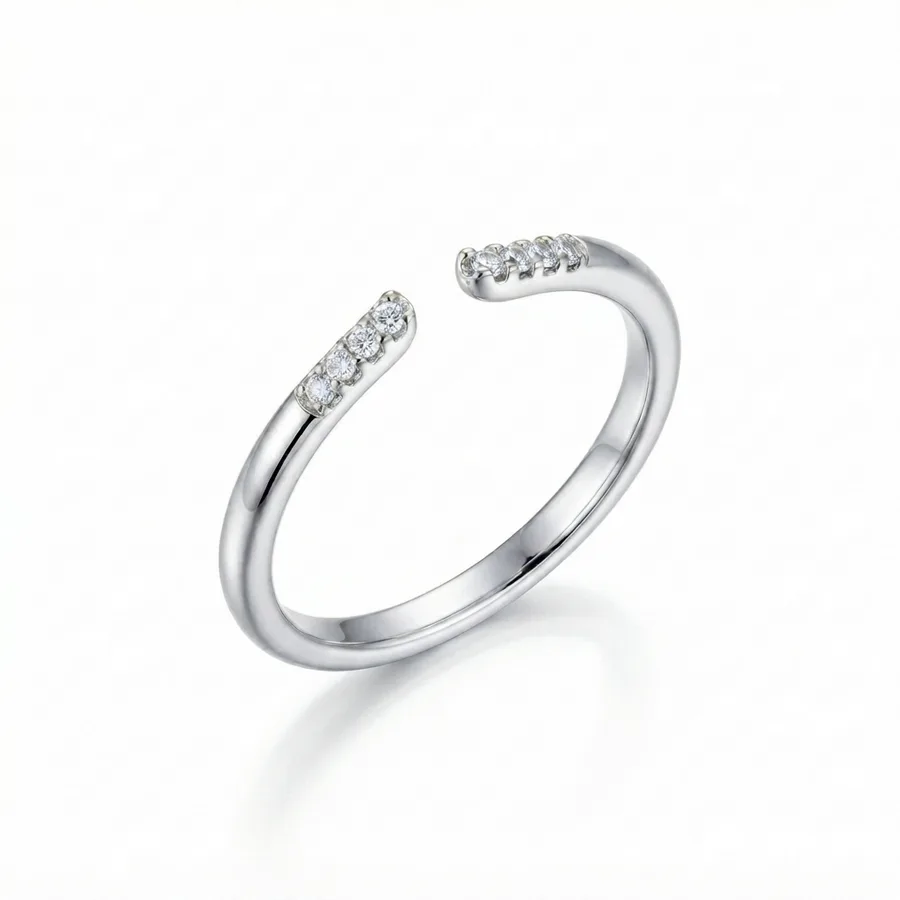
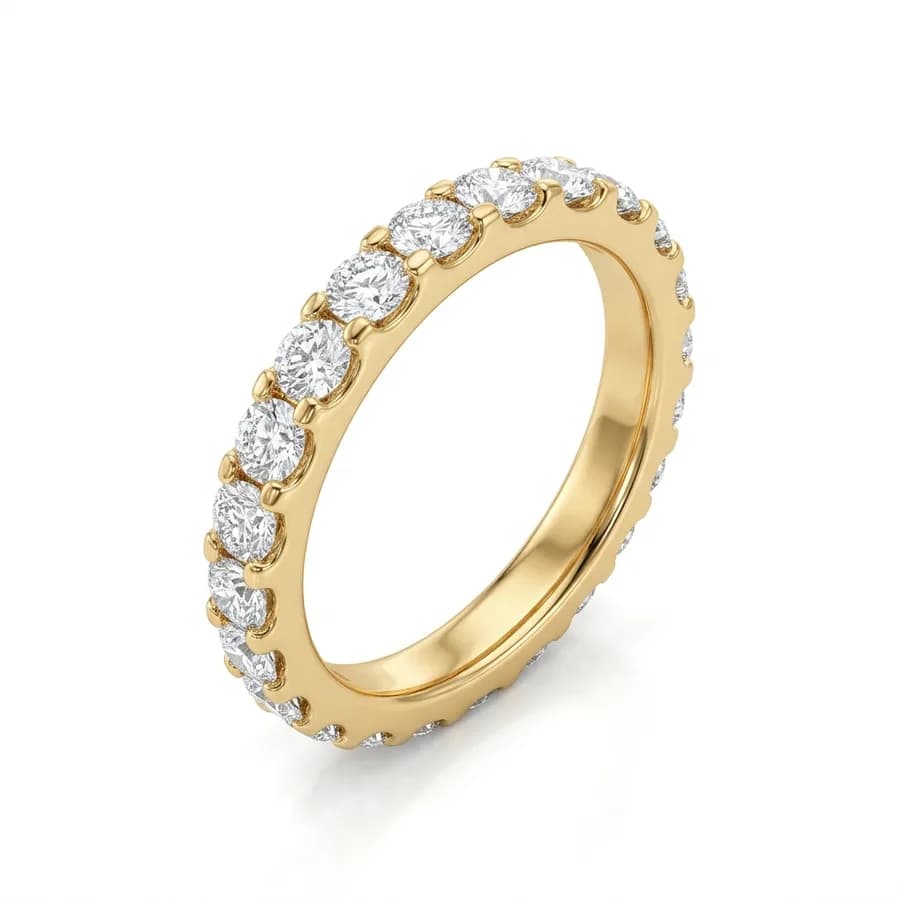
- Pavé: small diamonds set closely along the band, sometimes halfway around. Adds sparkle and pairs with any center stone.
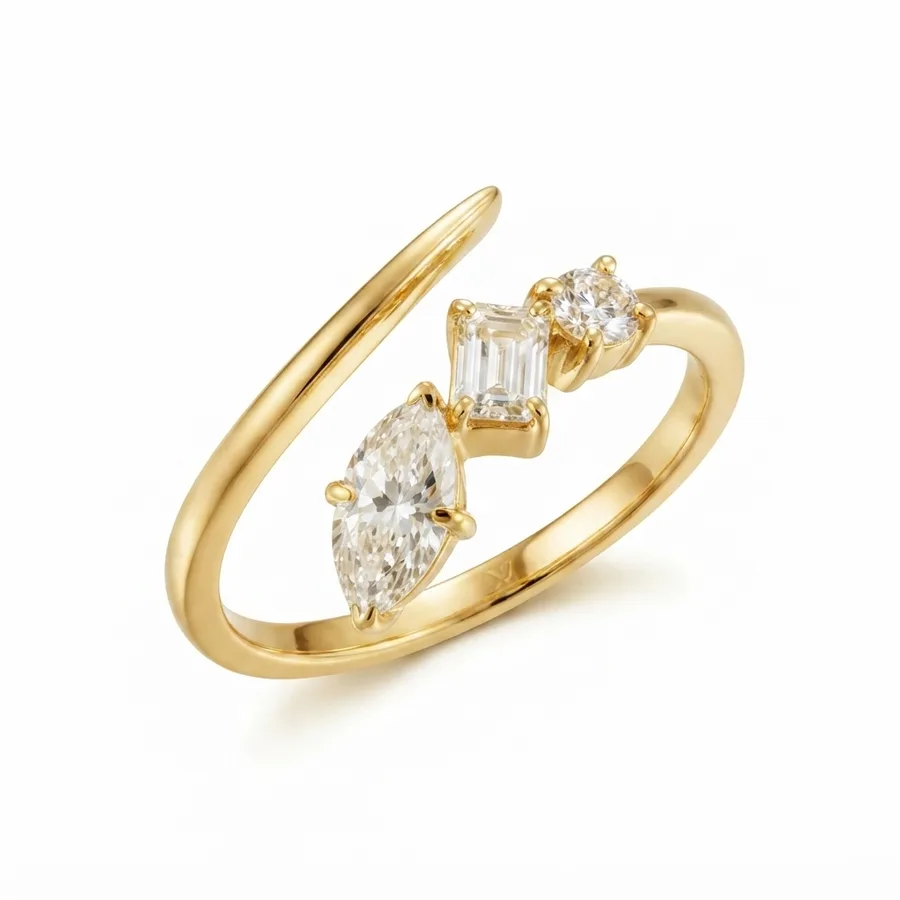
- Three-stone: a center stone flanked by two side stones, sometimes in contrasting shapes (pears or emerald cuts, for example).
- Bezel: a metal rim wraps all or part of the stone. Modern, clean and very protective.
- Tension-style look: the stone appears to float between the two ends of the band. Usually made with a hidden support that gives the look without sacrificing security.
- Cathedral: the shoulders arch up toward the stone like an archway, lifting it higher.
- Vintage and milgrain: tiny beaded edges, engraving and filigree for an heirloom feel.
- Toi et moi: two center stones side by side, often in different shapes or colors.
These styles aren't mutually exclusive. Many engagement rings combine two or three: a solitaire on a pavé band, a hidden halo under a prong-set stone, or a three-stone ring with milgrain edges. With a custom ring you can choose each element separately — the setting head, the shoulders and the band — and build exactly the combination you want.
Want to see one? Describe any of these settings in the design studio and get a visualization in seconds. Wording tips are in our guide on how to describe jewelry to AI.
Which diamond shape should you choose?
| Shape | Pros | Cons |
|---|---|---|
| Round | Maximum sparkle, timeless, suits every setting | Usually costs more for the same carat weight |
| Oval | Looks larger for its weight, elongates the finger | Some stones show a dark "bow-tie" in the center |
| Emerald | Elegant, distinctive "hall of mirrors" effect | Shows inclusions and tint easily — needs higher clarity |
| Cushion | Soft and romantic, good sparkle, vintage feel | Can look smaller than a round of the same weight |
| Pear | Distinctive, elongates the finger | The point needs protection (a V-prong) |
| Marquise | Looks the largest for its weight | Two pointed tips are vulnerable to knocks |
| Princess | Modern, strong sparkle, good value | Sharp corners need protecting |
| Radiant | Brilliant sparkle in a rectangle, sturdy cut corners | Less common, smaller selection |
Every shape is available in natural diamonds and, on request, lab-grown diamonds. The differences are explained in lab-grown vs natural diamonds.
How do you choose a setting for your hand?
There are no hard rules, but a few principles help narrow things down:
- Shorter fingers: elongated shapes like oval, pear and marquise create the illusion of a longer finger, and a slim band helps too.
- Long fingers or larger hands: cushion, radiant, halo or three-stone designs fill the finger and look balanced.
- Delicate hands: a thin pavé band or a low solitaire keeps proportions light.
- If you prefer understated jewelry: a bezel, hidden halo or flush-set stone gives quiet presence.
Don't forget ring size — it affects how the stone looks in proportion to the finger. See our ring size guide.
What about colored gemstones?
An engagement ring doesn't have to feature a diamond. Sapphire, ruby and emerald are popular with people looking for color and personality, often paired with a diamond halo or pavé. Keep in mind that emerald is softer and more brittle than diamond, so a bezel or corner-protecting prongs are a good idea. One real request: a 14K yellow gold ring with a cushion-cut emerald in a flower frame and 24 pavé diamonds.
Which setting is best for an active lifestyle?
If you work with your hands, train a lot or simply don't want to think about your ring all day, a few choices make a real difference:
- Bezel setting — the stone is protected on all sides and doesn't snag on clothing.
- Low profile — a stone that sits close to the finger takes fewer knocks.
- 6 prongs instead of 4 if you love the solitaire look.
- 14K gold — harder and more scratch-resistant than 18K. Full comparison in our 14K vs 18K gold guide.
- Avoid exposed points — pears, marquises and princess cuts benefit from V-prongs that guard the tips.
Will your engagement ring sit flush with a wedding band?
Many people only think about this too late. Halo rings, cathedral settings and low-set stones can leave a gap between the engagement ring and a straight wedding band. There are two solutions:
- Flush fit: design the engagement ring so the stone sits high enough for a straight band to rest right against it.
- Contoured band: a wedding band with a curve that wraps around the stone or halo. At Gold AI you can design a matching contoured band for a ring you already own — like the customer who asked for "a band to complement my engagement ring that flatters the round diamond" and received an 18K white gold band with 8 diamonds.
More ideas for matching bands are on our wedding rings page.
How much does each setting cost?
The setting affects price mainly through labor and stone count: a simple solitaire is usually the most economical option, while halo, pavé and vintage detailing add stones and hours. But the biggest factor is usually the center stone. Most custom pieces we quote start at around ₪2,000. See the full breakdown in how much an engagement ring costs.
Once your design is ready, request a personal quote and the team sends it on WhatsApp. Your ring is handcrafted by expert goldsmiths at partner workshops in the Ramat Gan diamond exchange district, usually within 2–3 weeks (business days), with insured shipping across Israel. For more inspiration, browse engagement rings.