14K vs 18K Gold: Which Should You Choose?
14K gold is 58.5% pure gold and is stamped 585; 18K gold is 75% pure gold and is stamped 750. 18K has a richer yellow color and costs more, while 14K is harder and more resistant to scratches and dents. For everyday wear and engagement rings, 14K is usually the more practical, better-value choice.

What does karat mean in gold?
Karat (K) measures gold purity on a scale of 24 parts. 24K gold is essentially pure (99.9%), but it is far too soft for most jewelry: it bends, scratches and wears down quickly. Jewelers therefore mix gold with other metals such as silver, copper, zinc and palladium. That alloy is harder, and the mix also determines its color.
14 karat means 14 parts gold out of 24, or 58.5%. 18 karat means 18 parts out of 24, or 75%. That is where the familiar hallmarks come from: 585 and 750 are simply the gold content in parts per thousand.
| Karat | Gold content | Hallmark | Typical use |
|---|---|---|---|
| 9K | 37.5% | 375 | Budget jewelry, mostly in the UK |
| 14K | 58.5% | 585 | Engagement rings, wedding bands, everyday pieces |
| 18K | 75% | 750 | Luxury pieces, rich yellow rings |
| 22K | 91.6% | 916 | Traditional jewelry in India and the Middle East |
| 24K | 99.9% | 999 | Bullion and coins, rarely jewelry |
How can you tell if jewelry is 585 or 750 gold?
Look for a tiny stamp inside the ring shank, on a necklace clasp or on an earring post. 585 (or 14K) means 14 karat gold; 750 (or 18K) means 18 karat. There may also be a maker's mark next to it. A stamp alone is not proof, though, so for any significant purchase make sure the alloy is written on your invoice.
Can you see the color difference between 14K and 18K?
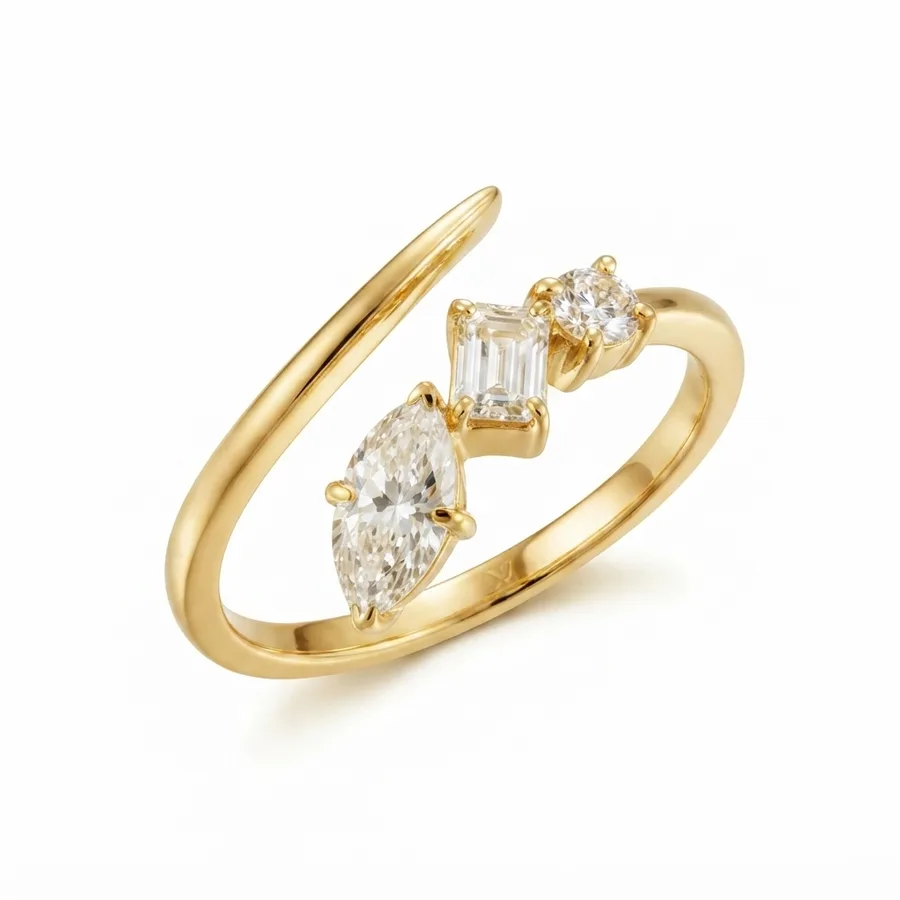
In yellow gold, yes. 18K looks deeper and warmer because it contains more pure gold. 14K yellow is slightly lighter and softer in tone, which many people actually prefer because it flatters a wide range of skin tones and stacks easily with other jewelry.
- Yellow gold: the most visible difference. 18K is rich and warm; 14K is lighter and more subtle.
- White gold: almost no visible difference, because both are usually plated with rhodium, which provides the bright white finish.
- Rose gold: the pink comes from copper. 14K contains more copper, so it is often slightly pinker than 18K rose.
For more on the colors themselves, read our guide to yellow, white and rose gold.
14K or 18K white gold: what does rhodium do?
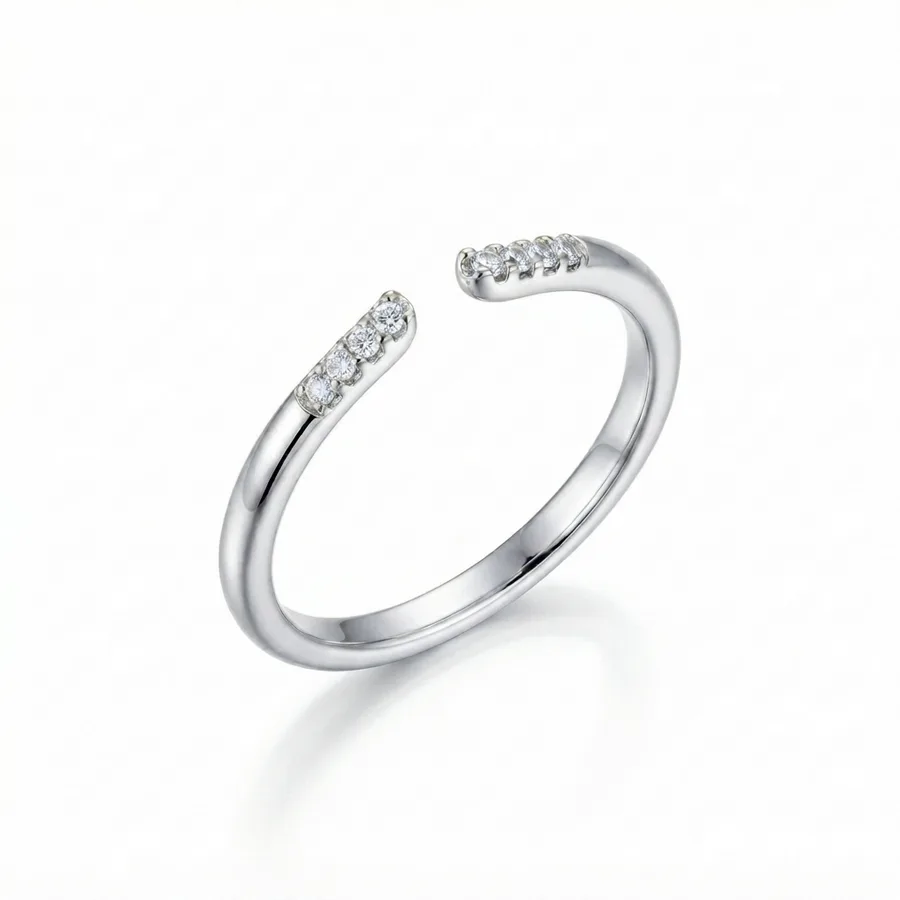
White gold isn't naturally white. It is yellow gold alloyed with pale metals such as palladium or nickel, so its natural tone is a soft grayish champagne. The bright white finish most people picture comes from a thin plating of rhodium, a platinum-group metal.
Because 18K contains more yellow gold, its natural color under the plating is slightly warmer than 14K. While the plating is intact you won't see a difference. As rhodium wears, usually after one to a few years depending on use, a faint yellow tint may show sooner on 18K. Re-plating is a simple, relatively inexpensive job for a goldsmith and a normal part of owning white gold.
- Want a crisp white look with less upkeep? 14K white gold is a good fit.
- Like a warmer white and don't mind re-plating? 18K white works well too.
- Buying an engagement ring and wedding band together? Match karat and color so the plating and tone age at the same pace.
Is 14K or 18K gold more durable?
14K wins here. With a higher share of strengthening metals, it is harder and less prone to scratches, dents and bending. That matters most for rings, which take knocks from steering wheels, door handles and everyday tasks. 18K is softer, so over the years it can show more wear, and on delicate settings the prongs that hold the stone may wear down faster.
That doesn't mean 18K won't last. 18K rings last for decades; they just need a bit more care and an occasional polish. Our gold jewelry care guide covers the basics.
Which is better for sensitive skin?
Pure gold is very unlikely to cause a reaction. Skin reactions usually come from the other metals in the alloy, most often nickel, which is used in some white gold alloys. The higher the gold content, the less room for other metals, so 18K is generally considered friendlier to sensitive skin.
If you know you are sensitive to nickel, mention it when you request a quote so the alloy can be chosen accordingly. In white gold, rhodium plating adds a protective layer, but it wears over time and is usually refreshed every few years.
How much more expensive is 18K gold?
Two factors drive the price gap. The obvious one: each gram of 18K contains about 28% more pure gold than a gram of 14K. The less obvious one: 18K alloy is denser, so the exact same design weighs more in 18K. So at most jewelers the gold portion costs more in 18K. The real gap, though, depends on how each jeweler prices gold — some charge the same rate per gram for both alloys, in which case the difference comes mostly from weight. The safe move is to ask for a quote in both and compare.
Gold is only part of the total, though. Labor, stones and Israel's 18% VAT stay about the same, so on a ring with a large diamond the percentage difference in the final price is much smaller. For the full breakdown, see how gold jewelry is priced.
Which is better for an engagement ring?
For most couples, 14K is the right call for an engagement ring: it is durable, holds stones securely and leaves more budget for the diamond. 18K suits people who love a deep yellow tone, have sensitive skin, or want a more luxurious feel and don't mind a little extra upkeep.
- Everyday wear and hands-on work: 14K.
- Delicate settings or pavé: 14K, which keeps prongs stronger.
- White gold: 14K, since the whiteness comes mostly from rhodium anyway.
- Rich, warm yellow: 18K, if that is the look you want.
- Sensitive skin: 18K, or 14K in a suitable alloy once you flag it.
To pick the setting style, see our guide to engagement ring settings, and for the full budget picture read how much an engagement ring costs.
What about wedding bands and necklaces?
Wedding bands are worn daily for decades, so 14K holds up better against scratches, though some couples choose 18K yellow for its classic tone. Necklaces and earrings take far less mechanical stress, so the choice can be mostly about look and budget. For very fine chains, 14K handles pulling and tangling better.
How to decide: three questions to ask
- How often will it be worn? An everyday piece, especially a ring, benefits from the hardness of 14K. A special-occasion piece can afford the softness of 18K.
- Which color do you love? If you're drawn to deep, warm yellow, 18K delivers it. If you prefer a subtler yellow, white or rose, 14K does the job.
- Where is your budget best spent? With a fixed budget, the gap between 14K and 18K can become a larger stone, a richer setting or a personal engraving.
Still undecided? Try describing the same piece in both versions in the studio and look at the designs side by side. Seeing the tone on screen often settles the question faster than any chart.
How it works at Gold AI
At Gold AI we work in 14K gold, our default and most popular choice, and in 18K, in yellow, white and rose. In our AI design studio you describe your piece in words, refine it in chat and request a personal price quote, which we send over WhatsApp. You can ask for both 14K and 18K quotes and compare for yourself. Every piece is handcrafted by expert goldsmiths at partner workshops in the Ramat Gan diamond exchange district.
Looking for inspiration? Browse engagement rings and wedding rings designed in the studio.