The Diamond 4Cs: A Complete Guide to Choosing a Diamond
The 4Cs are the four measures that set a diamond's quality and price: cut, color, clarity and carat weight. The most important rule is to prioritize cut, because it creates the sparkle. For color and clarity, you can choose a "good enough" grade that looks perfect to the eye and save a lot of money.

What are the 4Cs of diamonds?
The 4Cs system was created to give everyone a common language for describing diamonds. Every diamond is graded on four criteria, and the combination sets the price. What most buyers miss is that the four don't affect what you see on the hand equally. The secret isn't buying "the best of everything", but knowing where differences are visible and where they only exist on paper.
This guide applies to both natural and lab-grown diamonds, which are graded the same way. Still deciding between them? Read our lab-grown vs natural diamonds comparison.
Why is diamond cut the most important C?
Cut doesn't mean shape (round, oval and so on). It means the quality of the proportions, symmetry and polish. A well-cut diamond returns light up through the top to your eye, creating brilliance and sparkle. A stone cut too deep or too shallow leaks light out of the sides and looks dull, even if its color and clarity are excellent.
For round diamonds, GIA grades cut on a scale from Excellent to Poor. Our recommendation for a center stone: aim for Excellent or Very Good. This is where your money is most visible.
What about other shapes? For oval, pear, marquise and other "fancy" shapes, GIA doesn't give an overall cut grade, only symmetry and polish grades. That makes it important to see a photo or video of the actual stone. In ovals and pears, watch for the "bow-tie effect", a dark butterfly-shaped area across the center. Most such stones show a little of it, but a prominent bow-tie hurts sparkle and is worth avoiding.
What diamond color grade is good enough?
The color scale runs from D (completely colorless) to Z (a noticeable light yellow or brown tint). Differences between neighboring grades are very subtle, and most are invisible once the diamond is set and viewed from above.
| Color grade | Description | Best for |
|---|---|---|
| D–F | Colorless | Those who want the maximum; high price premium |
| G–H | Near colorless | The recommended sweet spot for white gold |
| I–J | Near colorless, slight warmth | Looks great in yellow and rose gold |
| K and below | Noticeable warm tint | Fans of a warm, vintage look |
Metal color changes the picture. White gold highlights any yellowish tint, while yellow gold warms the stone and masks it. So in yellow gold you can drop to I–J and save without anyone noticing.
Diamond clarity explained: what do VS2 and SI1 mean?
Clarity describes internal inclusions and external blemishes as seen under 10x magnification. The full scale:
- FL / IF: flawless (externally / internally) under magnification. Rare and very expensive.
- VVS1 / VVS2: extremely tiny inclusions, hard to find even for an expert under magnification.
- VS1 / VS2: small inclusions visible only under magnification.
- SI1 / SI2: inclusions easy to see under magnification; in SI2, sometimes visible to the eye.
- I1 / I2 / I3: inclusions visible to the eye that may affect brilliance and durability.
The key concept is eye-clean: a diamond with no inclusions visible to the naked eye at normal viewing distance. For most round diamonds, VS2 and often SI1 are eye-clean. Beyond that, you're paying for differences only a microscope can see.
Carat: weight, not size
A carat is a unit of weight (0.2 grams), not size. Two diamonds of the same weight can look different in size depending on cut: a deep stone hides weight in its base and looks smaller from above. Here are typical diameters for a round brilliant diamond:
| Carat weight | Approx. diameter (mm) |
|---|---|
| 0.25 | ≈4.1 |
| 0.50 | ≈5.2 |
| 0.75 | ≈5.8 |
| 1.00 | ≈6.5 |
| 1.50 | ≈7.4 |
| 2.00 | ≈8.2 |
Note that price doesn't rise linearly. A one-carat diamond usually costs well over twice a half-carat, and there are price jumps at round weights like 0.5 and 1.0. A 0.9 ct stone looks almost identical to a 1.0 ct, but usually costs noticeably less.
How to choose a diamond: recommended priority order
- Cut: Excellent or Very Good. Don't compromise here.
- Carat: pick a size that suits the hand and the budget, and consider weights just under round numbers.
- Color: G–H in white gold, I–J in yellow or rose gold.
- Clarity: an eye-clean VS2 or SI1, depending on shape.
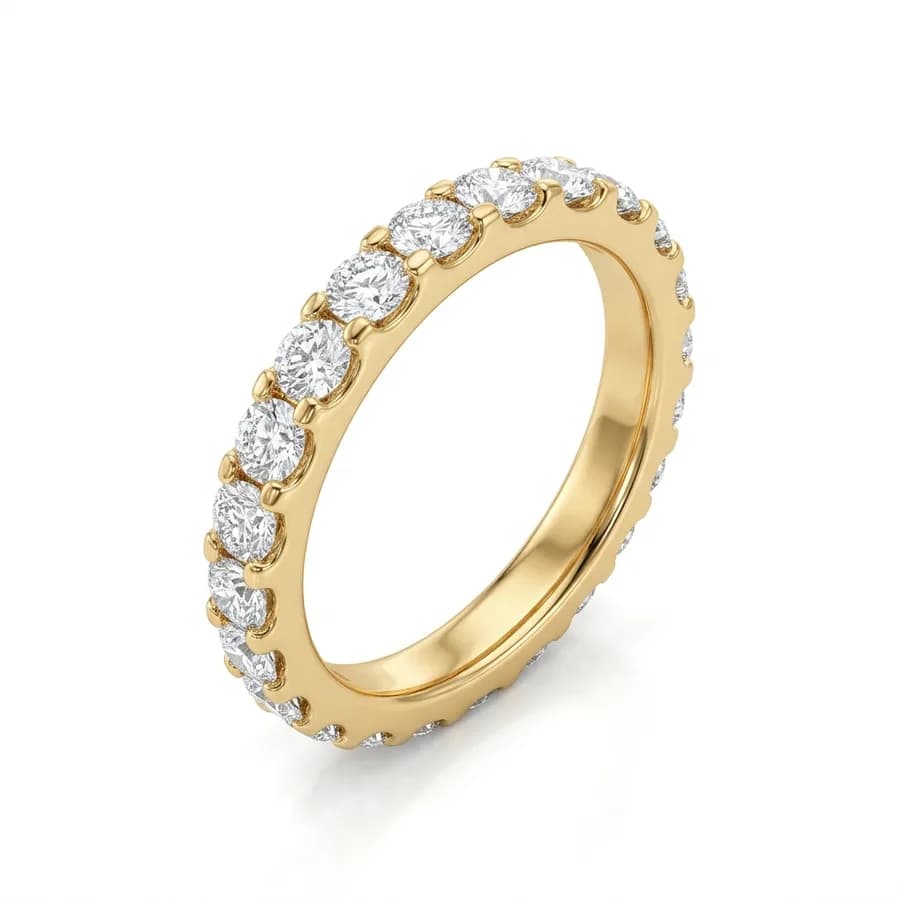
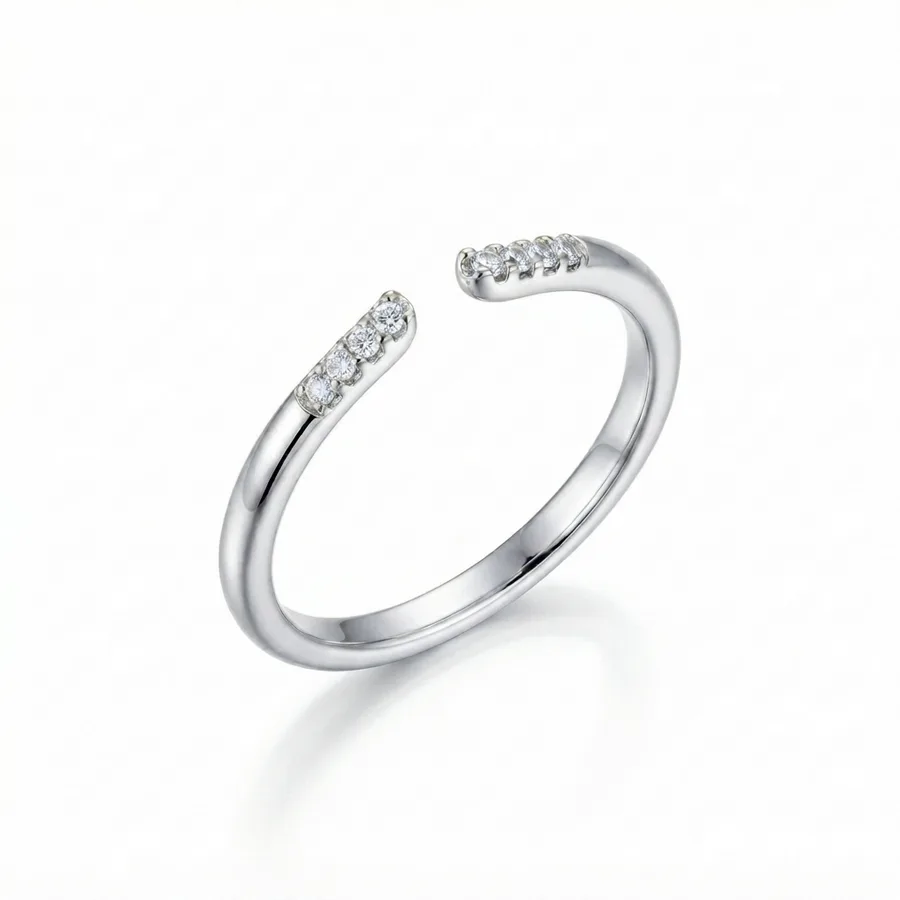
For pieces with many small diamonds, such as earrings or pavé rings, the grade of each individual stone matters less. What counts most there is consistency between the stones and the quality of the setting.
Common mistakes when choosing a diamond
- Chasing D and FL: paying a high premium for differences no one will ever see on the hand.
- Sacrificing cut for extra carats: a big, dull stone looks worse than a slightly smaller one that sparkles.
- Relying on the grade without seeing the stone: two SI1 diamonds can look very different depending on where the inclusion sits.
- Forgetting the metal: choosing a color grade without considering the gold color it will be set in.
- Buying a significant center stone without a certificate: a grade "by the seller's eye" is no substitute for an independent report.
What is fluorescence, and does it matter?
Some diamonds glow bluish under ultraviolet light. Fluorescence isn't one of the 4Cs, but it appears on grading reports from None to Very Strong. In most cases, faint to medium fluorescence is invisible in normal daylight, and it can even make a lower color grade look slightly whiter. In rare cases, very strong fluorescence can give a stone a slightly milky look. Fluorescent diamonds sometimes sell for less, so it's worth checking the specific stone.
Example: how to split a budget across the 4Cs
Say you're planning a solitaire in 14K yellow gold. Instead of hunting for a one-carat D/VVS1 diamond, consider a 0.9 ct stone with an Excellent cut, I color and an eye-clean SI1 clarity. On the hand the size difference is barely noticeable, the yellow gold warms the tint, and the inclusions can't be seen, yet the price is significantly lower. You can put the difference into the ring itself, a row of small diamonds or a personal engraving.
Diamond shapes in brief
- Round brilliant: the most sparkle and the classic, most popular shape.
- Oval and princess: ovals look larger than their weight and elongate the finger; princess is square and modern.
- Pear and marquise: elongated shapes that flatter the finger.
- Emerald and Asscher: mirror-like step cuts, elegant, and they need higher clarity.
- Cushion: rounded corners and a soft, romantic look.
Shape also affects the setting. Learn the differences between solitaire, halo and side-stone designs in engagement ring settings explained.
GIA and IGI certificates: why they matter
A grading report from an independent gemological lab verifies a stone's 4Cs. GIA and IGI are among the most recognized labs in the world, and both grade natural and lab-grown diamonds. For a center stone of half a carat or more, a certificate is well worth asking for.
At Gold AI you can choose a natural conflict-free diamond, or a lab-grown diamond on request. Start in our design studio, describe the piece, refine it in chat, and request a personal quote that we send over WhatsApp. Want to understand budgets first? Read how much an engagement ring costs or browse our engagement rings.