How Much Does an Engagement Ring Cost? A Clear Budget Guide
In Israel, an engagement ring can cost from roughly ₪2,500 for a simple 14K gold solitaire with a small lab-grown diamond to tens of thousands of shekels for a ring with a one-carat natural diamond. The biggest price driver is the center stone: natural or lab-grown, and its carat weight and quality.

What goes into the price of an engagement ring?
An engagement ring's price isn't a single off-the-shelf number. It's built from several components, and once you understand them it's much easier to compare quotes and decide where to spend and where to save.
- Gold: the ring's weight in grams times the price per gram. A delicate solitaire usually weighs just a few grams; a wide band or elaborate design weighs more. Gold prices move constantly, and so does the final price.
- Labor: casting, setting, polishing and finishing. A simple design takes fewer hours; pavé setting dozens of tiny stones takes many more.
- Center stone: usually the most expensive part. Price depends on type (natural or lab-grown), carat weight, color, clarity and cut.
- Side stones: small diamonds on the band, in a halo or on the sides. Each is inexpensive, but together they add up.
- VAT (18%): consumer prices in Israel include VAT, so check that any quote you get does too.
For a full breakdown of each component, see how gold jewelry is priced.
Natural vs lab-grown diamonds: the price difference
This is the decision that moves your budget more than anything else. A lab-grown diamond is chemically, physically and optically the same as a natural diamond: pure carbon in the same crystal structure, and identical to the eye. The difference is origin: one formed in the earth over millions of years, the other under controlled conditions in a lab.
In practice, a lab-grown diamond typically costs a small fraction of a natural diamond of the same weight and quality, and the gap widens as stones get bigger. On the other hand, natural diamonds carry rarity and tradition that matter to many couples. Read our full comparison of lab-grown vs natural diamonds, and learn the quality grades in our guide to the 4Cs.
What pushes a diamond's price up?
Two diamonds of exactly the same weight can still differ hugely in price. Four grades, known as the 4Cs, set the price:
- Carat: price doesn't rise in a straight line. A one-carat diamond usually costs far more than twice a half-carat, because larger stones are rarer.
- Color: colorless diamonds cost more. In the near-colorless grades the difference is hard to see, especially when the stone sits in yellow or rose gold.
- Clarity: the amount of internal inclusions. Most inclusions in mid-range grades are invisible to the naked eye.
- Cut: the grade that matters most for sparkle. A well-cut diamond looks brighter and bigger than a heavier stone with a mediocre cut.
Shape plays a role too: round diamonds are usually the most expensive per carat, while ovals, pears and marquises often look larger from above and can cost less.
Estimated price ranges by ring type
The table below shows general, estimated ranges only, including VAT, to give you a sense of scale. Actual prices depend on the gold price on the day you order, the stone's quality and the design's complexity.
| Ring style | Center stone | Estimated range |
|---|---|---|
| Simple solitaire, 14K gold | Lab-grown, 0.3–0.5 ct | Roughly ₪2,500–5,000 |
| Solitaire, 14K gold | Lab-grown, about 1 ct | Roughly ₪4,000–9,000 |
| Solitaire, 14K gold | Natural, 0.3–0.5 ct | Roughly ₪5,000–12,000 |
| Halo or pavé, 14K gold | Natural, about 0.5 ct | Roughly ₪9,000–18,000 |
| Solitaire, 14K or 18K gold | Natural, about 1 ct, good quality | From about ₪20,000 to ₪45,000 and up |
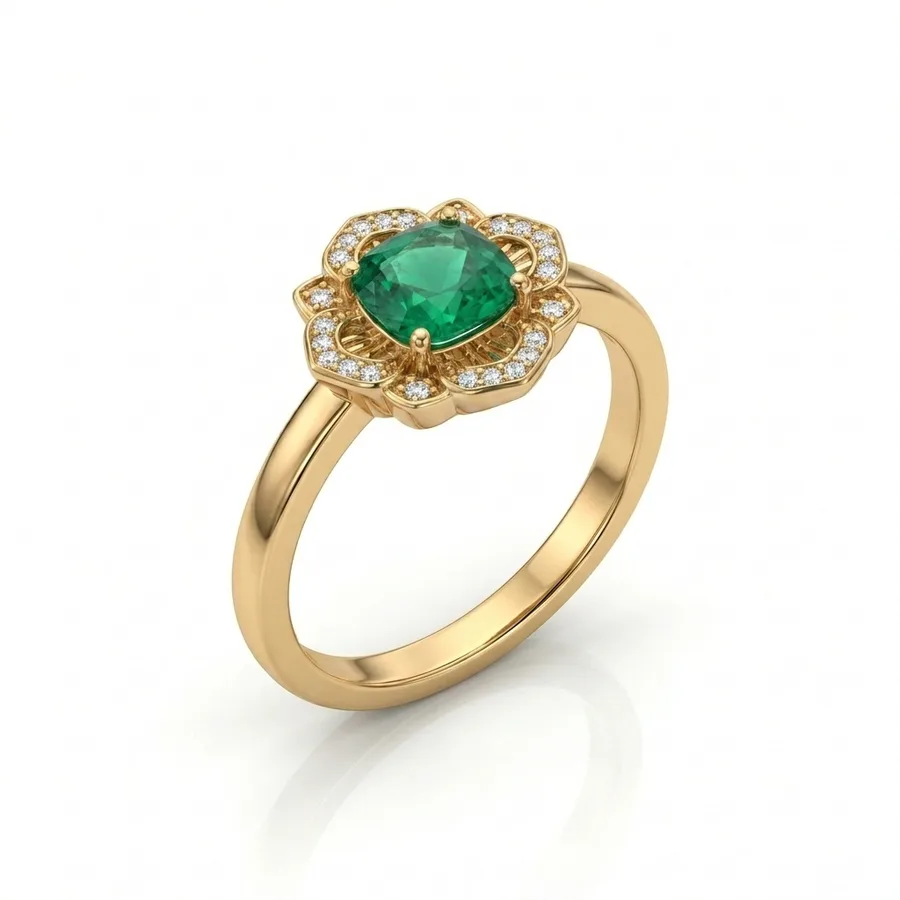
Colored gemstones such as sapphire, emerald, ruby or tourmaline can be a striking and sometimes more affordable alternative, though prices vary widely with quality here too.
What to ask before ordering an engagement ring
Comparing quotes only works when you compare like with like. Before deciding, make sure you have clear answers to these questions:
- What exactly is the stone? Natural or lab-grown, carat weight, color and clarity grades, and shape. Get the details in writing.
- Which gold, and roughly how heavy? 14K or 18K, and which color. A cheaper ring may simply be thinner and lighter.
- Does the price include VAT and shipping? Differences like these can hide gaps of hundreds or thousands of shekels.
- What if the size is off? Ask about adjustments and repairs after delivery, and under what terms.
Should an engagement ring cost three months' salary?
No. The three-months' salary rule (sometimes two months) didn't come from ancient tradition; it came from 20th-century diamond industry advertising. There's no reason to start married life in debt to hit an arbitrary number.
The right budget is one you're comfortable with after accounting for the wedding, housing and everything else. Many couples now decide together, and some prefer a modest, beautiful ring and spend the difference elsewhere. What really matters is that the ring suits the style and lifestyle of the person wearing it.
How can you save on an engagement ring without losing the look?
- Choose 14K gold. It's more durable than 18K and usually cheaper, and in white gold the difference is nearly invisible. More in our 14K vs 18K gold guide.
- Consider lab-grown. The same budget buys a larger, higher-quality stone, or the same stone for significantly less.
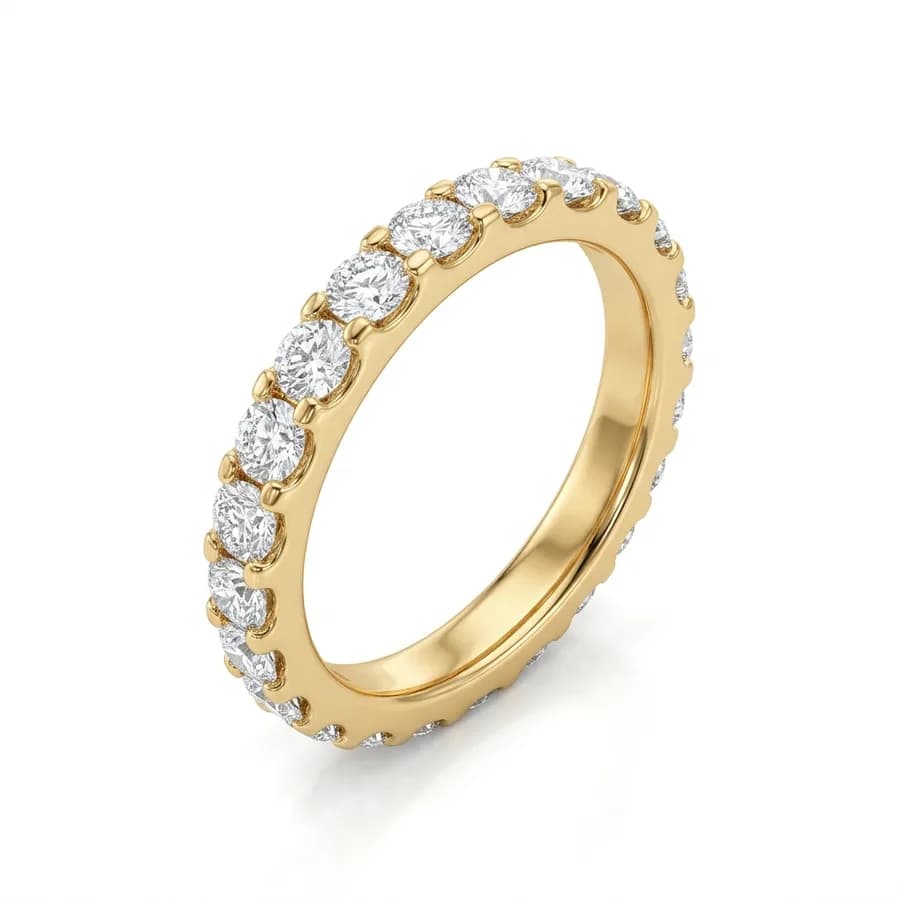
- Add a halo. A ring of small diamonds around the center stone makes it look larger, so you can choose a smaller, less expensive center stone.
- Buy just below whole carat weights. Diamond prices jump at round weights like 0.5 and 1 carat. A 0.9 ct diamond looks almost identical to a 1 ct stone but can cost noticeably less.
- Prioritize cut over clarity. An excellent cut drives sparkle, while small clarity differences are usually invisible to the eye.
- Go for a slim band. A delicate band uses less gold and often makes the stone look bigger.
Costs to remember beyond the ring itself
- Wedding bands: they're coming soon, so set aside budget now. If you want them to sit well with the engagement ring, plan both together at the design stage.
- Insurance: a valuable ring is worth insuring, either on its own policy or as an add-on to home insurance.
- Maintenance: rhodium re-plating for white gold, prong checks and an occasional polish.
- Engraving: a personal touch that adds meaning; see our engraving ideas.
How much does a custom engagement ring cost at Gold AI?
In the Gold AI design studio you describe your ring in words, in English or Hebrew, get photorealistic designs in seconds and refine them in chat: “make the band thinner”, “add small diamonds on the sides”. When the design is ready, you request a personal price quote based on gold weight, labor, stones and VAT, and the team sends it over WhatsApp. Most custom pieces we quote start at around ₪2,000.
We work with natural, conflict-free diamonds, lab-grown diamonds on request and colored gemstones, in 14K and 18K yellow, white and rose gold. Each ring is handcrafted by expert goldsmiths at partner workshops in the Ramat Gan diamond exchange district in about 2–3 weeks (business days), and ships insured and tracked, free on orders over ₪500. Before you order, check our ring size guide and browse engagement rings designed in the studio.