Matching Wedding Bands: How to Choose His and Hers Rings
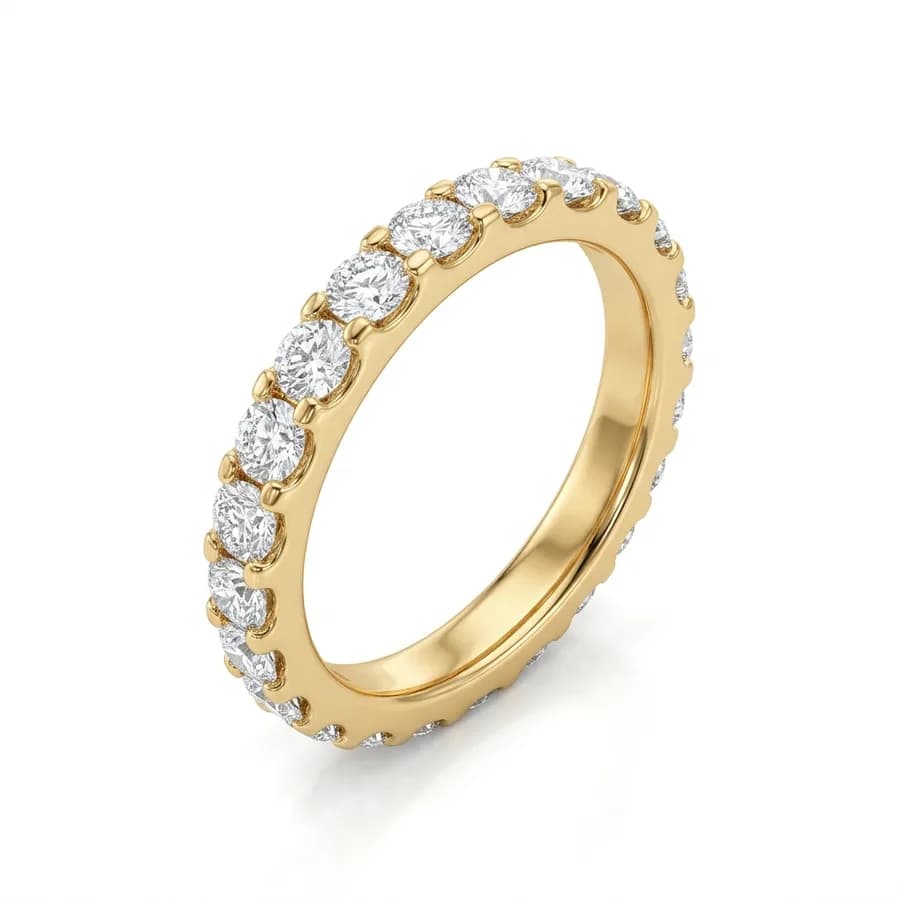
Matching wedding bands are a pair of rings that share a common thread — the same gold color, profile or finish — in a width that suits each hand. In most couples her band is narrower (typically 2–3 mm) and his is wider (typically 4–6 mm). Settle the shared style first, then tune width, profile and comfort for each of you.

Matching vs complementary wedding bands
There are two ways to approach a pair of wedding bands, and both are completely valid:
- Fully matching — same design, same gold, same finish, just different widths. It looks unified and symbolic, and it's the simplest decision.
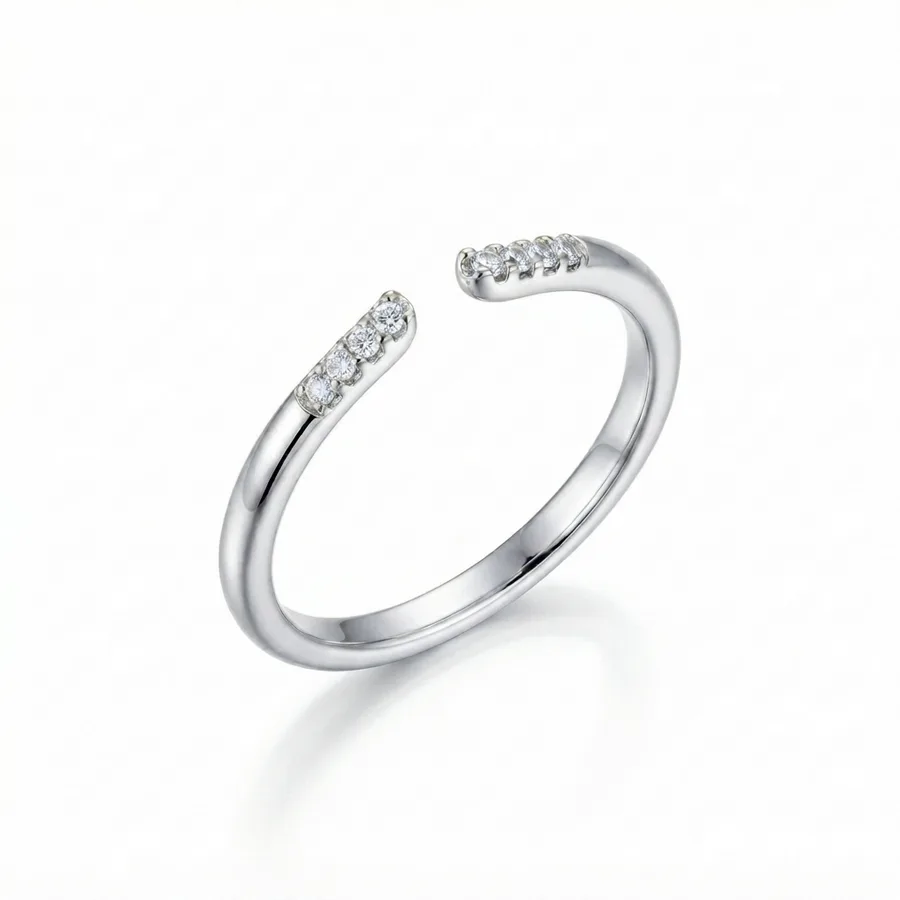
- Complementary — each of you picks a band that fits your own taste, linked by one shared element: the same gold color, the same matte finish, or the same inside engraving. Ideal when your styles differ — say, she wants a row of small diamonds and he prefers a plain, wide band.
There's no wrong answer. What matters is that each of you is happy with the ring you'll wear every day for years. Browse styles on our wedding rings page.
What width wedding band should I get?
Width changes both the look and the feel. A wide band has presence on the finger; a narrow one is delicate and almost disappears. Common rules of thumb:
| Width | Usually suits | Notes |
|---|---|---|
| 1.5–2 mm | Slender fingers, or stacking with an engagement ring | Very delicate; less resistant to bending |
| 2–3 mm | Most women's wedding bands | Good balance of delicacy and presence |
| 4–5 mm | Most men's wedding bands | Comfortable, substantial without being heavy |
| 6 mm and up | Larger hands, or anyone who likes a bold look | Comfort-fit interior recommended; feels snugger |
Keep in mind that a wider band feels tighter at the same size. Bands of 6 mm or more sometimes need half a size up. To get the measurement right, see our ring size guide.
Ring profiles: flat, comfort fit or D-shape
The profile is the band's cross-section — what it looks like from the side. It has a big effect on how the ring feels:
- Flat — a straight outer surface with relatively crisp edges. Modern and graphic, and a good canvas for outside engraving.
- Comfort fit (court) — the inside is rounded, so the band slides easily over the knuckle and feels great all day. Especially recommended for wider bands.
- D-shape — domed outside, flat inside. The classic "wedding ring" look.
Many couples pick the same profile for both rings to create the match, even when widths differ.
Finishes: polished, matte or hammered
- Polished — classic and shiny. Fine scratches show over time, but it can be re-polished.
- Matte (brushed) — a soft, modern look that hides everyday scratches better. The texture wears gently over time and can be refreshed.
- Hammered — a faceted, hand-struck surface that plays with light. Slightly rustic in character, and also good at hiding wear.
A popular combination: a matte center with polished edges, or the same finish on both bands in different gold colors. For color, read yellow, white or rose gold; for karat, 14K vs 18K gold.
How to pair a wedding band with an engagement ring
If the wedding band will sit right next to the engagement ring, design them as a set. A high setting or a halo can leave a gap, or the two rings can rub and scratch each other. The usual solutions:
- Straight plain band — works when the engagement ring's stone sits high enough for the band to slide underneath.
- Contoured band — curves around the stone or halo so the two rings sit flush with no gap.
- Notched band — a small cut-out that makes room for the engagement ring's head.
With custom work, the wedding band can be shaped precisely to an engagement ring you already own. More on settings in our engagement ring settings guide.
The chuppah ring: Jewish wedding custom
At a Jewish wedding, the ring the groom gives the bride under the chuppah is traditionally a plain band without stones, owned by the groom. The halachic reasoning is that the ring's value should be clear to the bride, and gemstones could create a mistaken impression of its worth. That's why many couples use a simple gold band at the ceremony and wear a diamond or more elaborate ring afterwards.
Customs vary between communities, and in many ceremonies the bride doesn't give the groom a ring under the chuppah — couples often exchange his band after the ceremony. Check in advance with your rabbi or officiant about what's customary for you.
Inside engraving ideas for wedding bands
Engraving the inside is the most intimate way to turn two rings into a pair. Popular choices: the wedding date, names or initials, "I am my beloved's and my beloved is mine" (often in the original Hebrew), or one sentence split across both bands — half in each. A 2 mm band has limited room, so keep the text short. More ideas in engraving ideas.
At Gold AI you design both rings in a chat, see them before paying, and get a personal quote over WhatsApp. The bands are handcrafted by expert goldsmiths at partner workshops in the Ramat Gan diamond exchange district, with free repairs and adjustments for one year. Questions about the process? See the FAQ.