Birthstones by Month: The Complete List and Which Ones Suit Everyday Jewelry
The modern birthstones by month are: January – garnet, February – amethyst, March – aquamarine, April – diamond, May – emerald, June – pearl, alexandrite or moonstone, July – ruby, August – peridot, September – sapphire, October – opal or tourmaline, November – topaz or citrine, December – tanzanite, turquoise or zircon.
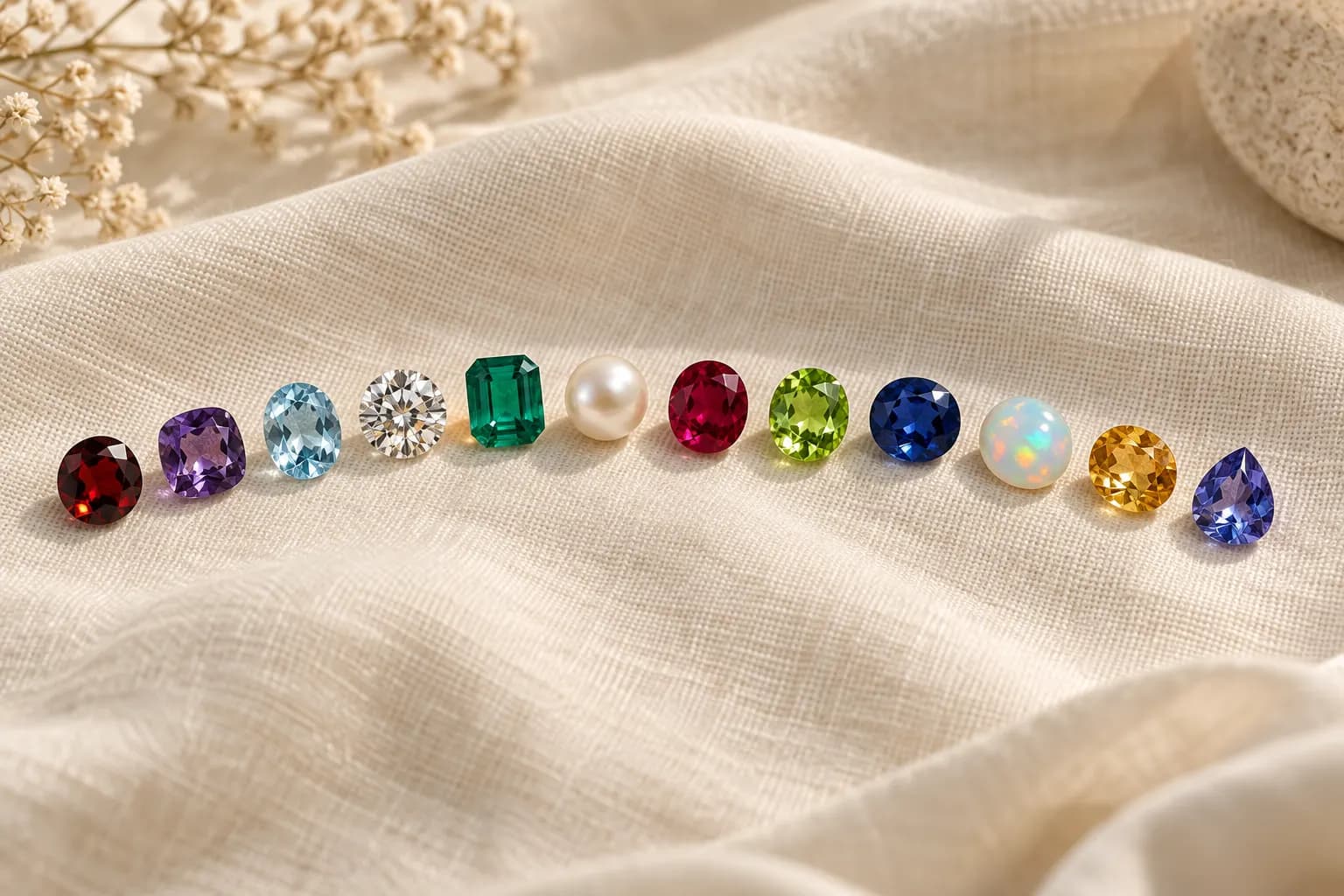
Birthstone chart by month
The list most jewelers use today is the “modern” list, formalized in the US in the early 20th century and updated several times since. Tanzanite joined December in 2002, and spinel joined August in 2016. The chart below follows the Gregorian calendar and includes Mohs hardness, which matters a lot if the stone is going into a ring you'll wear every day.
| Month | Stone | Color | Hardness (Mohs) | Good for a daily ring? |
|---|---|---|---|---|
| January | Garnet | Deep red (also green, orange) | 6.5–7.5 | Yes, in a protective setting |
| February | Amethyst | Purple | 7 | Yes, with some care |
| March | Aquamarine | Pale blue | 7.5–8 | Yes |
| April | Diamond | Colorless (also fancy colors) | 10 | Yes, the toughest |
| May | Emerald | Green | 7.5–8 | With care: relatively brittle |
| June | Pearl / Alexandrite / Moonstone | Creamy white / green-to-red / milky | 2.5–4.5 / 8.5 / 6–6.5 | Alexandrite yes; pearl and moonstone less so |
| July | Ruby | Red | 9 | Yes |
| August | Peridot | Light olive green | 6.5–7 | With care |
| September | Sapphire | Blue (and almost any color) | 9 | Yes |
| October | Opal / Tourmaline | Play of color / pink and more | 5.5–6.5 / 7–7.5 | Opal not ideal; tourmaline yes |
| November | Topaz / Citrine | Golden (topaz also blue) / yellow | 8 / 7 | Yes |
| December | Tanzanite / Turquoise / Zircon | Violet-blue / sky blue / blue | 6–7 / 5–6 / 6–7.5 | With care; turquoise less so |
Note that zircon is a natural gemstone and has nothing to do with cubic zirconia, the inexpensive synthetic diamond simulant. For months with several stones there's no single right answer: choose by color, budget and durability.
What is the Mohs scale and why does it matter for rings?
The Mohs scale ranks minerals by scratch resistance, from 1 (talc) to 10 (diamond). Ordinary household dust contains quartz particles at around 7, so a stone softer than that will gradually lose its polish in a ring that brushes against surfaces all day. Earrings and pendants rarely take knocks, so almost any stone works there.
- Great for everyday rings: diamond, sapphire, ruby, alexandrite, topaz, aquamarine.
- Fine with a protective setting: garnet, amethyst, citrine, tourmaline, emerald (hard, but its inclusions make it prone to chipping).
- Better in pendants or earrings: pearl, opal, turquoise, moonstone, and usually tanzanite and peridot too.
Hardness is only part of the story; toughness (resistance to chipping) matters too. That's why a stone like emerald benefits from a bezel, a metal rim around the stone, rather than prongs alone. Our guide to ring settings explains the options.
The 12 stones of the High Priest's breastplate
Exodus 28 describes the Choshen, the breastplate worn by the High Priest: four rows of three stones, each engraved with the name of one of the tribes of Israel. In Hebrew, the stones are:
- Row one: odem, pitdah, bareket.
- Row two: nofech, sapir, yahalom.
- Row three: leshem, shevo, achlamah.
- Row four: tarshish, shoham, yashpeh.
Keep in mind that identifying these ancient stones is genuinely debated. The Hebrew names don't necessarily match the stones that carry them today. Many scholars believe the biblical sapir was lapis lazuli rather than sapphire, and that the yahalom wasn't the diamond we know, since diamond would have been extremely difficult to engrave with the tools of the time. Different commentators and translations offer different identifications, and there's no consensus.
Some traditions link each tribe to a Hebrew month, and through it to a breastplate stone, but the order varies between sources. Many historians see the pairing of twelve breastplate stones with twelve months as one of the roots of the whole birthstone custom. If you'd like a piece based on the Hebrew month, pick the source that speaks to you and treat it as symbolism rather than a rule.
Birthstone jewelry ideas
A mother's necklace with the kids' birthstones
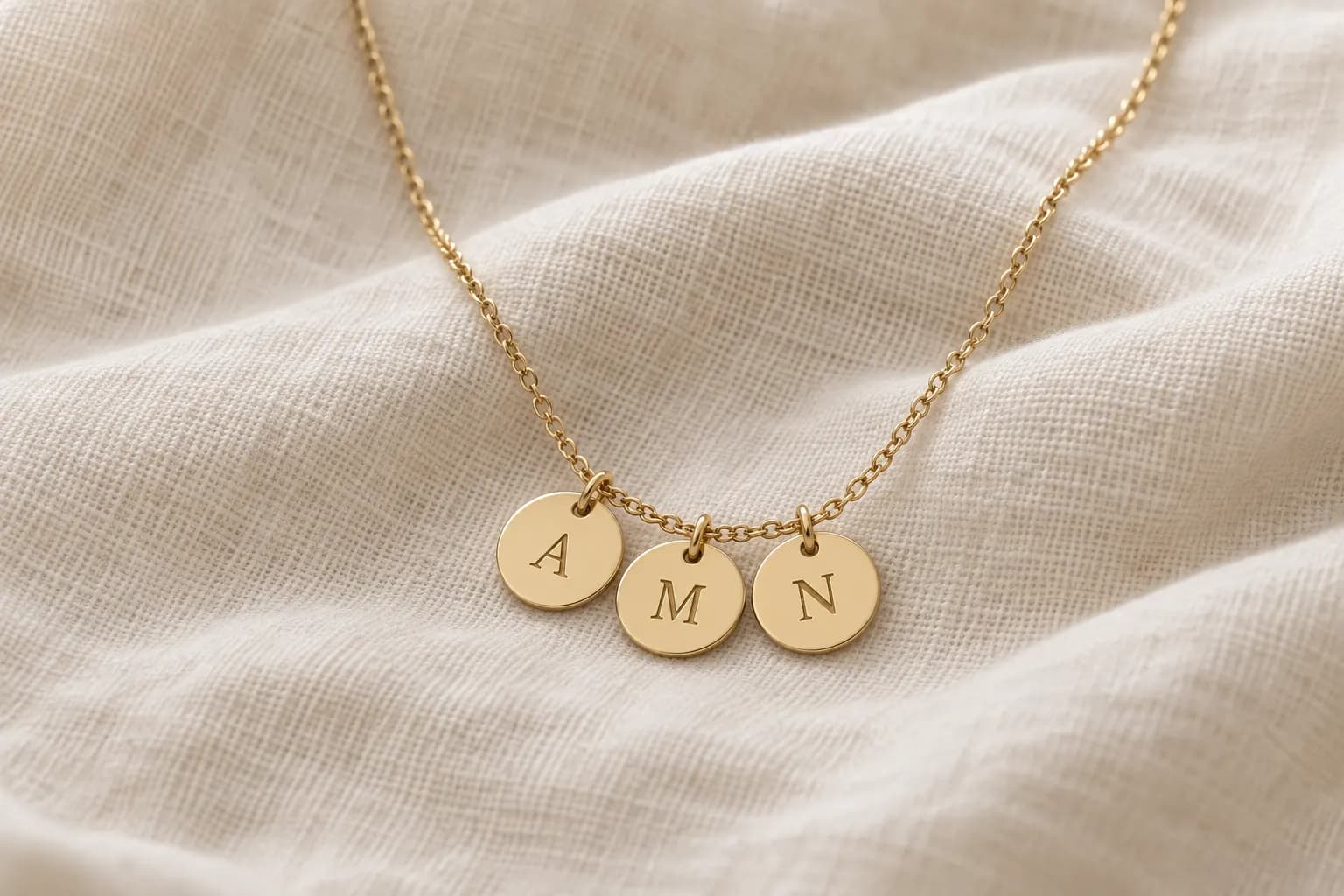
One of the most loved ideas: a pendant or necklace with a small stone for each child, matched to their birth month. You can add names, initials or birth dates too; see our post on the mother's necklace with kids' names. Since pendants rarely get knocked, this is where softer stones like opal or turquoise can shine.
Stackable birthstone rings
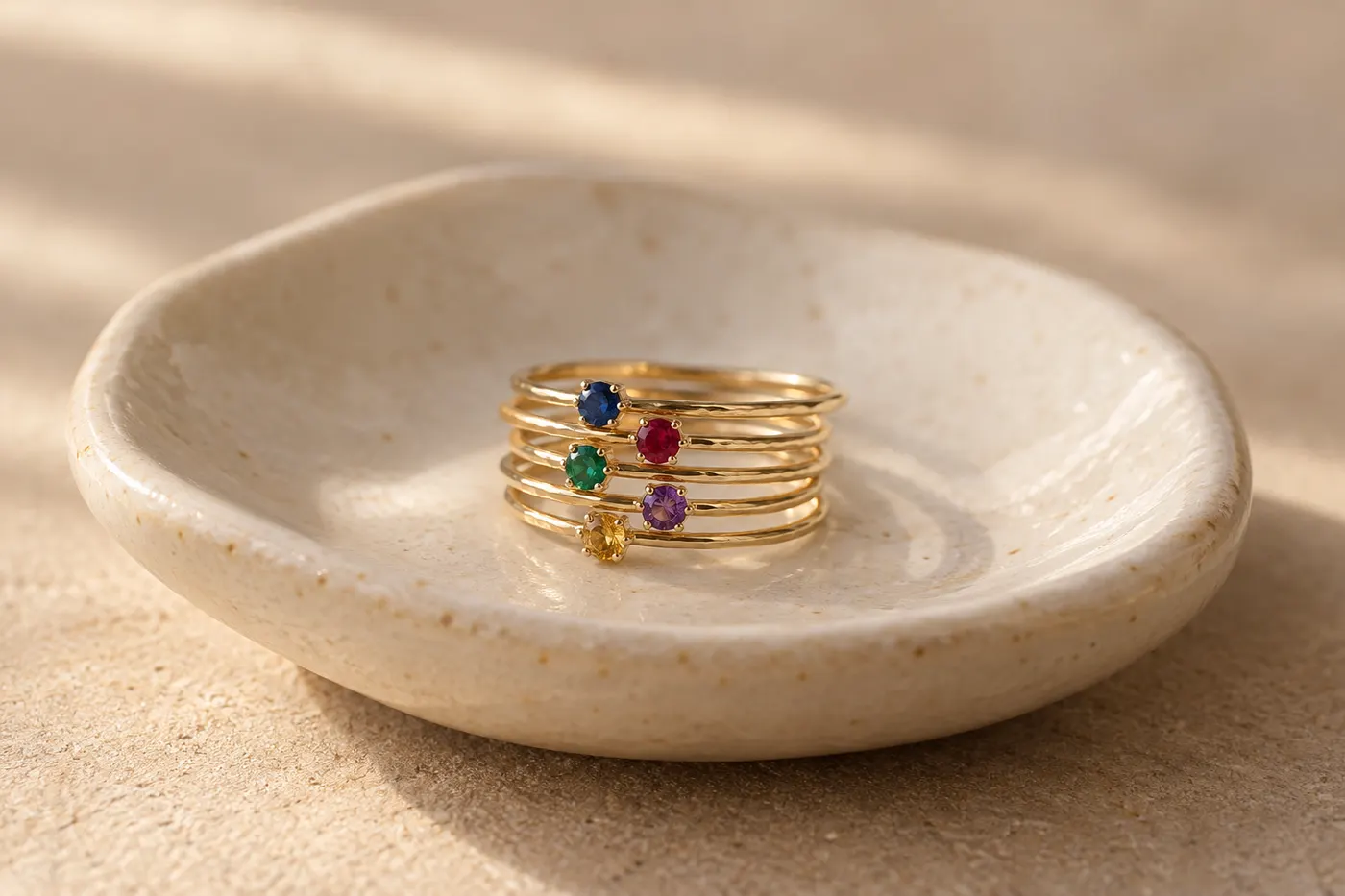
Several slim bands, each with the birthstone of a different family member, worn together on one finger. They look especially good in yellow or rose gold; our guide to gold colors helps you choose. For rings worn daily, stick to stones from the durable group above.
Earrings and milestone gifts
Small birthstone studs are a classic bat mitzvah or milestone-birthday gift. Find more ideas in our jewelry gift guide and our post on bat mitzvah jewelry gifts.
How to choose a birthstone for gold jewelry
- Match the stone to the piece. Softer stones belong in pendants and earrings; hard stones work in rings too.
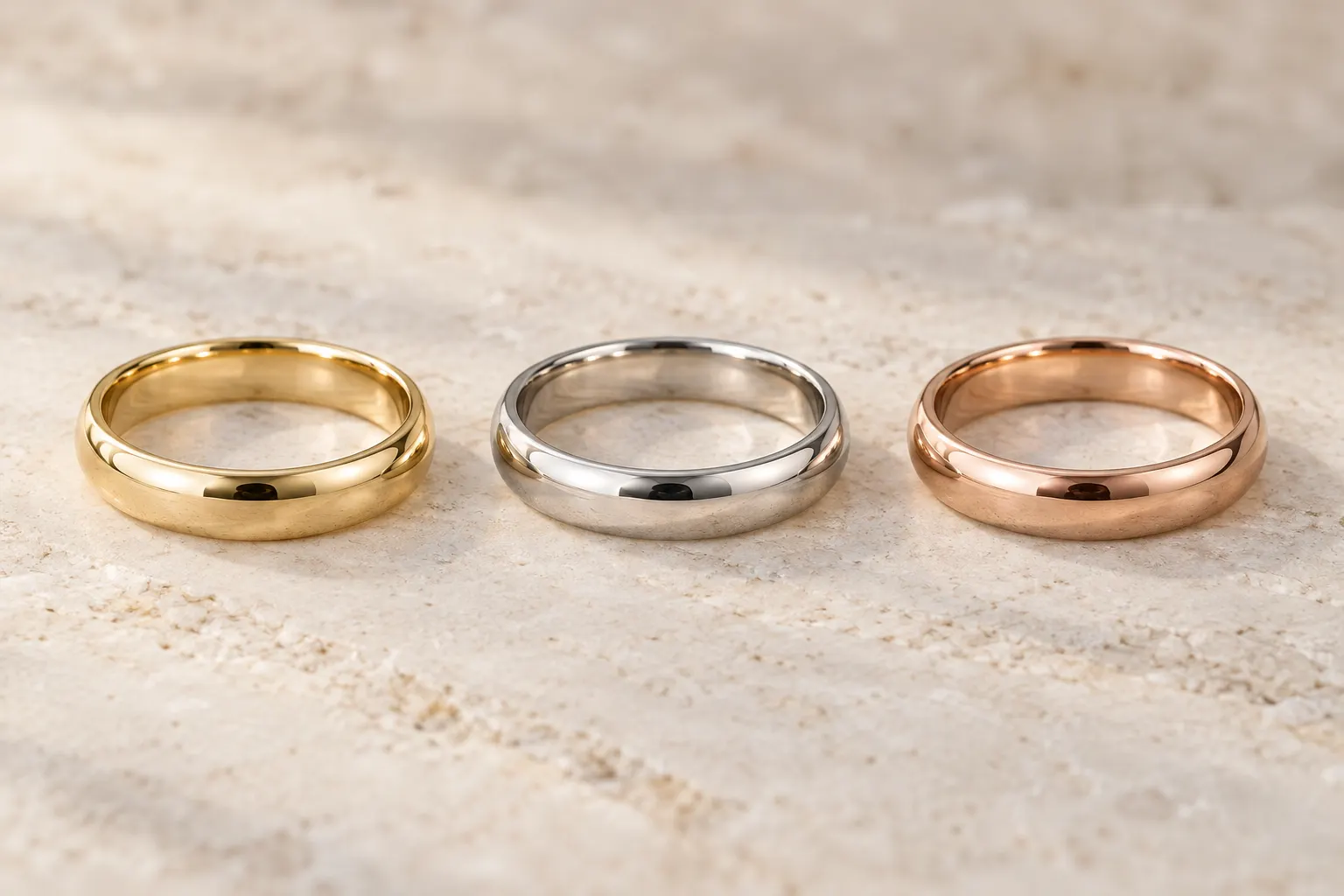
- Consider the gold color. Warm stones (garnet, citrine, golden topaz) glow on yellow gold; cool stones (aquamarine, sapphire, tanzanite) pop on white gold.
- Size drives price. Small accent stones usually add little to the cost, but fine rubies, sapphires and emeralds in larger sizes can be very expensive. See what drives gold jewelry pricing.
- Ask about treatments and lab-created stones. Many colored gemstones are heat-treated or otherwise enhanced, which is standard in the trade. What matters is knowing what you're buying.
With Gold AI you describe the piece in words, see a realistic design before paying anything, and request a personal quote over WhatsApp. Pieces are handcrafted by expert goldsmiths at partner workshops in the Ramat Gan diamond exchange district, in 14K or 18K gold, with natural diamonds or colored gemstones. If a particular stone matters to you, get in touch and we'll check.