Gold Plated, Gold Filled or Solid Gold? Differences, Prices and What Lasts
Gold plated jewelry is a cheaper metal, usually brass or silver, with a gold layer only a few microns thick. Gold filled is a much thicker gold layer bonded to a base metal. In solid 14K gold, 58.5% of the metal is gold all the way through. Plating wears through within months to two years of daily wear, gold filled lasts years, and solid gold stays gold for good. It can also be resized, repaired and sold by weight.
What's the difference between gold plated, vermeil, gold filled and solid gold?
On the day you buy them, all four look almost the same. The difference is what sits under the surface, and that decides how long the piece looks good and what you can do with it later:
| Gold plated | Vermeil | Gold filled | Solid 14K/18K | |
|---|---|---|---|---|
| Gold layer | Very thin, usually 0.5–2.5 microns | Thicker plating, usually 2.5 microns+ | Thick layer bonded with heat and pressure, at least 5% of the weight | No layer, gold all the way through |
| Base metal | Brass, copper or steel | Sterling silver | Brass or copper | Gold alloy (58.5% or 75% gold) |
| Looks good for | Months to two years | One to a few years | Many years | Forever; scratches polish out |
| Resizing and repair | Hardly; soldering ruins plating | Limited | Limited | Yes |
| Resale value | Close to zero | The silver only | Low | By gold weight |
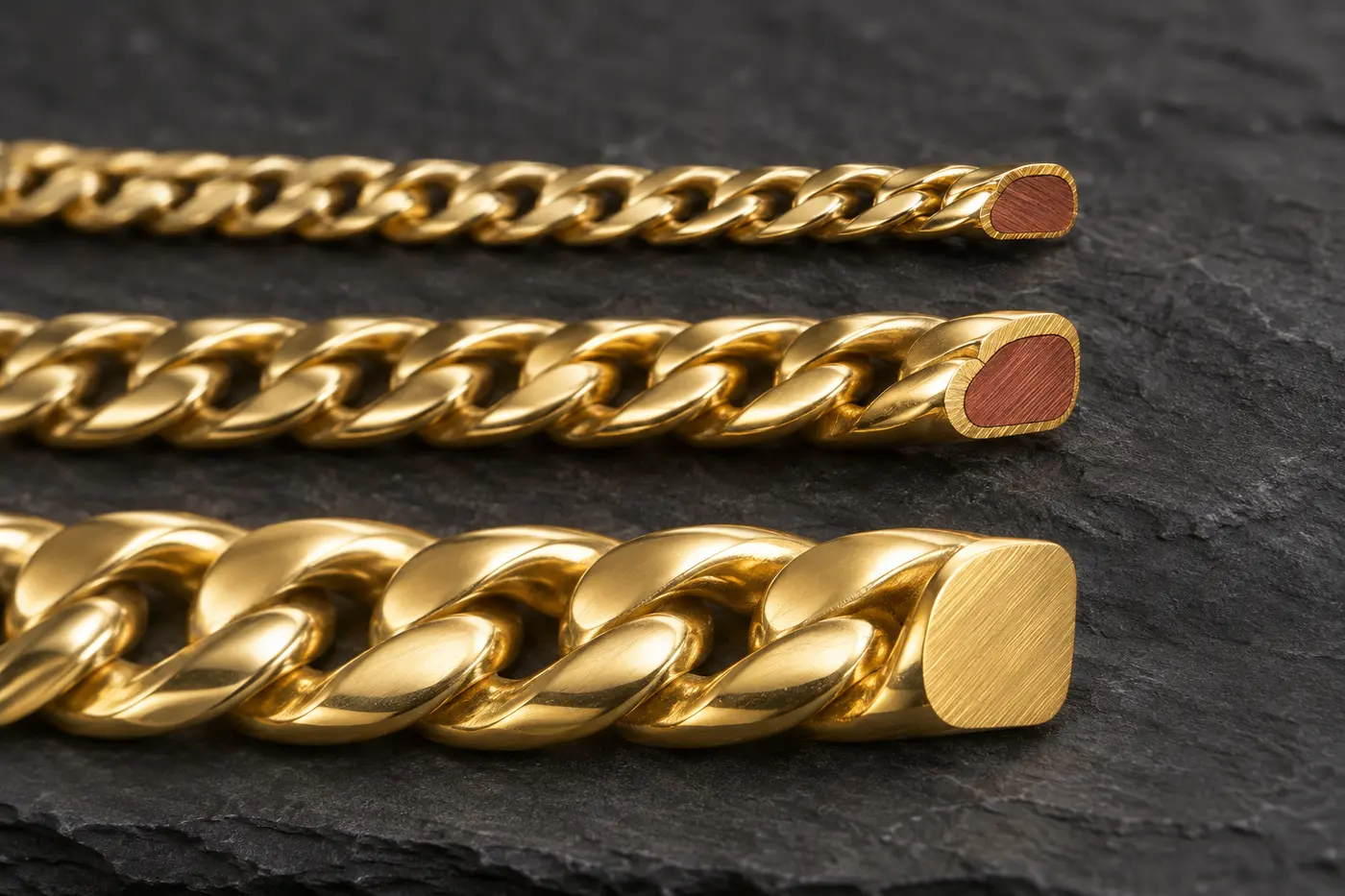
Vermeil is gold plating over sterling silver. It sounds more premium, but it is still plating, and when it wears the silver underneath tarnishes. Gold filled is far more durable than ordinary plating, but you still can't polish deeply or solder it without exposing the base.
How long does gold plating last, and why does it wear off?
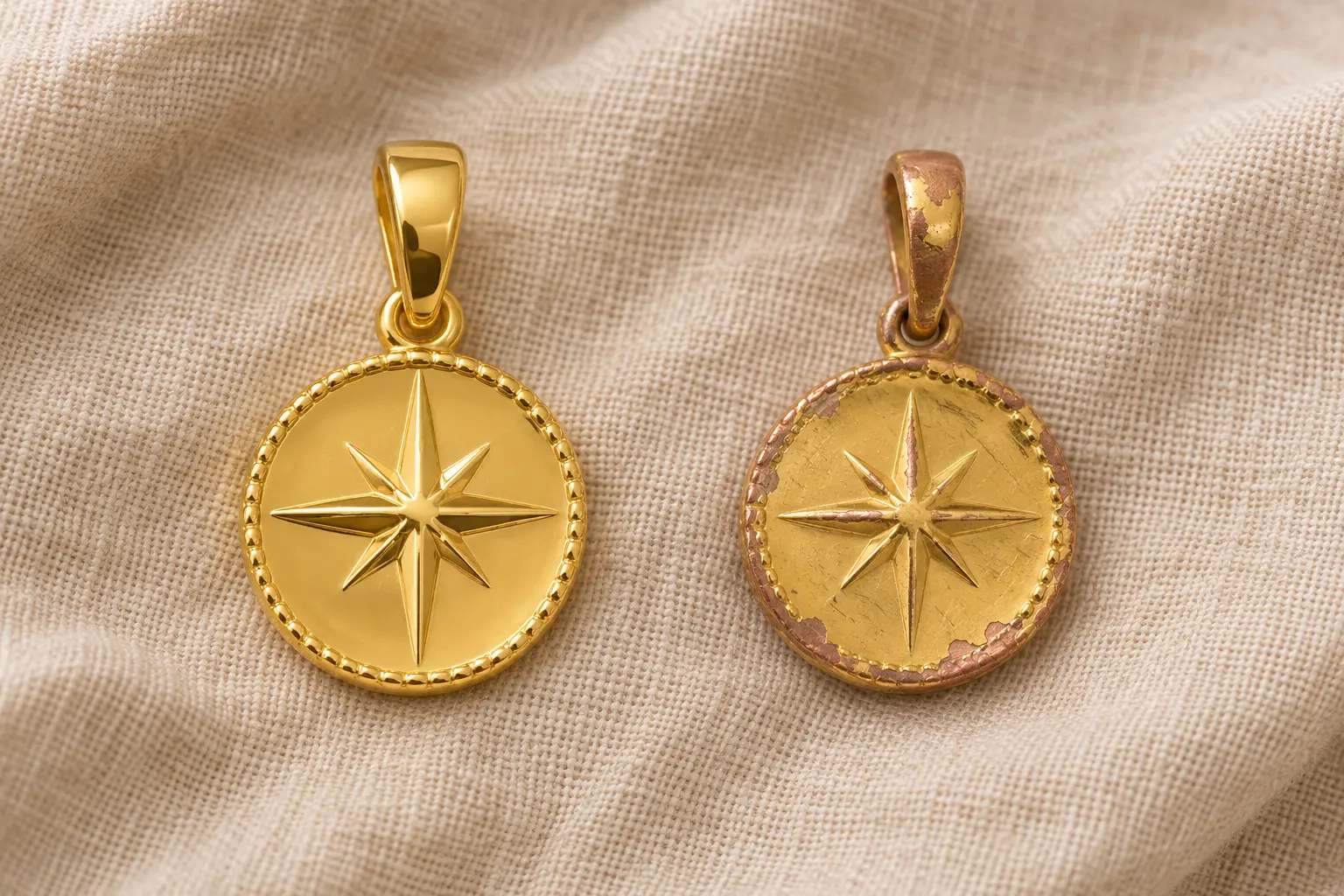
Gold plating doesn't really peel like paint. It wears away gradually from friction, and once the thin layer is gone the brass underneath shows as a brownish-pink patch. It starts where the piece touches the most: the underside of a ring, the edges of a pendant, the clasp and links of a chain.
| Piece | Wear | Roughly |
|---|---|---|
| Everyday ring | Very high – touches everything | A few months |
| Bracelet | High | Six months to a year |
| Necklace and pendant | Medium | One to two years |
| Earrings | Low | Two years or more |
What shortens plating's life: sweat, perfume, lotions, seawater, chlorine and cleaning products. A jeweler can re-plate, but on an inexpensive piece it often costs nearly as much as the piece, and the new plating wears at the same rate.
Rhodium plating on white gold is a different thing
Solid white gold is also plated, with rhodium, which confuses many people. The difference is fundamental: under the rhodium is solid white gold. When the rhodium wears, a soft champagne tone of gold shows, not brass, and the piece is worth exactly the same. Re-plating brings the white back easily. Details in our white gold guide.
How much does each option cost?
In a plated piece the gold itself is worth a few shekels. Most of the price is labor, branding and marketing, so a branded plated piece can cost hundreds of shekels and still contain almost no gold. Gold filled has more gold and is priced accordingly. Solid gold starts from the gold weight in grams, plus labor, stones and VAT, as explained in our gold jewelry pricing guide.
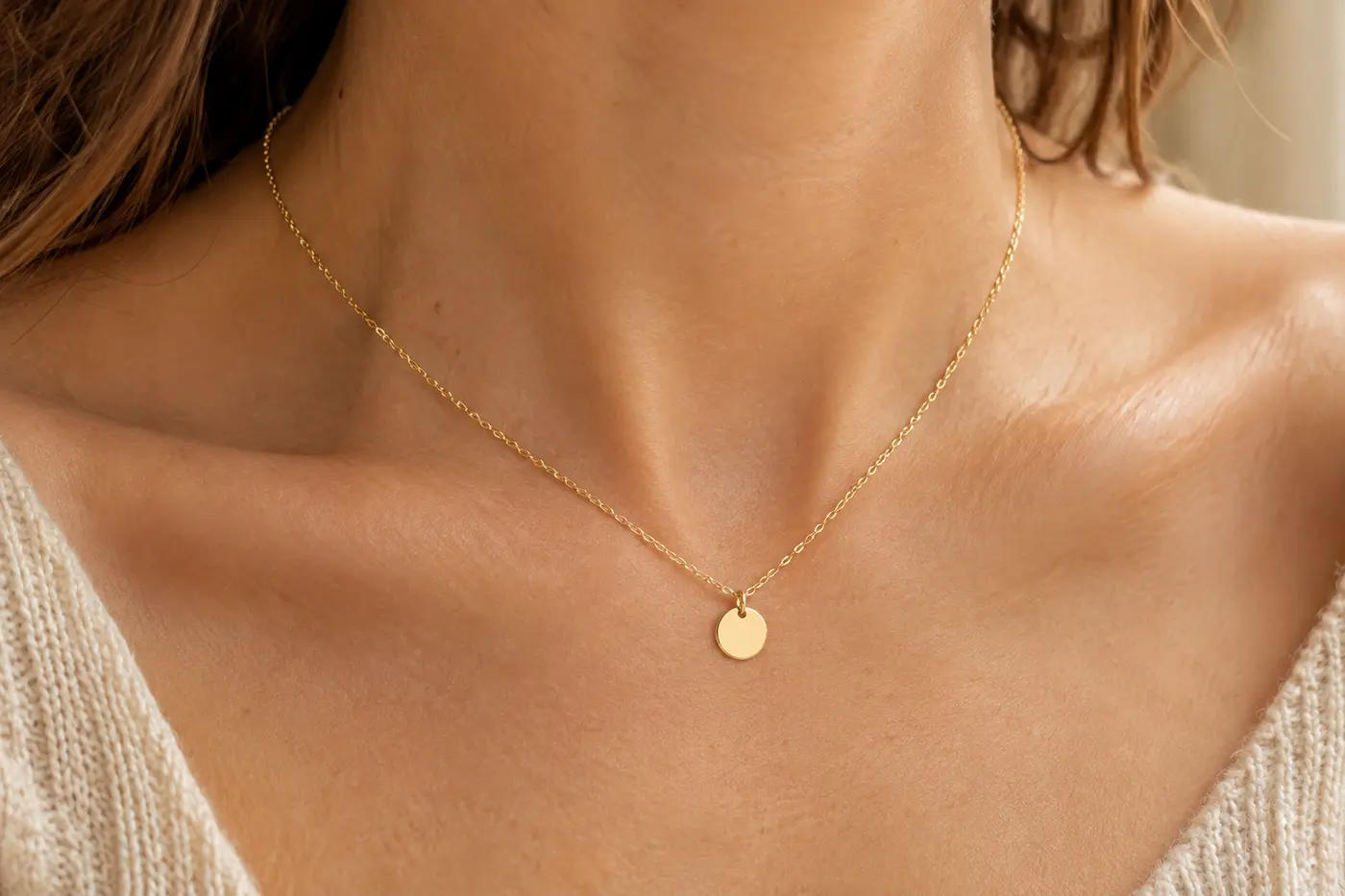
The key point: delicate pieces don't weigh much. A fine chain weighs 2–5 g, a name necklace 2–4 g and a pair of stud earrings 1–2 g. So a delicate solid 14K piece costs more than plating, but the gap is smaller than most people assume.
Is solid 14K worth paying more for than plating?
According to our 2026 custom jewelry in Israel report, 44% of our designers chose a ₪1,000–2,000 budget. In that range, people often weigh a branded plated piece against a light solid gold one. The answer depends mostly on how the piece will be worn:
| Piece | Recommendation | Why |
|---|---|---|
| Everyday ring | Solid gold | Plating on a ring wears through in months |
| Name necklace or necklace with the kids' names | Solid gold, a light design is fine | Worn for years, and the engraving has to last |
| Bat mitzvah gift | Solid 14K | The first "grown-up" piece is meant to stay |
| Fashion earrings for an event | Plating is enough | Worn rarely, little wear |
| A trend piece you'll replace next season | Plating is enough | No point paying for years of durability |
Do the math over time: a ₪400 plated piece replaced every 18 months adds up to ₪1,200–1,600 over five years, and at the end you're left with nothing. A solid gold piece costs more on the day you buy it, but you never replace it, and its gold keeps its value.
How to tell gold plated from solid gold
- Look for a stamp. Solid gold is usually stamped 585 (14K) or 750 (18K). Plated pieces may say GP, GEP or HGE (plated), RGP or GF (gold filled), or just 925 (silver, possibly vermeil).
- Check the edges. Brownish-pink or grey wear on corners, the clasp or inside a ring is a clear sign of plating.
- Mind the price. "Gold" jewelry for a few dozen shekels is almost certainly plated.
- Ask a jeweler to test it. An acid test or an XRF reader gives an exact answer in minutes.
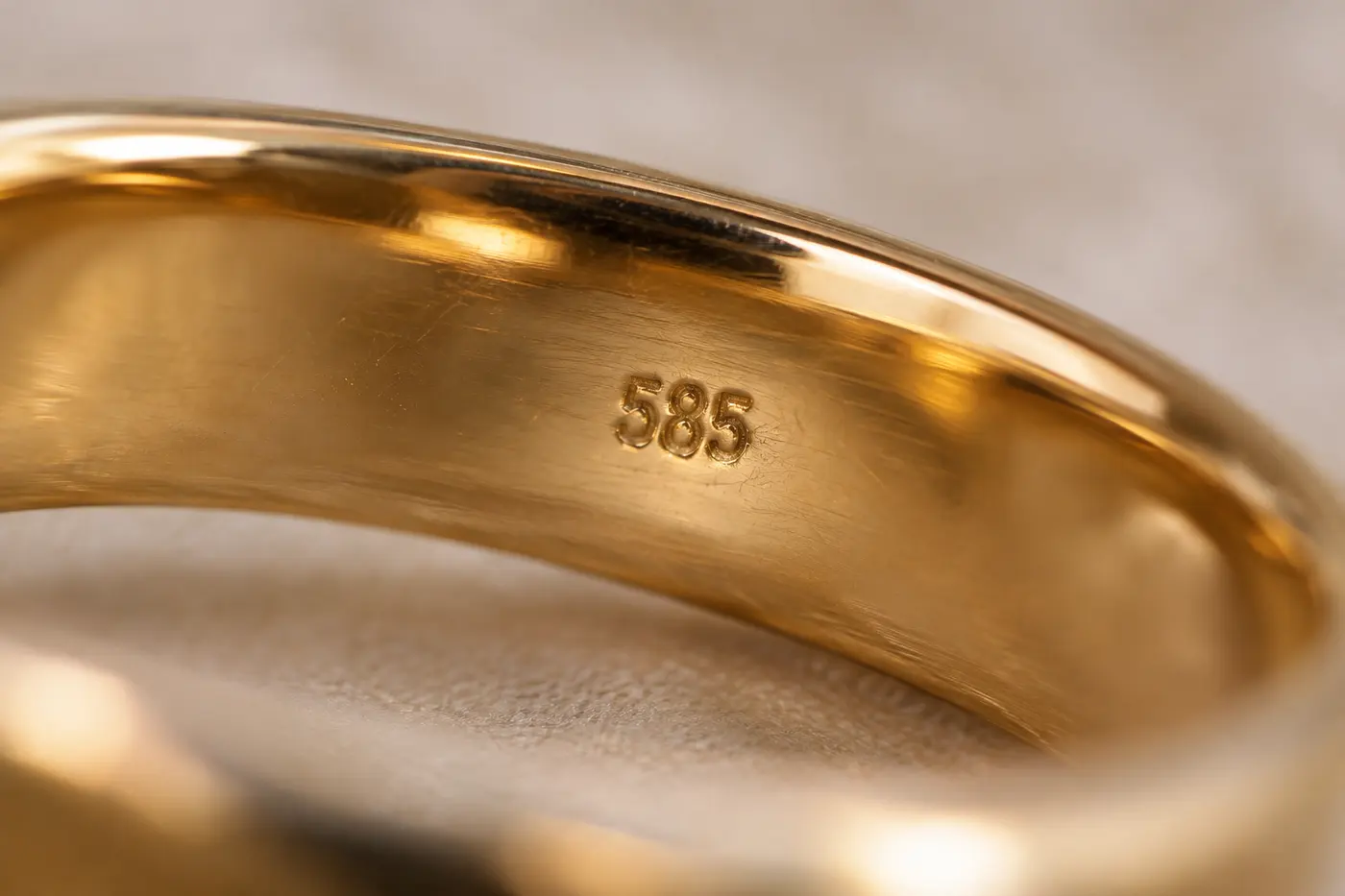
What about the magnet test? Gold isn't magnetic, but neither are brass or silver. A magnet can catch a crude fake with an iron core, but it can't tell plated brass from solid gold. What the numbers on the stamp mean is covered in our 14K vs 18K gold guide.
How to clean gold plated jewelry without ruining it
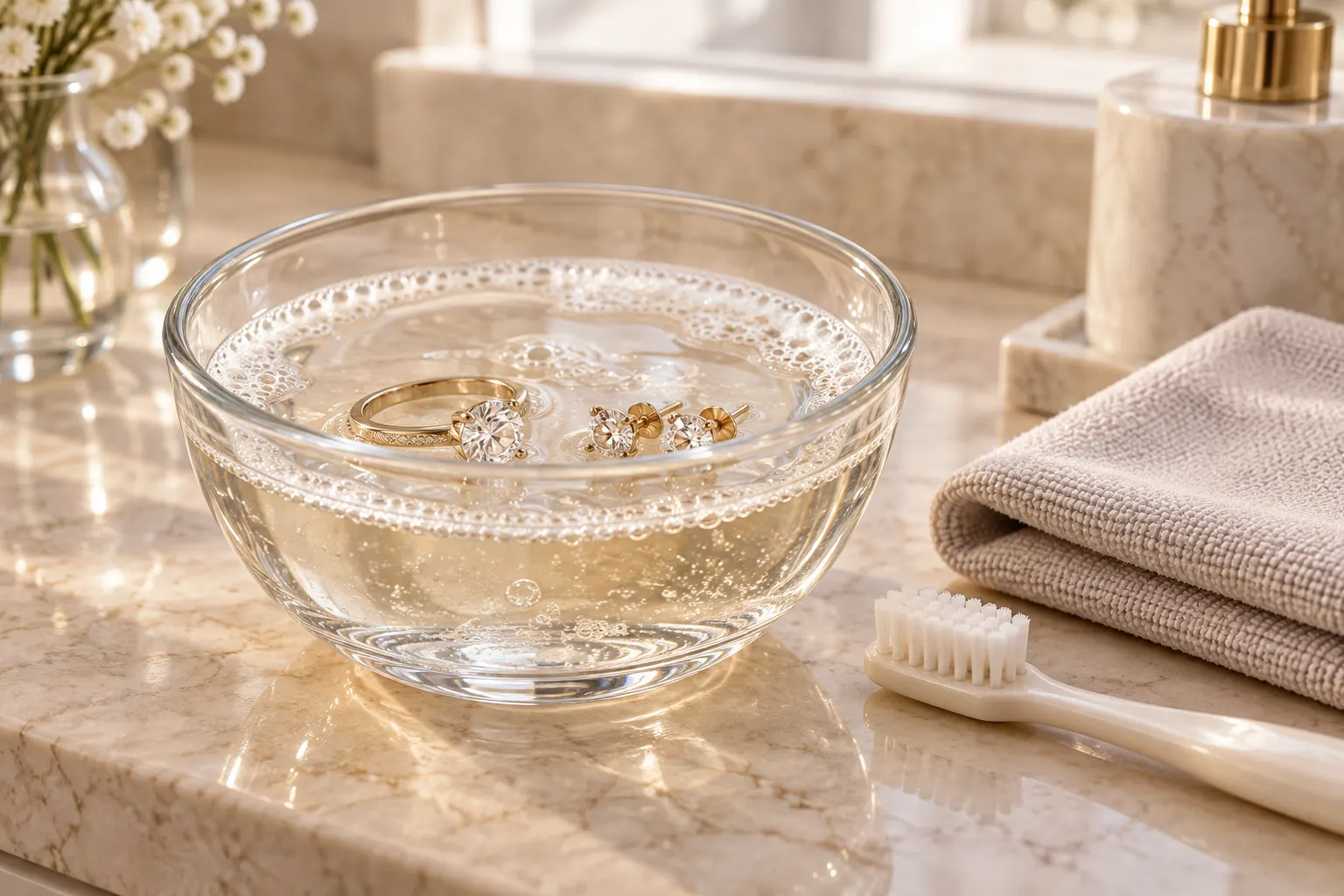
- Warm water and a drop of mild dish soap, wiped gently with fingers or a soft cloth. No long soaks.
- No polishing cloth with polishing compound – every use removes a little more plating.
- No baking soda, toothpaste, vinegar or jewelry-cleaner dips.
- Dry completely before storing, and keep it separate so other pieces don't scratch it.
Solid gold takes much more: you can polish it, have it professionally refinished and clean it thoroughly. All methods are in our gold jewelry cleaning guide.
What we make at Gold AI
We only make solid gold, 14K or 18K, in yellow, white and rose, never gold plating. Our gold price per gram is the same for every gold color, so the price is set mainly by weight, complexity and stones. Most pieces start around ₪2,000, and delicate pieces like fine gold necklaces and small earrings usually sit at the lower end of the range. Every piece is handmade within about 2–3 weeks of design approval.
Looking for a gift idea? See our jewelry gift guide for every occasion.