White Gold: What It Is, Why It Turns Yellow and How to Care for It
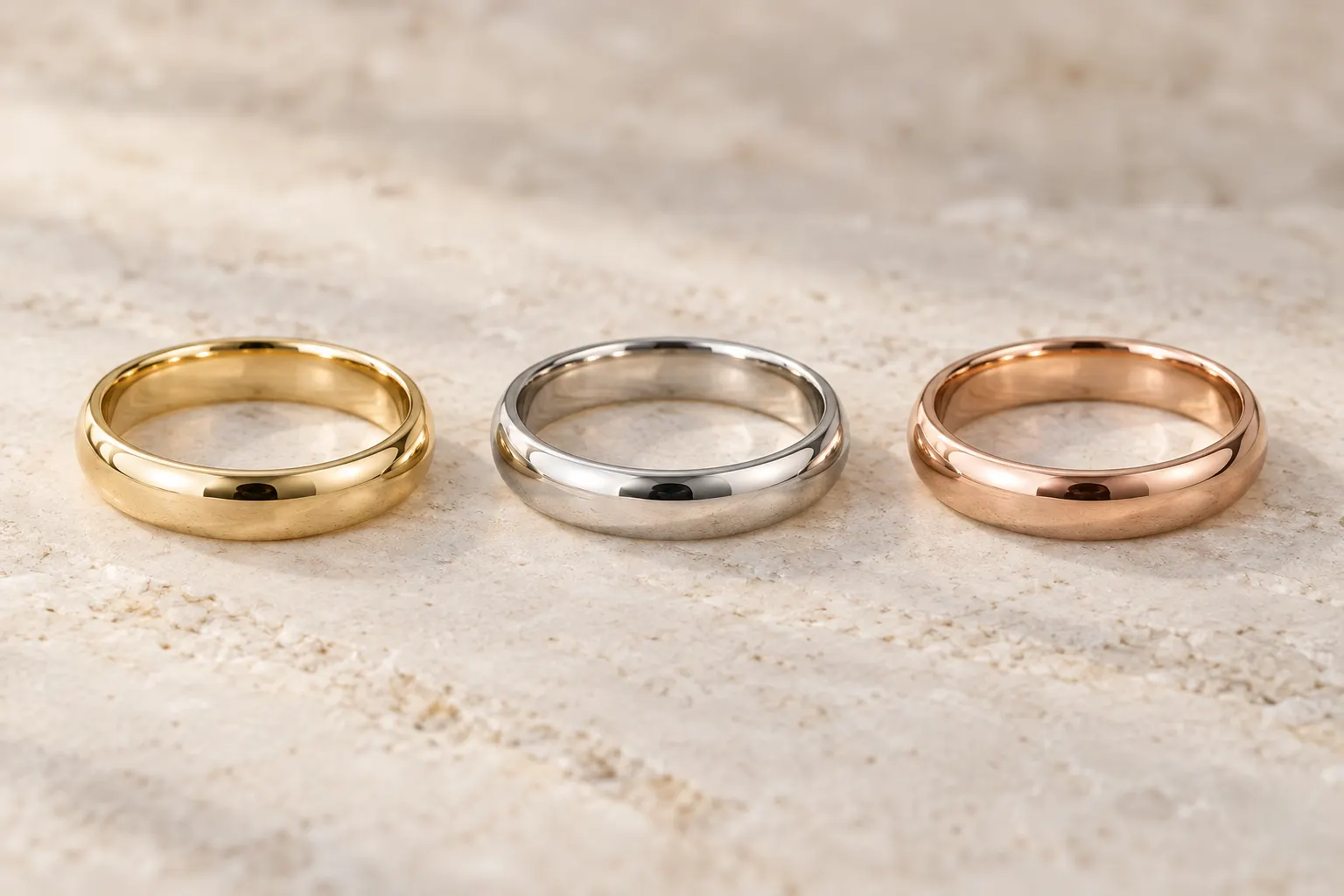
White gold is real gold mixed with pale metals such as palladium, nickel or silver, then plated with a thin layer of rhodium that gives it its bright white shine. Over time the plating wears and the warmer tone of the alloy shows through, which is why white gold "turns yellow". Re-plating with rhodium at a jeweler makes it look new again.
What is white gold?
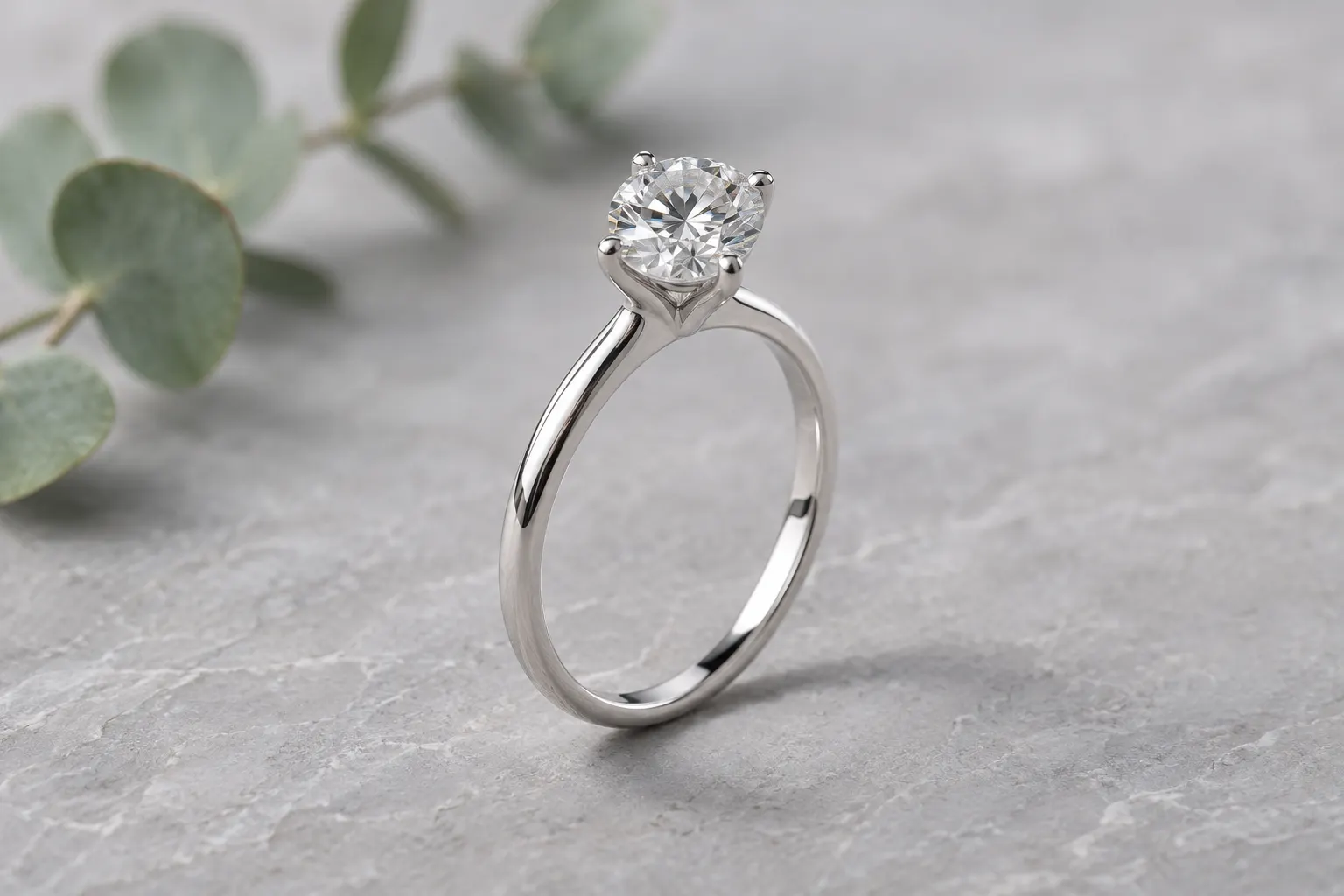
Pure gold (24K) is yellow, and there is no such thing as pure white gold. White gold is an alloy: gold mixed with pale metals to tone down the yellow. 14K white gold is 58.5% gold and 18K white gold is 75% gold. The rest are the "whitening" metals.
- Palladium – a precious metal from the platinum family. Gives a clean grey-white tone and is considered skin-friendly.
- Nickel – whitens efficiently and costs less, but it is one of the most common causes of contact allergy.
- Silver and copper – in small amounts, to improve workability and adjust hardness.
Even after alloying, the metal keeps a slight warm, greyish-champagne tone. That is why almost every white gold piece is finished with rhodium plating, a very white, bright metal from the platinum family. The plating is what gives white gold the cool, mirror-like look people know.
Why does white gold turn yellow?
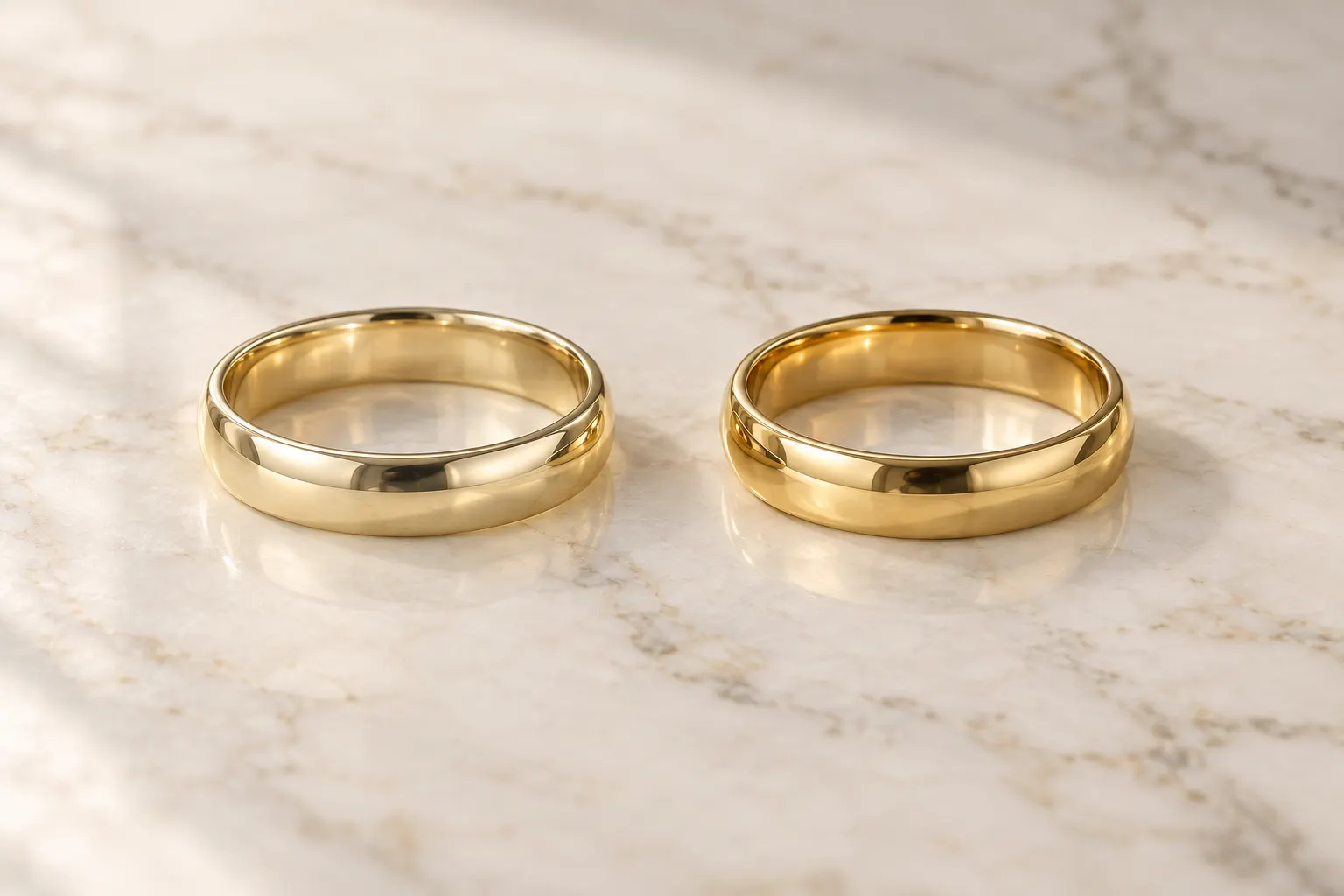
Rhodium plating is very thin, and on a ring worn every day it wears gradually from friction, small knocks and contact with surfaces. Wherever it wears through, the warmer alloy underneath shows. It usually starts on the underside of the ring, which touches the most, and looks like a soft cream or champagne tone.
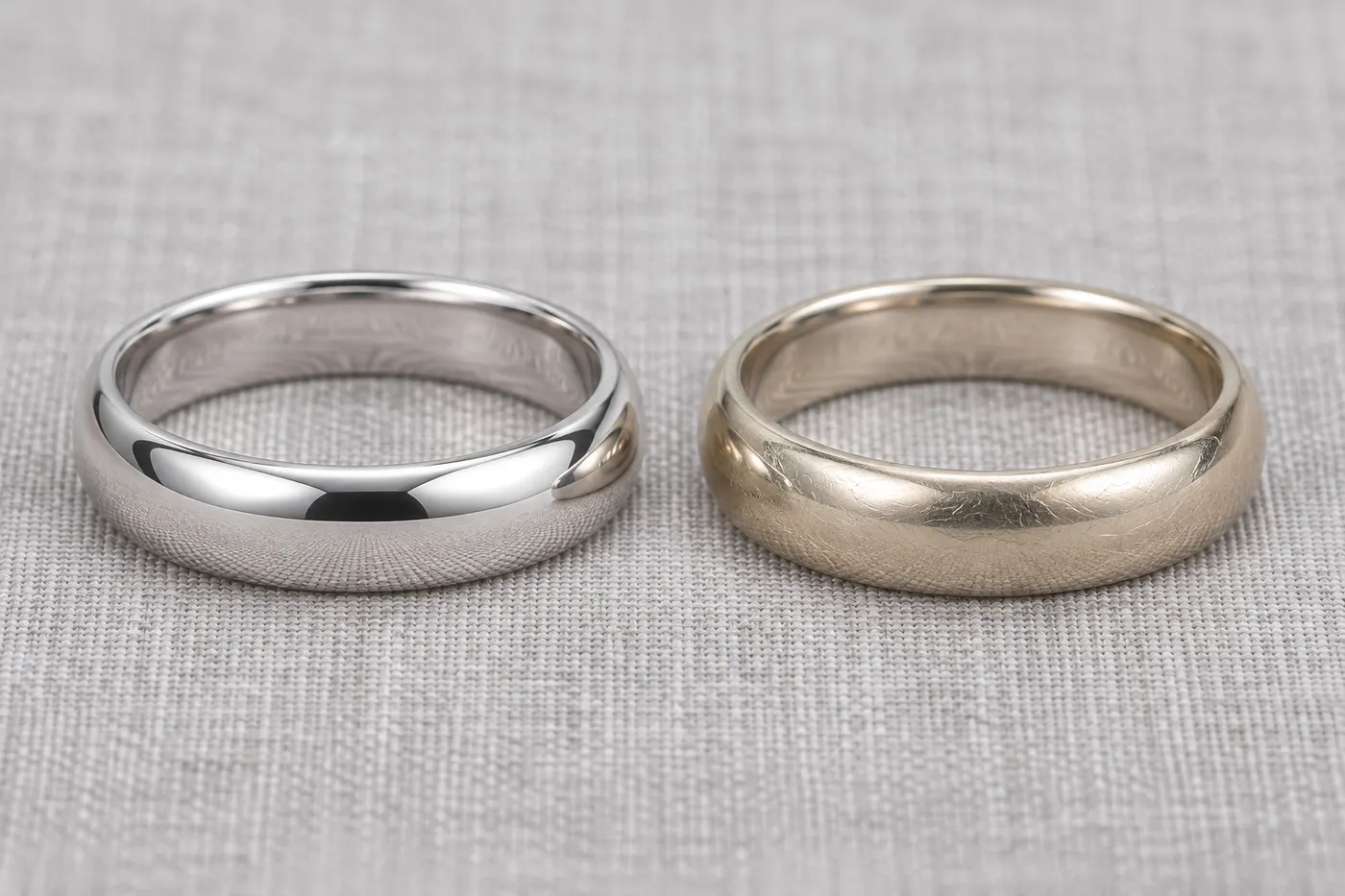
It is not a defect and it does not mean the gold is fake. It is simply the real metal under the plating. How fast it happens depends mostly on the piece:
| Piece | Wear exposure | Re-plate roughly |
|---|---|---|
| Engagement or wedding ring | High – touches everything | Every 1–2 years |
| Bracelet | Medium–high | About every 2 years |
| Necklace and pendant | Low | Every few years |
| Earrings | Very low | Rarely |
How to make white gold white again
The fix is rhodium re-plating at a jeweler. It is quick: the piece is cleaned thoroughly, polished, and dipped in a rhodium bath with an electric current that deposits a fresh layer. It comes back as white and bright as the day you got it.
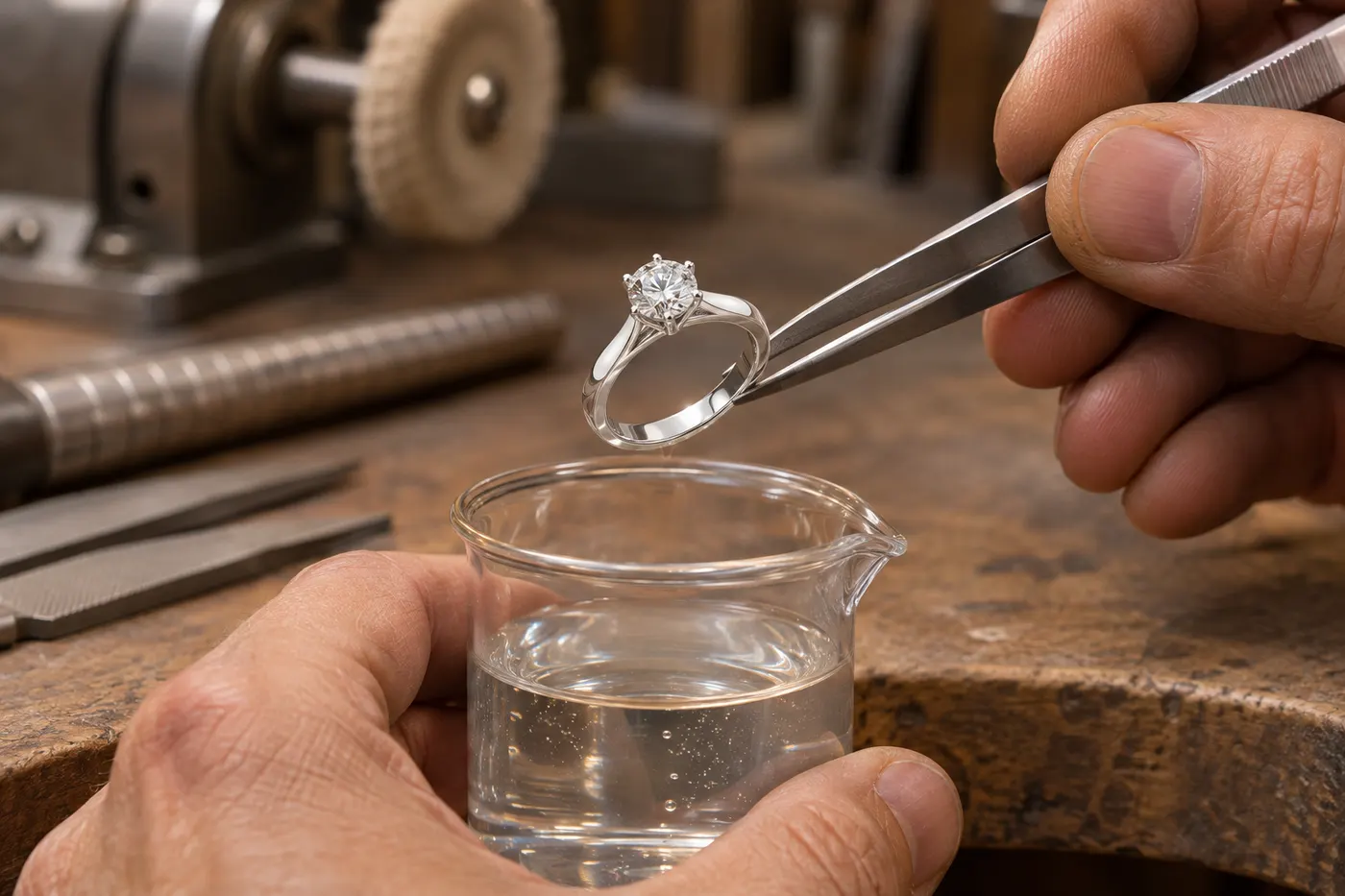
Note that polishing removes a microscopic layer of metal, so it should not be done too often. If you would rather skip the upkeep, choose yellow or rose gold, whose color is the metal itself rather than a plating.
How to clean white gold at home
Cleaning white gold is like cleaning any gold jewelry, with one priority: protect the plating. The safe method:
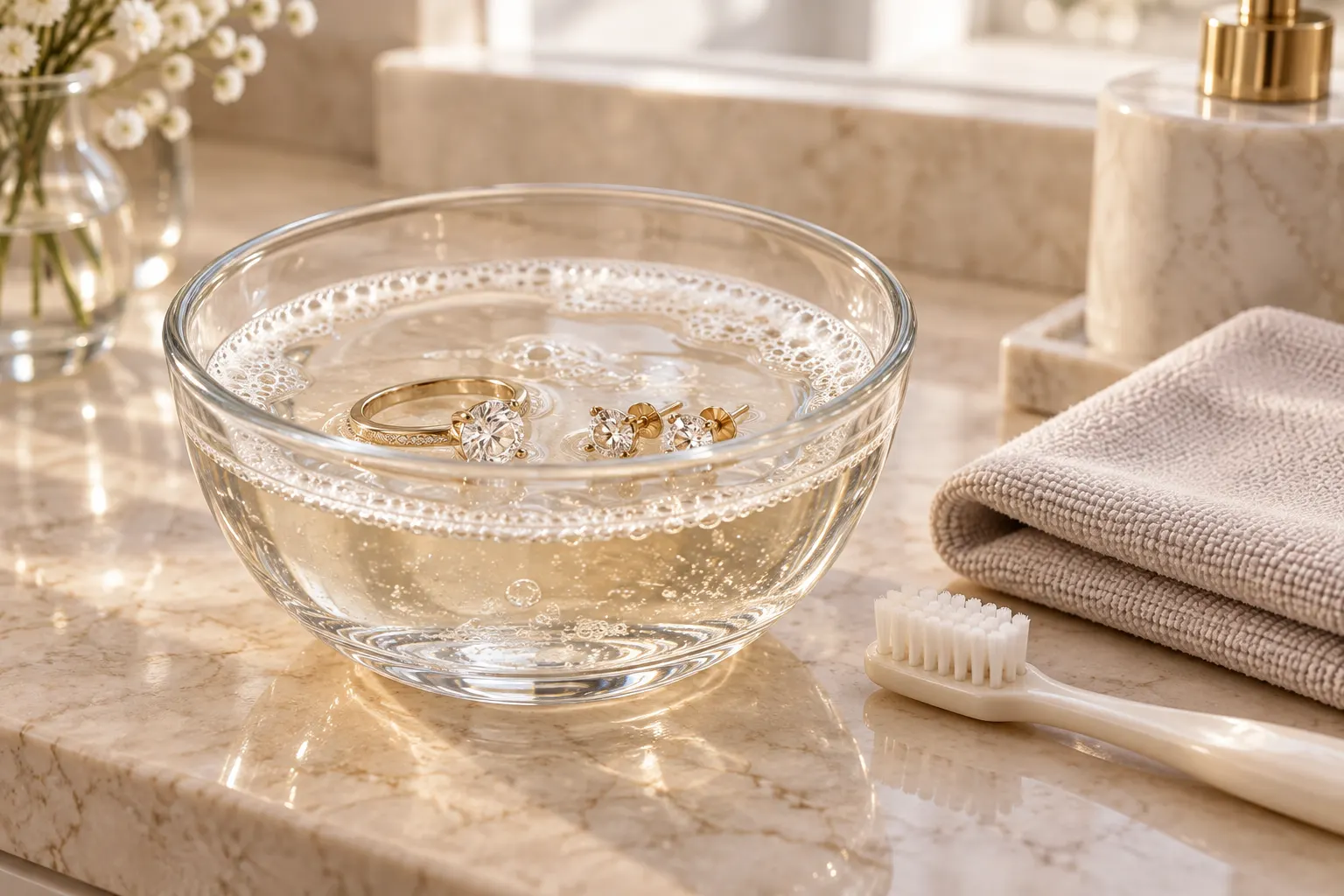
- Fill a bowl with warm water and a few drops of mild dish soap.
- Soak the piece for 15–20 minutes.
- Brush gently with a soft toothbrush, especially under stones.
- Rinse in clean water and dry with a soft, lint-free cloth.
What to avoid: toothpaste, baking soda, scouring powders and abrasive cloths. They scratch the rhodium and shorten its life. Chlorine, in pools or cleaning products, also attacks gold alloys, so take your jewelry off first. Everything else, including storage, is in our gold jewelry cleaning guide.
White gold, platinum or silver?
All three look similar when new, but they differ a lot in durability, upkeep and price:
| White gold | Platinum | Silver | |
|---|---|---|---|
| Color | Bright white thanks to rhodium | Naturally greyish white | Greyish white, tarnishes over time |
| Upkeep | Re-plating every year to few years | Occasional polishing | Regular cleaning of tarnish |
| Durability | Hard and durable | Dense and heavy, wears to a soft patina | Soft, scratches and bends easily |
| Weight | Medium | Very heavy | Light |
| Price | Medium–high | Highest | Low |
For an engagement or wedding ring worn every day, white gold is the common balance: white and bright, durable, and more accessible than platinum. Silver suits fashion jewelry better than a piece meant to last decades.
White gold and diamonds
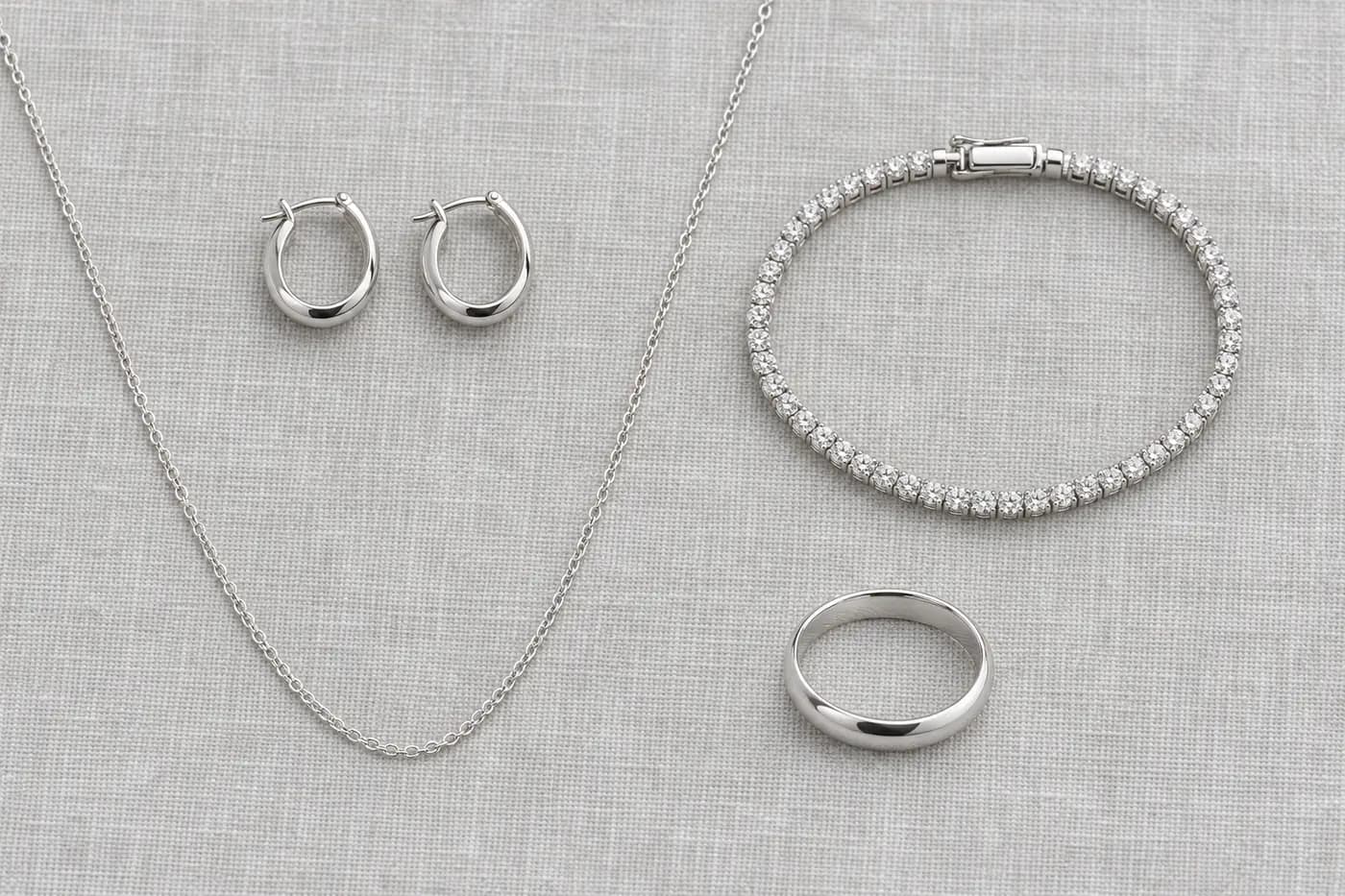
White gold brings out the whiteness of a diamond, which is why it is a popular choice for engagement rings and tennis bracelets. Because the setting is white, a diamond with a slightly lower color grade still looks white, which is a way to save without losing the look. Choosing color and clarity is explained in our diamond 4Cs guide.
A common trick is to combine both: a yellow gold band with a white gold head (the part that holds the stone). You get a warm-toned ring and a diamond that looks bright white.
Nickel sensitivity and white gold
Some white gold alloys contain nickel. As long as the rhodium plating is intact, skin usually doesn't touch the alloy, but once it wears, sensitive people may react with itching or redness. If you have a known nickel sensitivity, mention it when you request a quote so we can check a nickel-free alloy, for example palladium-based, or choose yellow or rose gold.
How popular is white gold in Israel?
Less than you might think. According to our 2026 custom jewelry in Israel report, 80% of our designers chose yellow gold, and white gold came up in the descriptions of 6.7% of designers writing in Hebrew. Still, for diamond engagement rings, white gold remains a classic.
With us, the gold price per gram is the same for yellow, white and rose gold. Price differences between pieces come from weight, stones and labor, as explained in our gold jewelry pricing guide.
For more inspiration, browse engagement rings and wedding rings.