Tennis Bracelet Guide: How to Choose a Diamond Tennis Bracelet
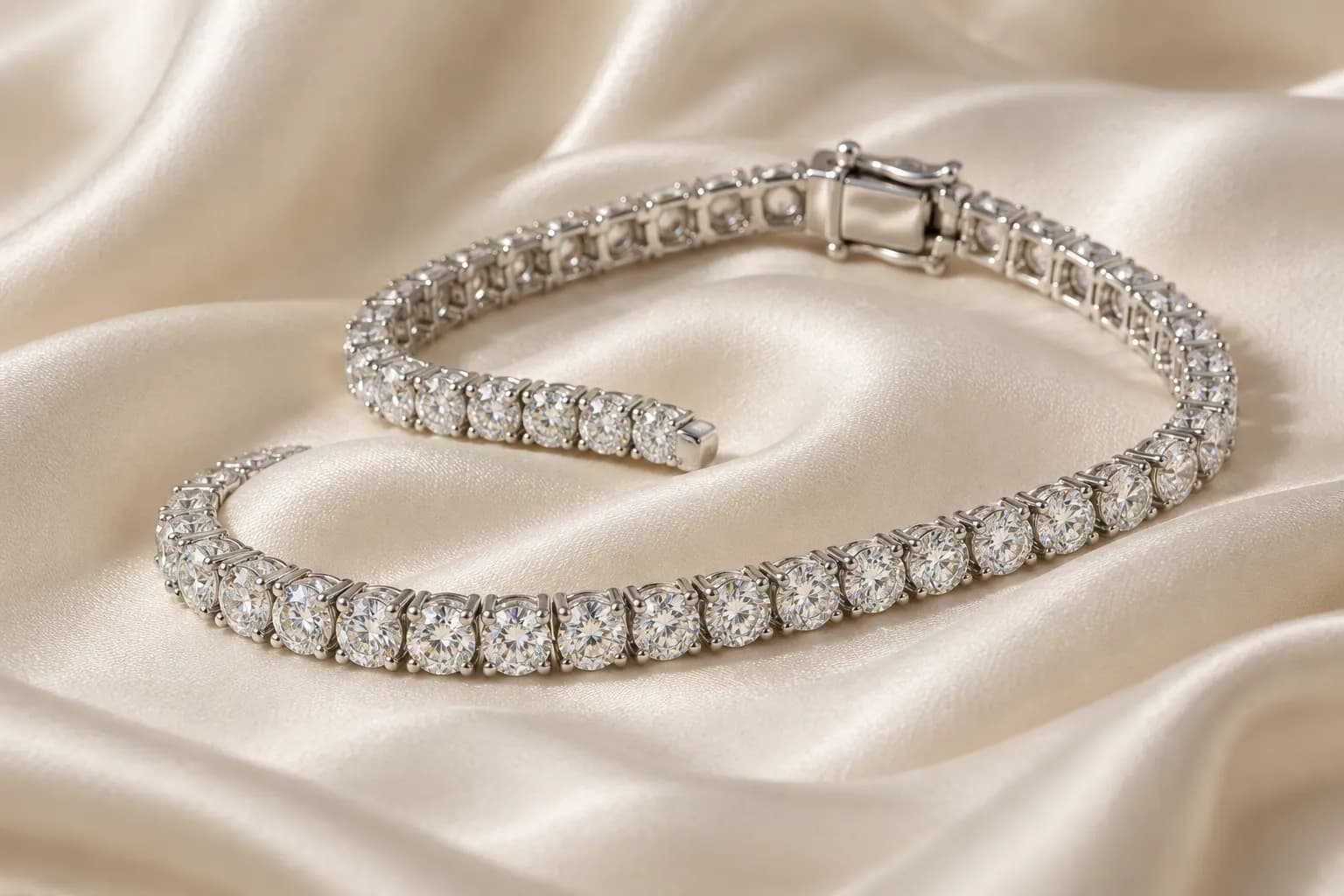
A tennis bracelet is a flexible bracelet made of one continuous line of stones, usually matched diamonds set in gold. To choose one, decide on the total carat weight (most fall between 1 and 5 carats), the stone size, the setting style and the gold color — and insist on a clasp with a secondary safety lock.
Why is it called a tennis bracelet?
Long known simply as a "line bracelet", the style got its now-famous name from a moment at the 1987 US Open: Chris Evert's diamond bracelet came undone during a match, and she asked to pause play so she could find it. The moment drew a lot of attention, and the name "tennis bracelet" stuck. The story also carries a useful lesson — on this bracelet, the clasp is everything.
How many carats should a tennis bracelet be?
Total carat weight (TCW) is the combined weight of every stone in the bracelet. The same total can come from many small stones or fewer large ones, and that changes the look:
- Up to 1 carat — very delicate with a soft sparkle; great for daily wear and stacking.
- 2–3 carats — the most popular range. Clearly visible without feeling heavy.
- 4–5 carats — a bold piece for events and for anyone who loves serious sparkle.
- Over 5 carats — a statement bracelet with notably large stones.
The table below gives rough estimates for a bracelet of about 17–18 cm. Exact numbers depend on spacing and setting style.
| Stone diameter | Approx. weight per stone | Approx. number of stones | Approx. total carat weight |
|---|---|---|---|
| 1.7 mm | ~0.02 ct | 70–75 | ~1.5 ct |
| 2.0 mm | ~0.03 ct | 60–65 | ~2 ct |
| 2.5 mm | ~0.06 ct | 50–55 | ~3–3.5 ct |
| 3.0 mm | ~0.10 ct | 45–50 | ~4.5–5 ct |
| 4.0 mm | ~0.25 ct | 35–38 | ~8–9 ct |
With stones this small, you don't need top color and clarity grades — the eye can't tell the difference. What matters is consistency: every stone should match in tone and brilliance. More on grading in our diamond 4Cs guide.
Prong vs channel vs bezel settings
| Setting | Look | Pros | Cons |
|---|---|---|---|
| Prong (4-prong) | Maximum sparkle, lots of light | Brightest, classic look | Prongs can snag; needs periodic checks |
| Channel | Stones held between two gold walls | Smooth, snag-free, protects stones | Less light reaches stones, slightly less sparkle |
| Bezel | Each stone ringed in gold | Most secure and durable, modern look | Stones look smaller; more gold means higher cost |
For everyday wear, channel or bezel is the low-maintenance choice. If you want maximum fire, four-prong is the classic. For a broader look at setting styles, see our settings guide.
Lab-grown diamonds: the smart way to cut cost
A tennis bracelet holds dozens of stones, so the natural vs lab-grown decision has a big effect on price. Lab-grown diamonds are chemically and visually identical to mined ones and are usually significantly cheaper, so the same budget can buy a higher total carat weight. Gold AI works with natural conflict-free diamonds, with lab-grown available on request. Full comparison: lab-grown vs natural diamonds.
You can also go with colored gemstones — sapphire, emerald or ruby — for a colorful tennis bracelet, or alternate them with diamonds.
What's the safest clasp for a tennis bracelet?
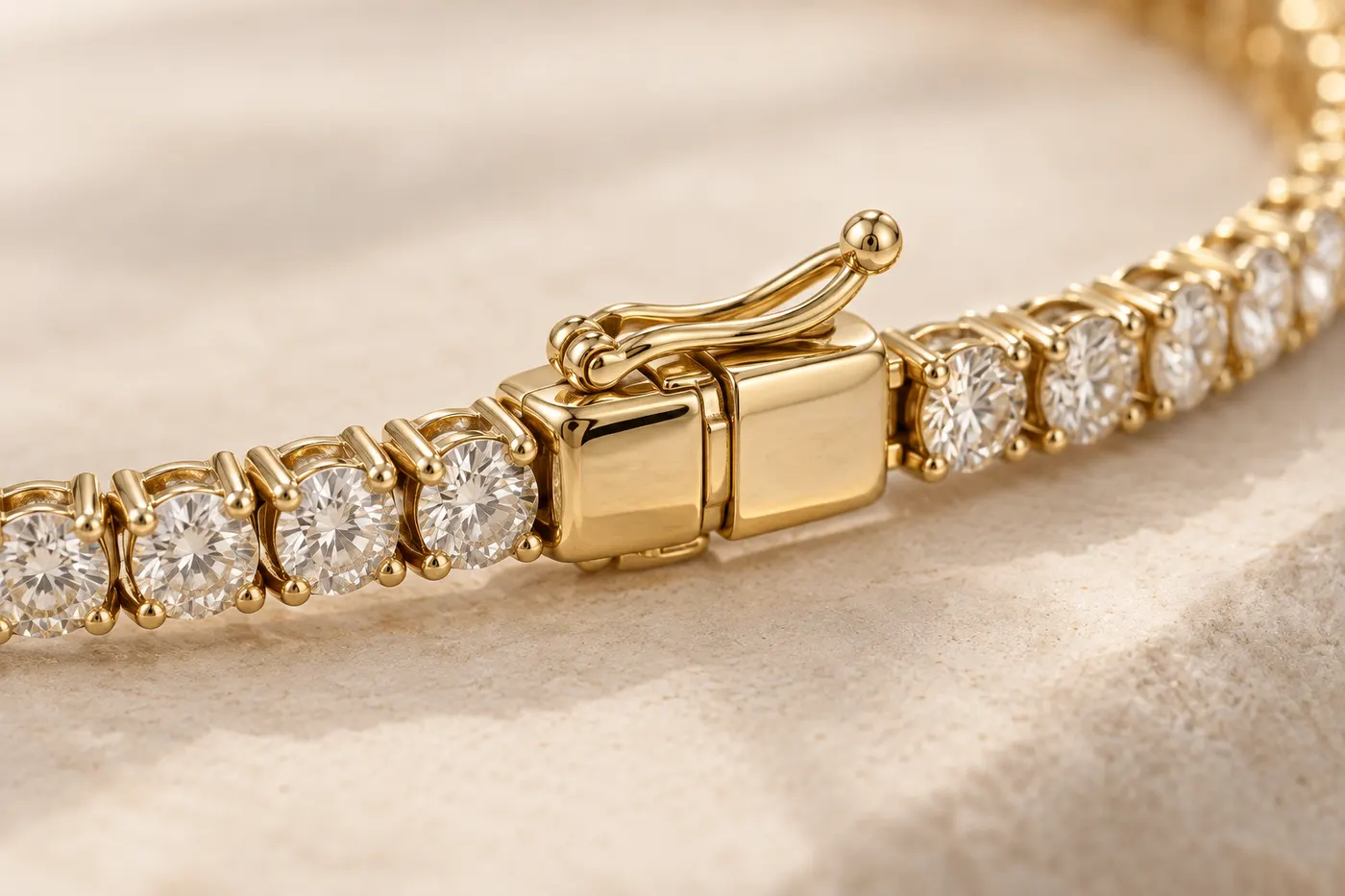
As Chris Evert found out, the clasp is the weak point. A well-made tennis bracelet uses a box clasp — a tongue that snaps into a small box — plus a secondary safety lock: a figure-8 latch on the side or a double safety catch. Even if the main clasp opens, the bracelet stays on. Check the clasp now and then, and if it opens too easily, have it repaired.
How to size a tennis bracelet
Measure your wrist with a soft tape just above the wrist bone, then add about 1–2 cm. Around 1 cm gives a snug fit; 2 cm gives a looser drape. A tennis bracelet shouldn't hang too loose, or it spins and takes more knocks. Common women's lengths are roughly 16–18 cm.
How much does a gold tennis bracelet cost?
There's no single price for a tennis bracelet, because it's driven mainly by:
- Total carat weight and stone quality — the biggest factor. A 5-carat bracelet costs far more than a 1-carat one.
- Natural or lab-grown — lab-grown diamonds bring the price down considerably.
- Gold weight — bezel settings and chunkier links use more gold; 14K vs 18K matters too.
- Setting labor — every stone is set by hand, and there are dozens of them.
- VAT — 18% on the final price.
The most accurate way to know is a quote on a specific design. For the full breakdown, read how gold jewelry is priced, and for design ideas browse gold bracelets.
At Gold AI you describe the bracelet, see photorealistic designs and get a personal quote over WhatsApp. It's handcrafted by expert goldsmiths at partner workshops in the Ramat Gan diamond exchange district in about 2–3 weeks, then shipped insured and tracked. For upkeep, see our gold jewelry care guide.