Gold Chain Types: A Guide to Links, Lengths and Thickness
The most common gold chain types are cable (rolo), box (Venetian), curb, Cuban, figaro, rope, snake, Singapore, paperclip and bead chains. For an everyday pendant, cable, box and rope chains are the safest choices, typically at 42–45 cm for women and about 1–2 mm thick.
Gold chain link types explained
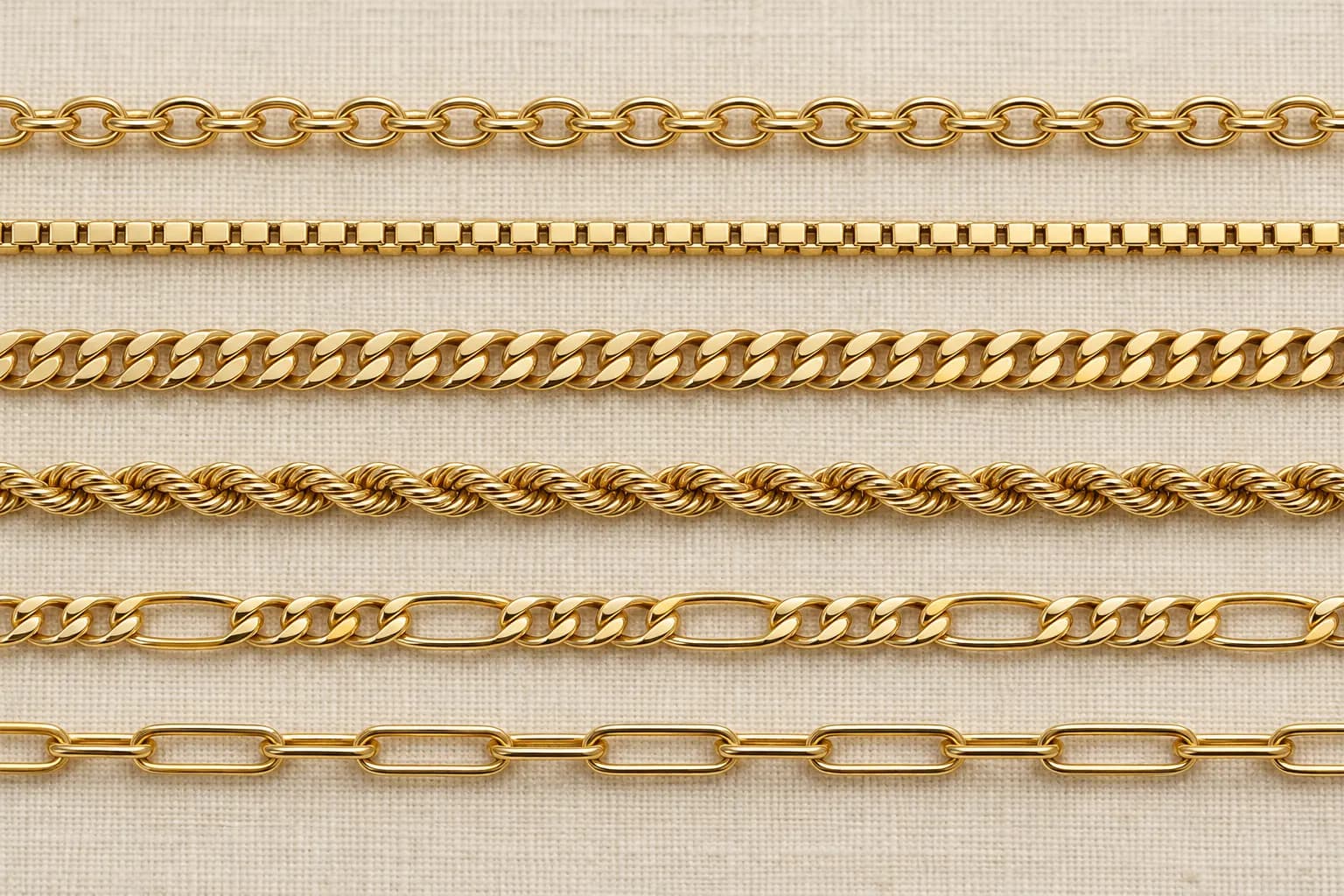
A link is the single unit of metal a chain is built from, and its shape determines the chain's look, flexibility and strength. These are the styles you'll meet most often:
- Cable / rolo: round or oval links interlocking one after another. The simplest classic, strong and easy to repair. Rolo usually refers to the version with rounder, chunkier links.
- Box / Venetian: square links that form a row of tiny cubes. Stable, bright and excellent for pendants. Venetian is often used for a fine, delicate version of the box chain.
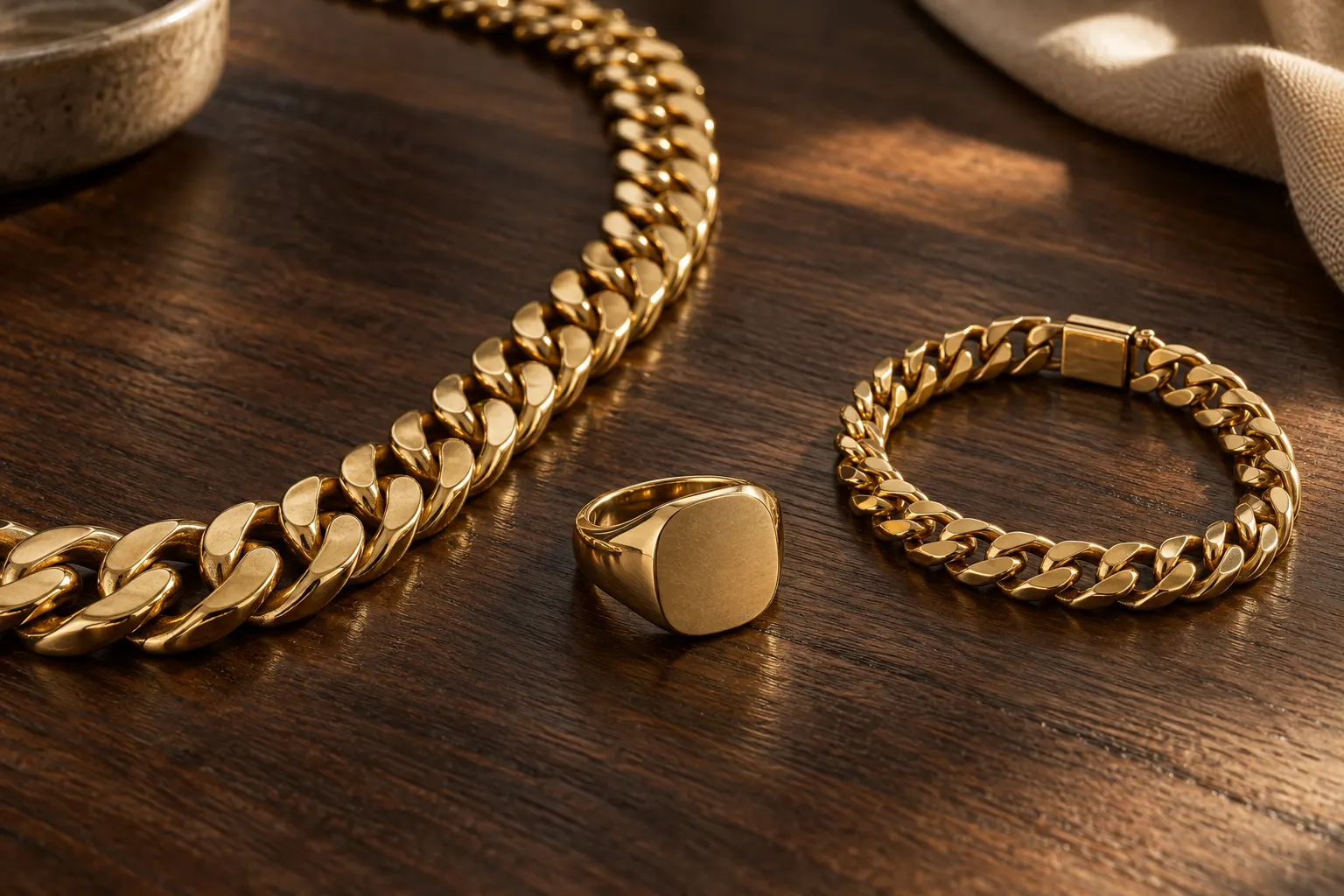
- Curb: flattened, slightly twisted links that lie flat against the skin. Strong and very common in bracelets and men's chains.
- Cuban: a thick, heavy take on the curb, with rounded, tightly packed links. Usually worn on its own, without a pendant, and popular in men's jewelry.
- Figaro: a repeating pattern of several short links followed by one long link (often 3:1). A classic Italian look and fairly strong.
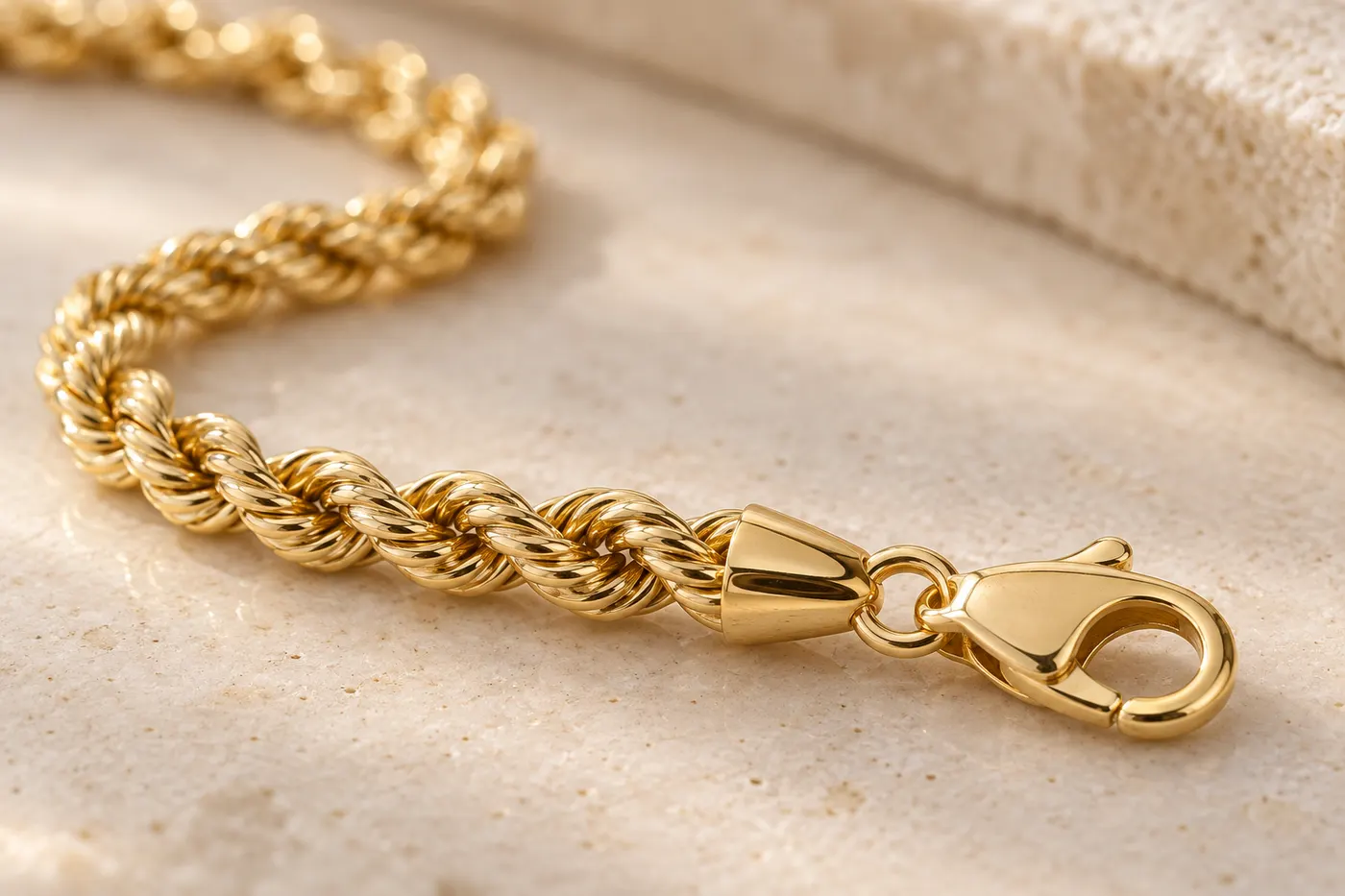
- Rope: small links twisted together like rope, catching light from every angle. Very durable at medium thickness.
- Snake: a smooth, flexible tube made of tightly fitted plates. Liquid and luxurious, but if it kinks it's very hard to repair.
- Singapore: twisted links that form a sparkling, fluid wave. Beautiful with light pendants, but fine versions tangle easily.
- Paperclip: long, flat, elongated links like paper clips. Very on-trend and great for layering, but a pendant will slide along it.
- Bead / ball: small beads along a wire. Simple and light, but less resistant to tugging.
What is the strongest type of gold chain?
| Link type | Durability | Holds a pendant? | Notes |
|---|---|---|---|
| Cable / rolo | High | Yes, excellent | Easiest to repair |
| Box / Venetian | High | Yes, excellent | Stable, doesn't twist |
| Curb | High | Yes | Lies flat |
| Cuban | Very high | Usually worn alone | Heavy; lots of gold |
| Figaro | Medium-high | Yes | Check the bail fits the long links |
| Rope | High (medium width) | Yes, excellent | Lots of sparkle |
| Snake | Medium | Light pendants only | Kinks leave permanent marks |
| Singapore | Medium | Light pendants | Very fine versions tangle |
| Paperclip | Medium | Yes, but it slides | Can snag on clothing |
| Bead / ball | Low-medium | Light pendants | Simple and relatively inexpensive |
Whether a chain is solid or hollow matters too. Hollow chains are lighter and cheaper, but they dent and break more easily and are often hard to repair. For an everyday chain with a pendant, solid gold is the safe choice. Gold weight is also one of the main price drivers; see how gold jewelry is priced.
What length chain should I get? Length chart
| Length | Where it sits | Best for |
|---|---|---|
| 40 cm (16″) | Base of the neck, close to the body | Delicate chains, small pendants, top layer |
| 42 cm (16.5″) | Just below the base of the neck | Name necklaces, everyday pendants |
| 45 cm (18″) | On the collarbone | The most popular women's pendant length |
| 50 cm (20″) | Just below the collarbone | Larger pendants, second layer |
| 55 cm (22″) | Above the neckline of most tops | Men's chains, third layer |
| 60 cm (24″) | Mid-chest | Men's chains, worn over clothing |
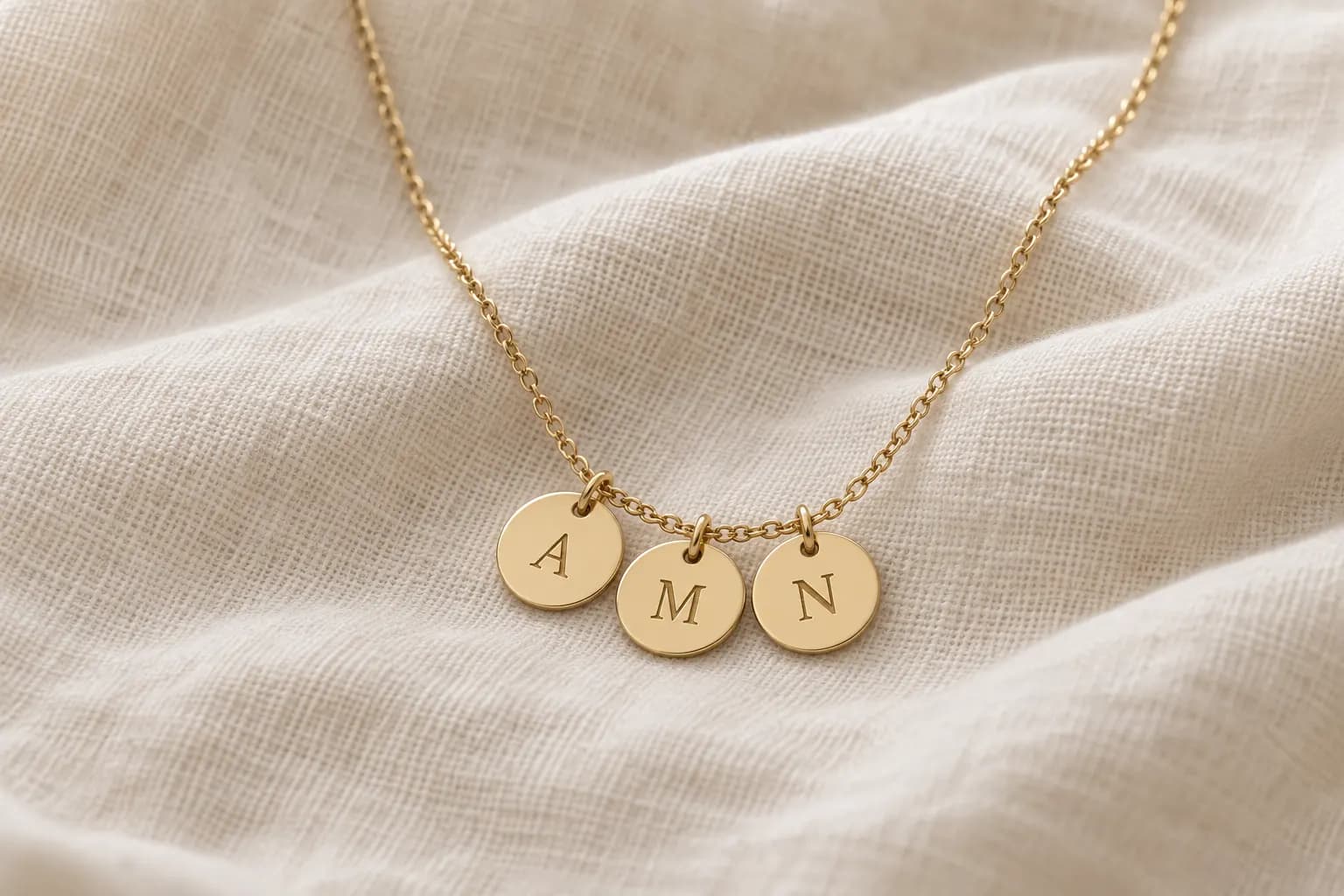
These are estimates: a larger neck makes any chain sit higher. The easiest test is to drape a string of the target length around your neck and check in a mirror. You can also ask for an extra jump ring so the chain closes at two lengths, say 42 and 45 cm. Name necklaces are most often worn at 42–45 cm; see also our post on the mother's necklace with kids' names.
How thick should a gold chain be?
- 0.8–1.2 mm: very delicate, for a small pendant or layering; almost a “thread of gold”.
- 1.5–2.5 mm: the most common everyday width for women; holds a medium pendant and has real presence.
- 3–5 mm: a chain that stands on its own without a pendant; common in curb, rope and figaro.
- 6 mm and up: statement territory, mostly Cuban and curb chains for men. More in our guide to men's gold jewelry.
Rule of thumb: the heavier the pendant, the thicker and stronger the chain should be. A large pendant on a very fine chain will flip, drag the clasp to the front and can eventually tear a link.
Types of chain clasps
- Lobster clasp: the most common and secure, a claw-shaped catch opened with a small lever. Easy to work one-handed.
- Spring ring: a round ring with a spring-loaded pin. Common on fine chains, small and discreet, but fiddly with short nails.
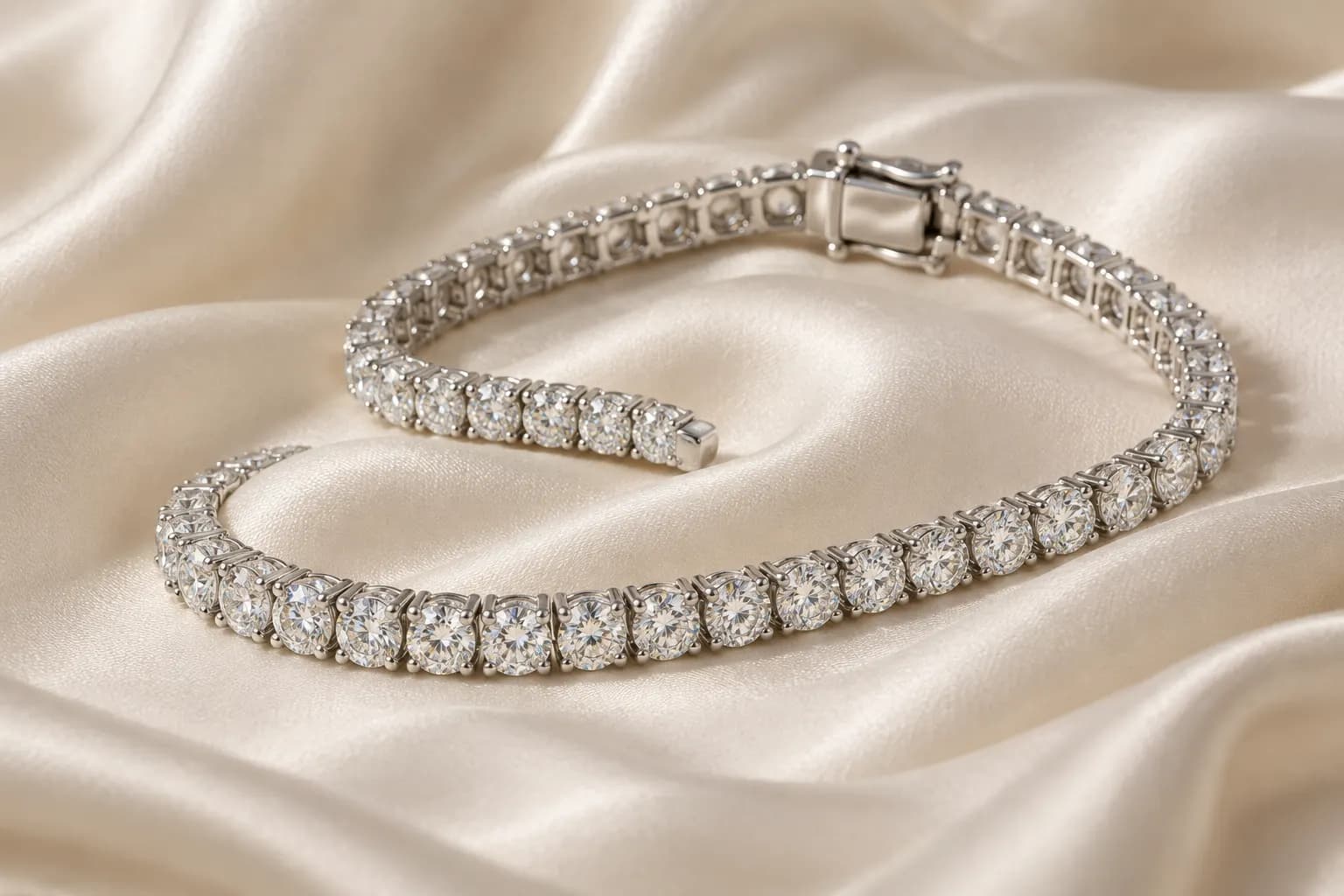
- Box clasp: a tongue that locks into a small box, often with a safety catch. Typical on thick chains and Cuban links, and on tennis bracelets.
How to choose a gold chain for a woman
- Decide on a pendant. If yes, go for cable, box or rope. If the chain is the piece itself, consider figaro, paperclip or curb.
- Pick a length based on your neckline and what you wear most (45 cm is a good starting point).
- Pick a thickness that suits the pendant's weight and your style.
- Choose karat and color. 14K is more scratch-resistant and common for everyday chains; 18K has a richer color. See 14K vs 18K gold and yellow, white or rose gold.
- Think about care. Fine chains tangle, so store them closed and separately. More tips in our gold jewelry care guide.
With Gold AI you can design a chain or pendant in words, see the result before paying anything and request a personal quote over WhatsApp. Every piece is handcrafted by expert goldsmiths in 14K or 18K gold, in yellow, white or rose, and production usually takes 2–3 weeks. Find more inspiration on our gold necklaces page.