Moissanite vs. Diamond: Differences, Price and How to Tell Them Apart
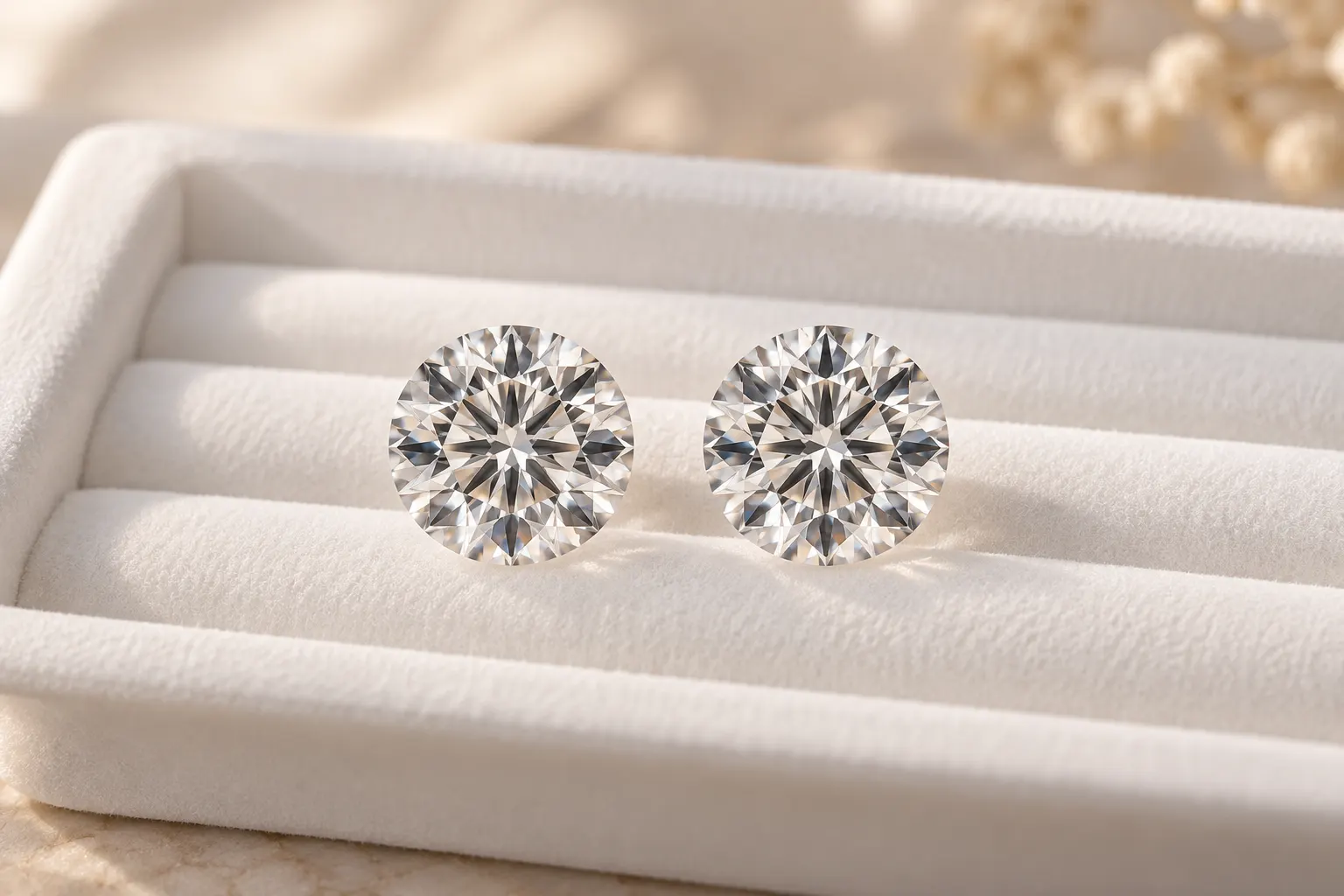
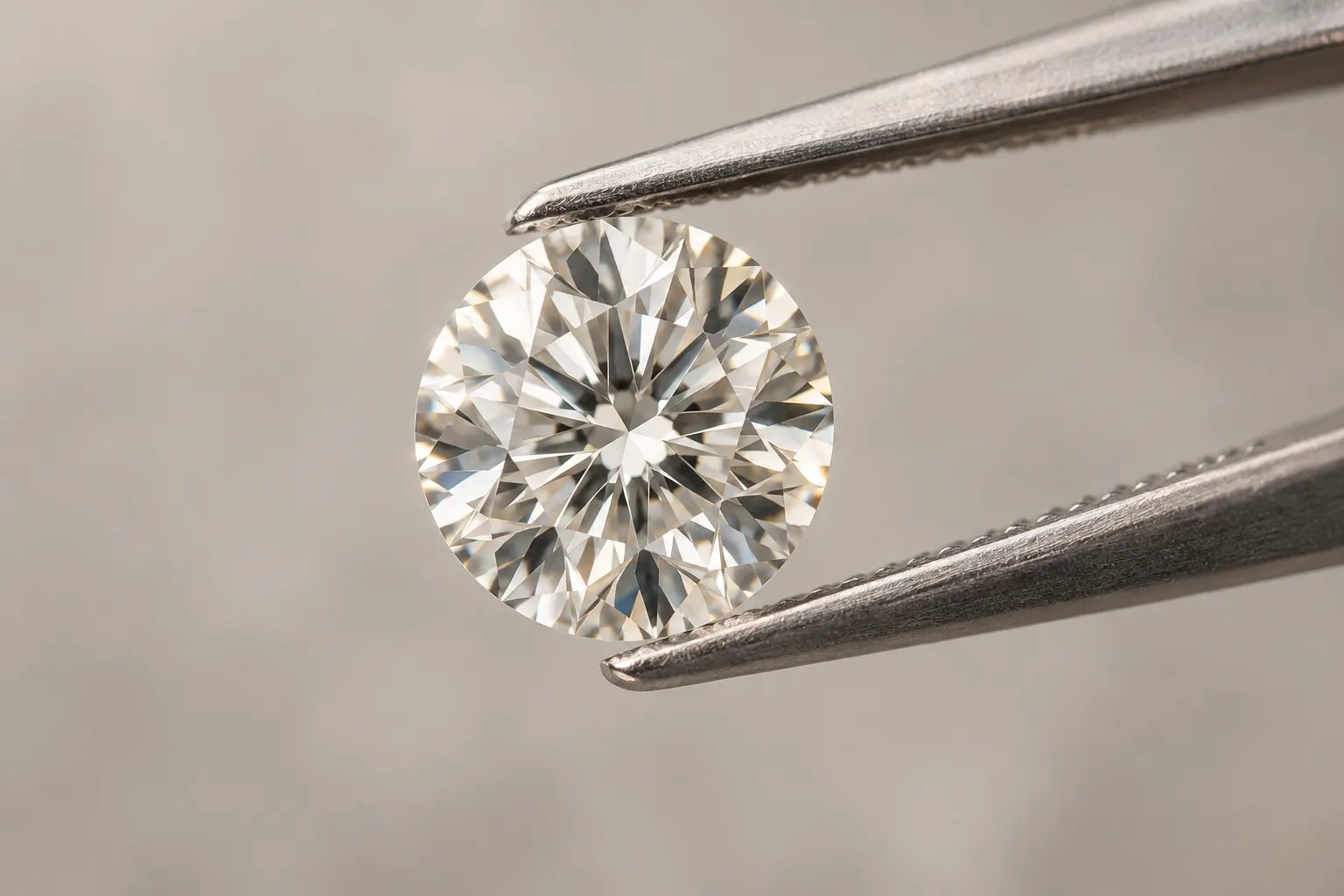
Moissanite is a gemstone made of silicon carbide, not a diamond. It is nearly as hard (9.25 vs. 10 on the Mohs scale), shows more rainbow-colored sparkle, and costs a fraction of a diamond's price. Diamonds, natural or lab-grown, are pure carbon, harder, and have a whiter, more classic brilliance.
What is moissanite?
Moissanite is the mineral silicon carbide (SiC). French chemist Henri Moissan first identified it in the 1890s in fragments from a meteorite site in Arizona, and the stone is named after him. Natural moissanite is extremely rare and occurs only in tiny grains, so every moissanite you'll find in jewelry today is lab-created.
It's worth being precise: moissanite is not a "lab diamond" and it isn't a cheap glass imitation. It's a separate gemstone with its own chemistry and optical properties. A lab-grown diamond, on the other hand, is a real diamond: pure carbon with the same crystal structure as a mined one. We cover that comparison in lab-grown vs. natural diamonds.
Moissanite vs. diamond: what's actually different?
Hardness and durability
Diamond is the hardest natural material, a 10 on the Mohs scale. Moissanite scores 9.25, harder than sapphire and ruby (9) and every other common gemstone. In everyday terms, moissanite resists scratches very well and is perfectly suitable for daily wear, engagement rings included. The gap shows up mostly over many years of hard wear, and even then the metal and setting matter as much as the stone.
Brilliance, fire and sparkle
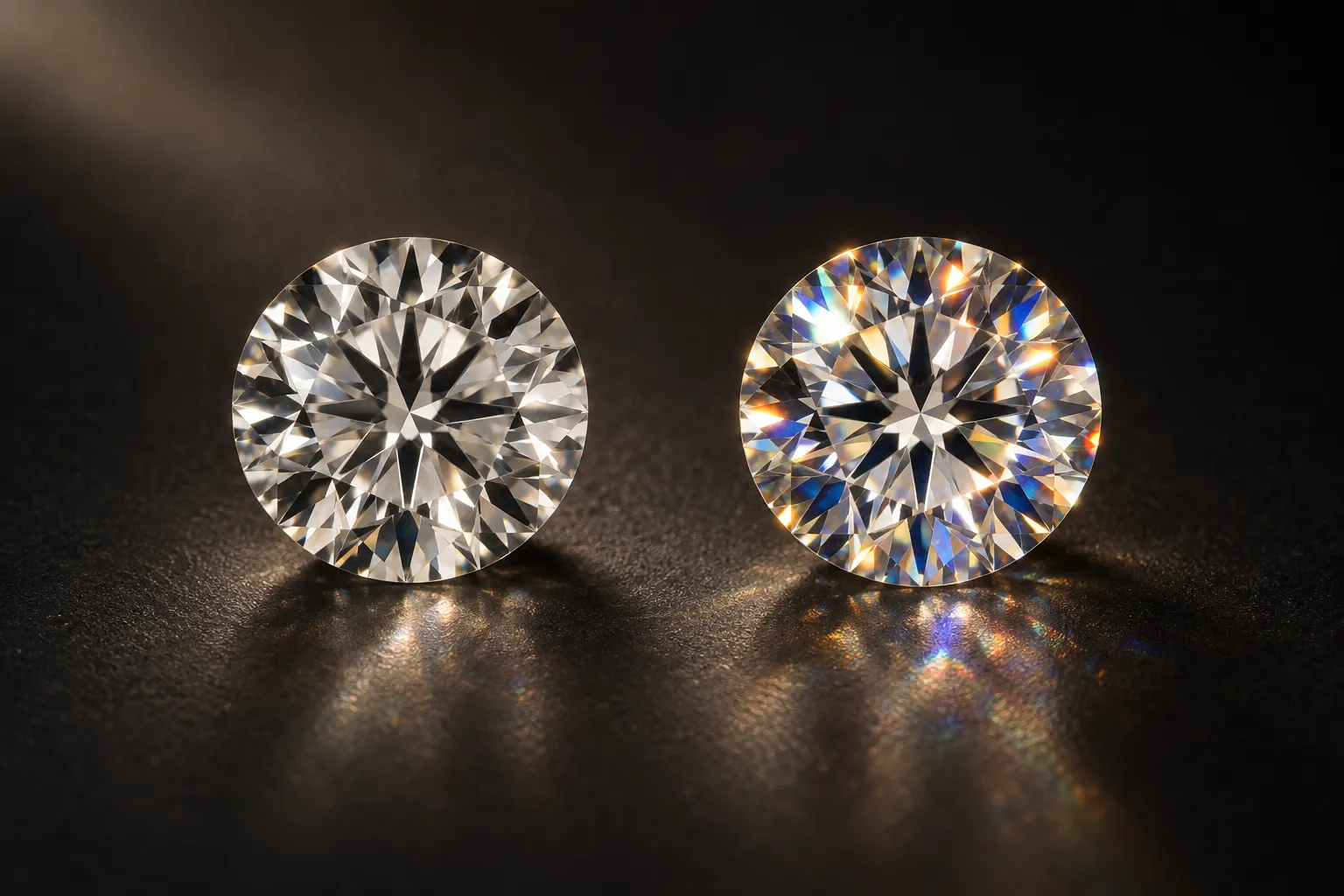
This is the difference you can actually see. Moissanite has a higher refractive index (about 2.65–2.69 vs. 2.42 for diamond) and roughly twice the dispersion, which jewelers call fire. The result is strong rainbow flashes, especially in sunlight or under spotlights. Some people love that "disco ball" effect; others feel it gives the stone away instantly. Diamond returns more white light and has a more balanced, subtle sparkle.
Moissanite is also doubly refractive. Under magnification and at certain angles you can see the facet edges doubled. Cutters orient the stone to minimize this, and to the naked eye it's rarely noticeable.
Color and weight
Early moissanite often had a yellowish or greenish tint; colorless grades are now common. Moissanite is also lighter than diamond, so a stone of the same diameter weighs less. That's why moissanite is usually described by millimeter size or "diamond-equivalent weight" rather than carats alone.
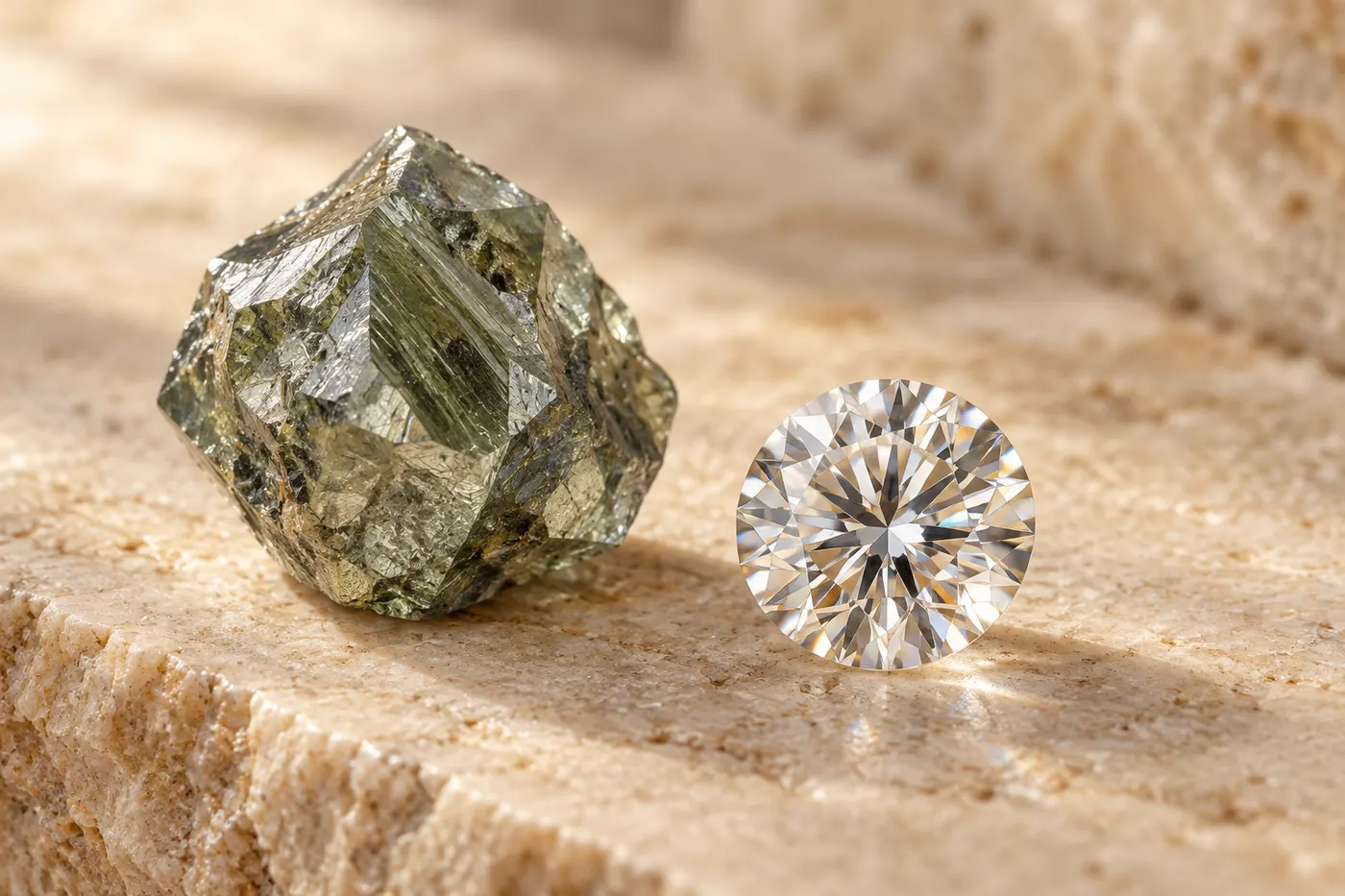
Comparison table: moissanite, lab-grown diamond and natural diamond
| Moissanite | Lab-grown diamond | Natural diamond | |
|---|---|---|---|
| Composition | Silicon carbide | Pure carbon | Pure carbon |
| Origin | Lab-created | Lab-created | Mined |
| Hardness (Mohs) | 9.25 | 10 | 10 |
| Refractive index | About 2.65–2.69 | 2.42 | 2.42 |
| Look | Strong, colorful sparkle | Classic white brilliance | Classic white brilliance |
| Relative price | Lowest | Middle | Highest |
| Resale value | Close to none | Low | Exists, usually well below purchase price |
| Standard 4Cs grading | No | Yes | Yes |
How much does moissanite cost compared to a diamond?
Much less. Moissanite typically costs a small fraction of a natural diamond of the same size, and usually less than a lab-grown diamond too. Exact prices depend on quality, size and maker, so there's no single number. Keep in mind that in a ring, the stone is only part of the price: gold weight, labor and VAT all add up, as we explain in our gold jewelry pricing guide and in how much an engagement ring costs.
How can you tell moissanite from a diamond?
In a finished piece, most people can't. Professionals look for a few clues:
- Strong rainbow fire – vivid colored flashes, especially in sunlight, point toward moissanite.
- Doubled facets – under a loupe, looking through the side of the stone can reveal doubled facet lines.
- Diamond testers – basic thermal testers can read moissanite as diamond, because both conduct heat well. A multi-tester that also checks electrical conductivity tells them apart.
- Certificates – natural and lab-grown diamonds usually come with a grading report, and a gemological lab identifies moissanite with certainty.
Does moissanite hold its value?
If future value matters to you, this is a real consideration. There's almost no secondhand market for moissanite. Lab-grown diamonds also resell for little, partly because their new prices have fallen in recent years. Natural diamonds do have a resale market, but they usually sell for significantly less than what was paid. In short: choose a stone because it suits you and your budget, not as an investment.
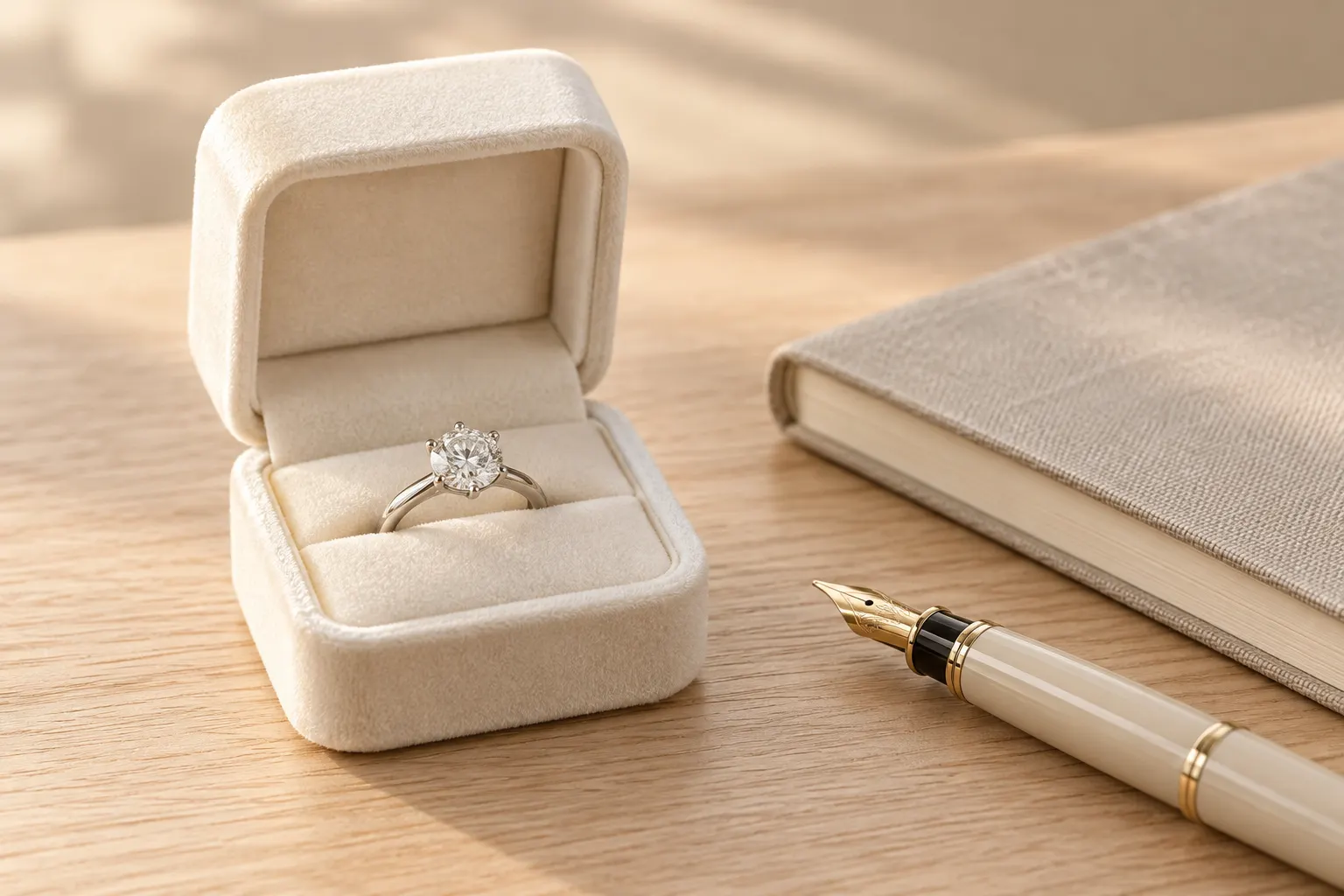
Moissanite in an engagement ring: what to watch for
If you're considering moissanite as a center stone, a few choices shape the result as much as the stone itself:
- Size – because moissanite is relatively affordable, it's tempting to go very large. In big stones the rainbow fire becomes even more obvious, and so does the difference from diamond. A moderate size usually looks more natural on the hand.
- Gold color – white gold flatters a colorless stone; yellow and rose gold add warmth and can bring out any faint tint. Compare them in our gold colors guide.
- Setting – prongs or a bezel protect the stone from knocks, which matters for anything worn every day.
- Cleaning – every stone sparkles less under a film of oil and lotion. Gentle, regular cleaning keeps it bright; see our gold jewelry care guide.
Some couples choose moissanite for now and upgrade to a diamond later. If that's your plan, design the ring so its setting fits a stone of the same millimeter size, and the stone can be swapped without remaking the whole ring.
Which should you choose?
- Moissanite – if you want a large, very sparkly center stone on a modest budget and enjoy the colorful fire.
- Lab-grown diamond – if you want a real diamond, with diamond's look and hardness, for less than a natural stone.
- Natural diamond – if rarity, tradition and natural origin matter to you and you're willing to pay for them.
Whichever way you lean, it helps to understand the 4Cs of diamonds so you can compare stones properly, and to pick a ring setting that protects the stone.
Diamonds and gemstones at Gold AI
At Gold AI we design and make pieces in 14K and 18K gold with natural, conflict-free diamonds, lab-grown diamonds on request, and colored gemstones. Interested in moissanite? Ask us when you request a quote and we'll check what's possible for your design.