Earring Types: A Complete Guide to Studs, Hoops, Threaders and More
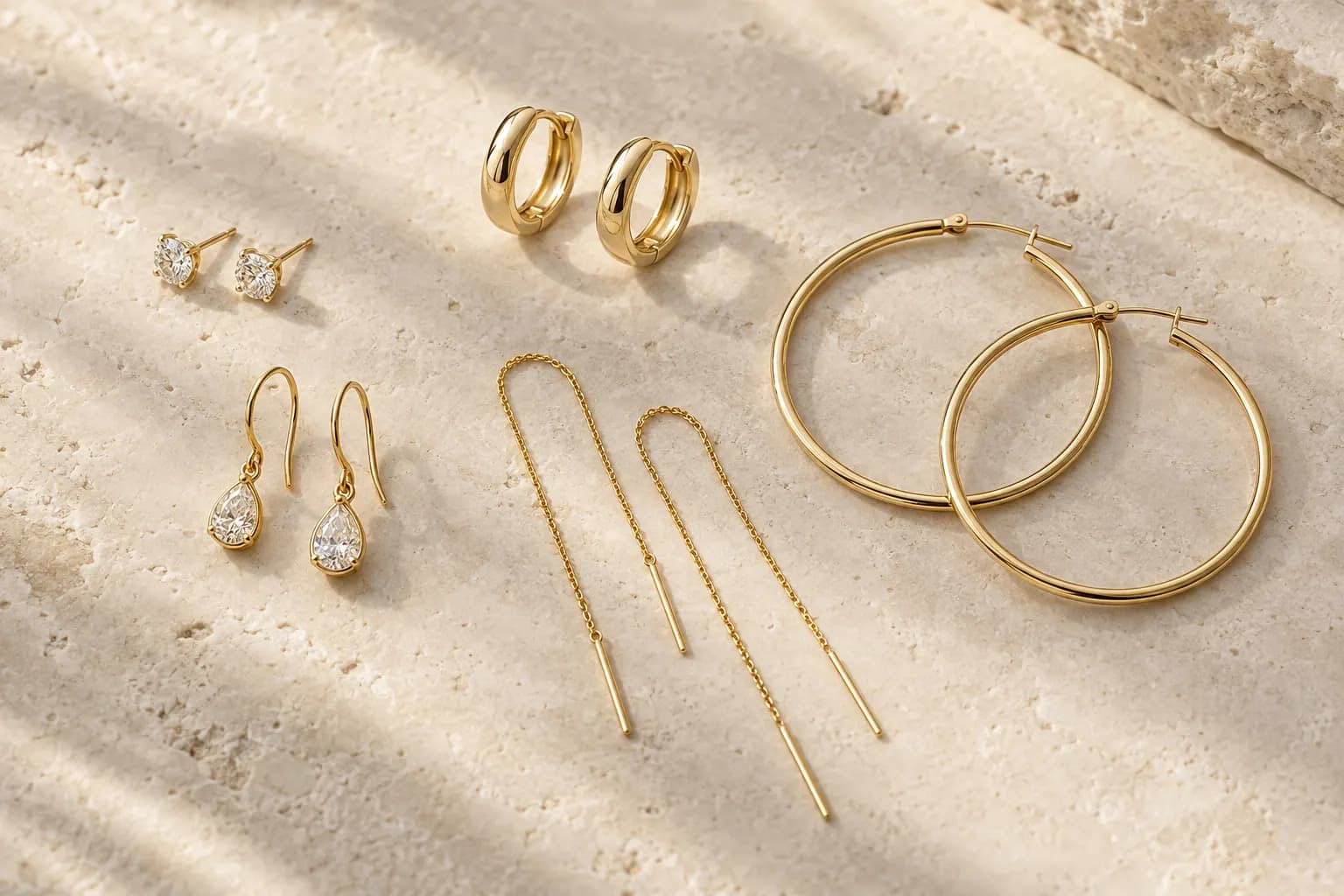
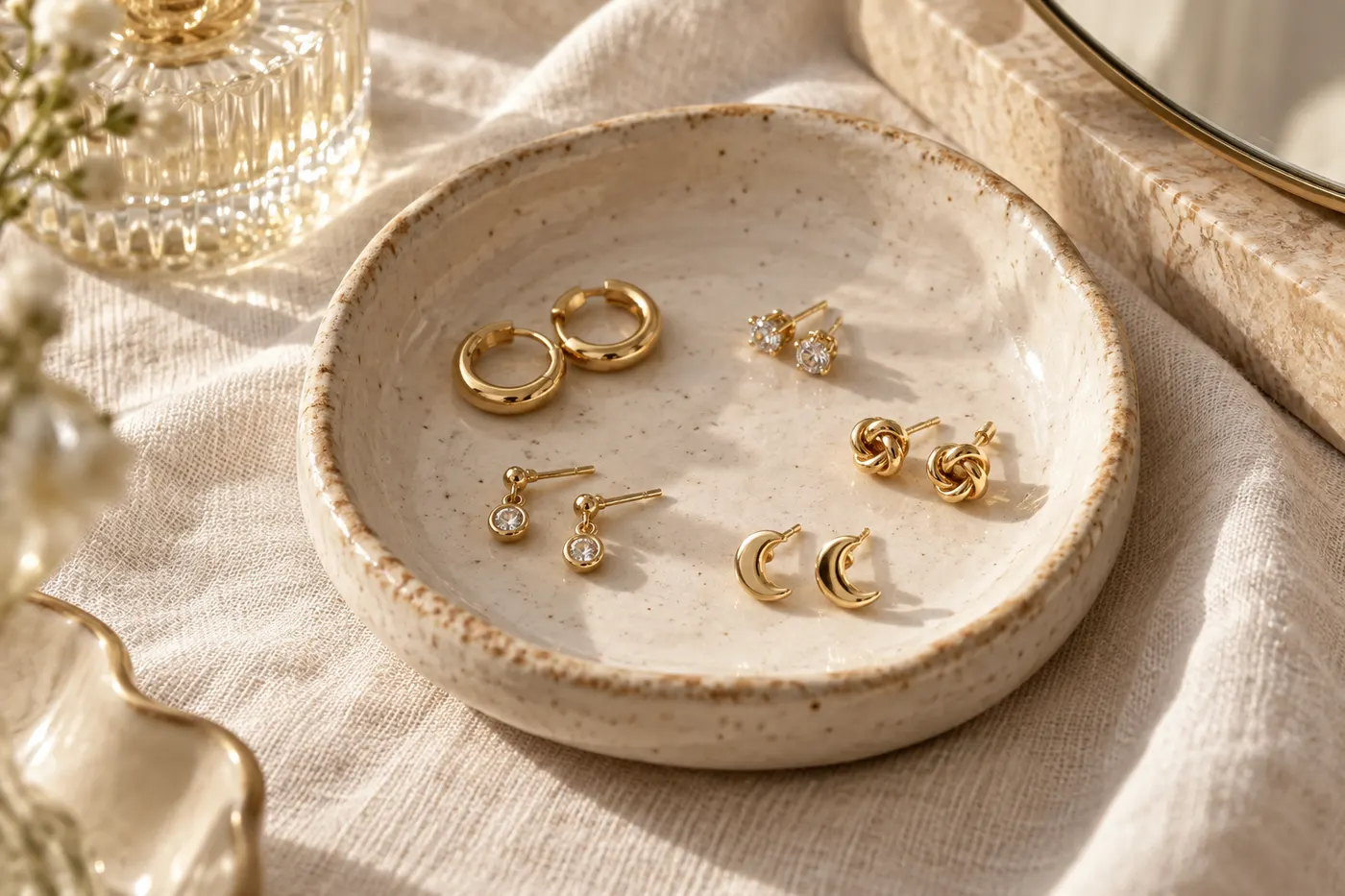
The main earring types are studs, which sit directly on the earlobe; hoops, an open or closed circle of metal; huggies, small hoops that hug the lobe; drops and dangles that hang below it; threaders, a fine chain pulled through the piercing; ear climbers that run up the ear's edge; and ear cuffs, which clip onto cartilage without a piercing.
Stud earrings
The most classic earring: a stone, pearl or small gold shape sitting right on the lobe, with a post that goes through the piercing and fastens behind. Studs work almost anywhere: the office, light exercise, sleeping (in flat designs) and events. Diamond studs are one of the most popular gifts there is; our guide to the diamond 4Cs explains how to choose the stone itself.
What size stud earrings should I get?
| Diameter (mm) | Approx. weight, round diamond (per stone) | How it looks |
|---|---|---|
| 3 | about 0.10 ct | Very delicate; great for second and third holes |
| 4 | about 0.25 ct | Noticeable, easy everyday wear |
| 5 | about 0.50 ct | Classic with real presence |
| 6.5 | about 1.00 ct | Striking; visible from across the room |
Diamond stud weights are often quoted for the pair (“total carat weight”), so a “half carat” pair usually means two stones of about a quarter carat each. On a small lobe, 4–5 mm tends to look balanced; above 6 mm a stud becomes a statement. If you want a bigger stone on a smaller budget, moissanite is worth a look.
Hoop earrings and huggies
Hoops are a ring of metal, open or closed, that passes through the piercing. They come in every size, from tiny hoops that almost touch the lobe to large ones that reach the jawline. Huggies are small, relatively chunky hoops that hug the lobe, and they're a favorite for everyday wear and extra piercings.
| Diameter (mm) | Type | Best for |
|---|---|---|
| 8–12 | Huggies | Everyday, second and third holes, helix |
| 15–20 | Small hoops | Everyday, office |
| 25–35 | Medium hoops | Everyday and evenings out |
| 40+ | Large hoops | Statement, evening and events |
Thickness matters too: a 1.5–2 mm tube looks delicate, while 3–4 mm gives a bold, golden look. Thick solid-gold hoops weigh more, and gold weight is one of the main things that sets the price; see how gold jewelry is priced.
Drop and dangle earrings
Drop earrings have an element that hangs just below the lobe: a teardrop stone, a small charm or a short chain. Dangles are longer and move freely. They lengthen the neckline, suit weddings and events, and look especially good with hair worn up. Keep them reasonably light: heavy earrings stretch the piercing over time.
Threaders, ear climbers and ear cuffs
- Threaders: a fine chain or thin bar pulled through the piercing so it hangs on both sides of the lobe, often with a birthstone or charm at the end. Light, full of movement, and you can adjust how much hangs in front.
- Ear climbers: inserted into a regular piercing, they run up along the edge of the ear, so one earring looks like several, no extra holes needed.
- Ear cuffs: an open ring that squeezes gently onto the cartilage, usually mid-ear. No piercing at all, which makes it a good way to try the cartilage-piercing look.
Types of earring backs: which is most secure?
| Back | How it works | Pros | Best for |
|---|---|---|---|
| Push back (butterfly) | A friction back slides onto the post | Most common, quick to put on | Light studs |
| Screw back | Back screws onto a threaded post | Most secure; very unlikely to fall off | Valuable diamond studs, kids |
| Lever back | Hinged lever closes behind the ear wire | Secure and comfortable | Drops and dangles |
| Latch / hinged snap | Part of the hoop clicks shut | Clean, no separate parts to lose | Hoops and huggies |
Earrings for second, third and cartilage piercings
For extra lobe piercings, people usually go smaller than the first hole to create a gradient: say, a medium hoop in the first, huggies in the second and a 2–3 mm stud in the third. For cartilage (helix, tragus, conch), flat-back studs that don't catch on pillows or hair, or very small huggies, are the norm.
Important: a new piercing needs to heal before switching to regular jewelry. Lobes typically take several weeks, while cartilage can take many months. Coordinate the first jewelry and the first change with your piercer.
Earrings for sensitive ears: which gold is best?
Most earring reactions are caused by nickel, found in fashion jewelry and sometimes in white gold alloys. The higher the karat, the more pure gold and the less of other metals in the alloy, so 18K is generally considered the safer choice for very sensitive ears, while 14K suits most people. Our 14K vs 18K guide explains the differences.
- Yellow and rose gold are usually a safe bet, since their alloys are based mainly on silver and copper.
- For white gold, ask what the alloy contains, and remember that rhodium plating wears off over time.
- Keep posts and backs clean: buildup of dirt and lotions irritates even non-sensitive ears. See our gold jewelry care guide.
How to choose earrings for your style
- Everyday and work: 3–5 mm studs or huggies; nothing to snag or get in the way.
- Events: drops or large hoops, which stand out especially with hair worn up.
- A gift when you're unsure of their taste: classic studs suit almost everyone, and they make a lovely bat mitzvah gift. More ideas in our jewelry gift guide.
- Face shape: long drops create a vertical line on rounder faces; hoops and wider studs balance a longer face.
With Gold AI you see the design before paying anything: describe the earrings in words, for example “14K yellow gold threaders with small leaves”, get designs in seconds, refine them in chat and request a personal quote over WhatsApp. The earrings are handcrafted by expert goldsmiths, with production usually taking 2–3 weeks. For tips on writing a good prompt see how to describe jewelry to AI, and browse more on our gold earrings page.