AI Jewelry Design: How It Really Works, and What AI Can't Do
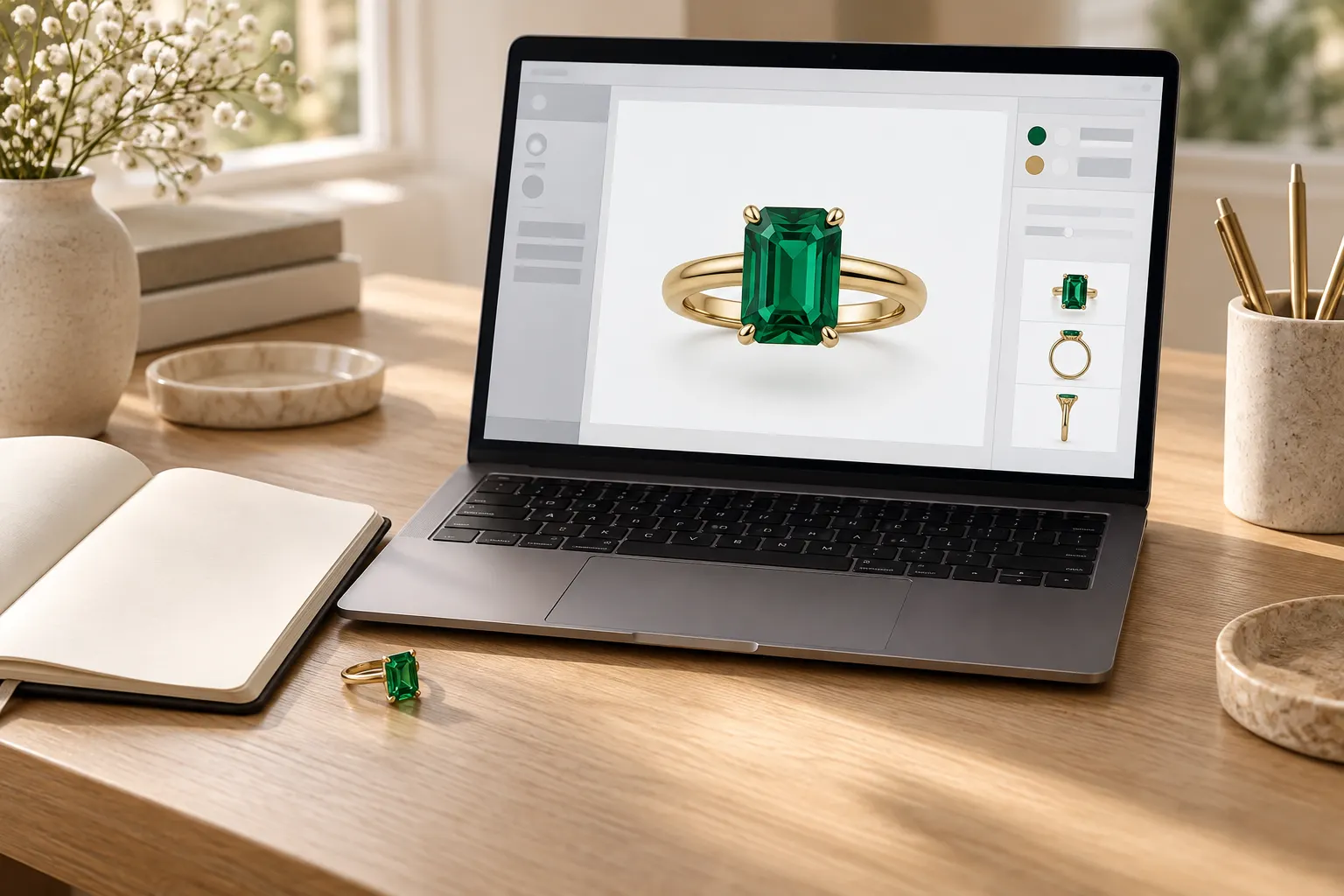
AI jewelry design is a way to see a piece before it exists: you describe it in words, and an AI model creates a photorealistic render in seconds. The AI replaces the sketching stage, not the goldsmith. The jewelry itself is still handcrafted in real gold, after you approve the design.
What is AI jewelry design, really?
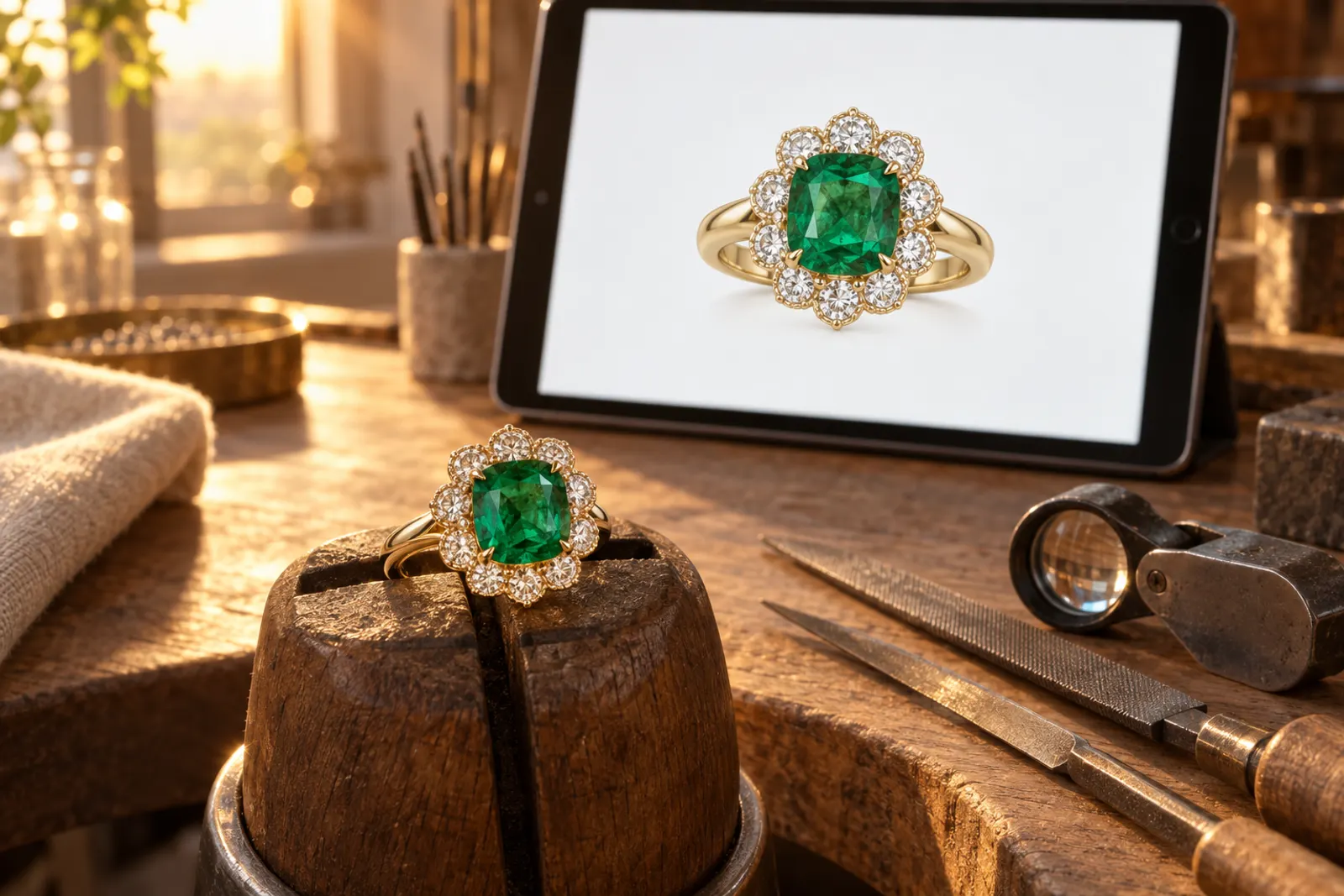
In a traditional custom order, getting from idea to picture takes a while: a meeting with a jeweler, a hand sketch, rounds of changes, sometimes a CAD model — and only then can you really see what you're getting. AI design shrinks that stage to seconds. You type something like "a yellow gold ring with an emerald in a flower shape and small diamonds around it", and a model trained on millions of images produces a render of that piece as if it had been photographed in a studio.
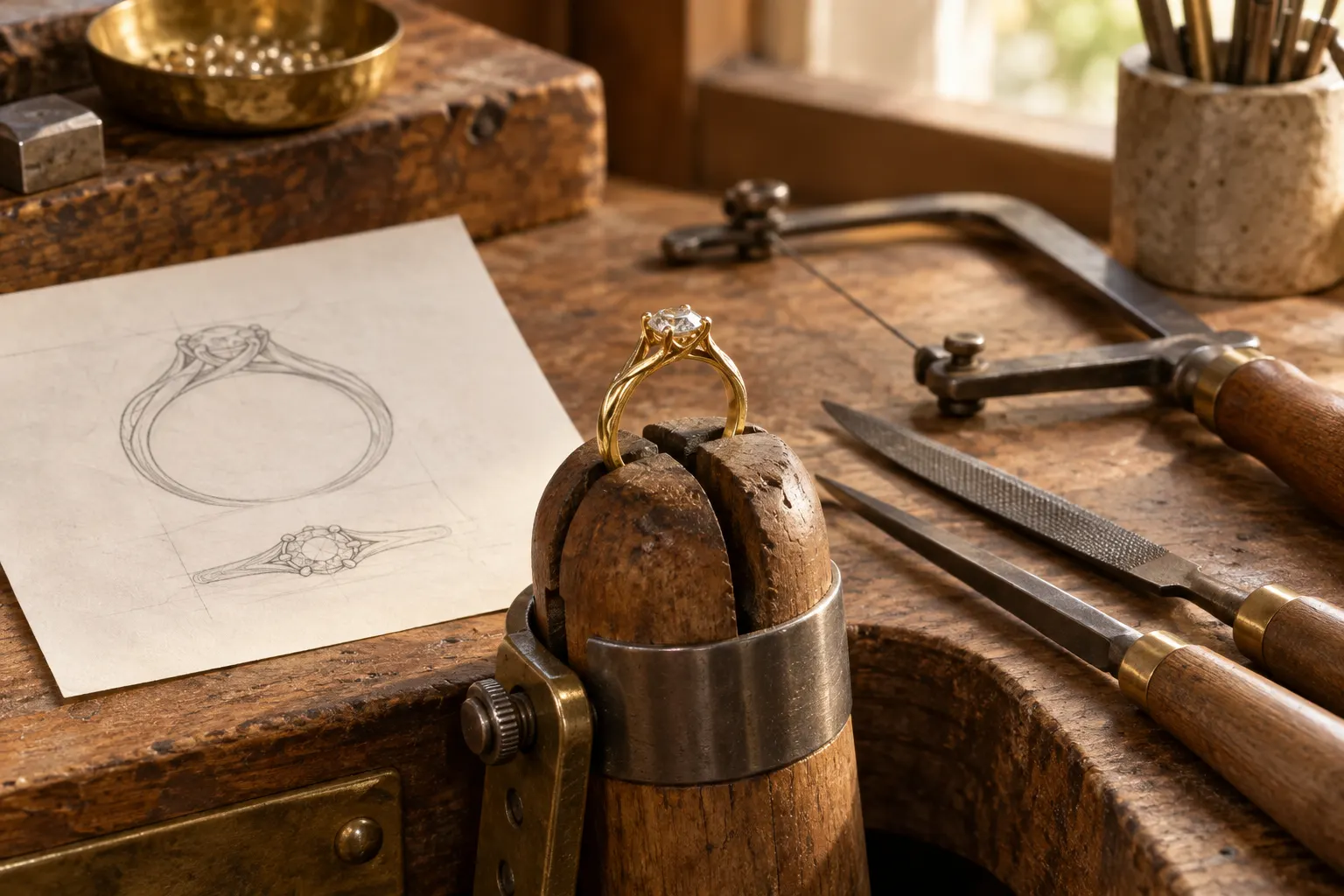
It's worth being clear about what that render is — and isn't. It's a picture, not an engineering drawing. It shows style, proportions and mood, and lets you say "yes, that's what I imagined" or "no, make the band thinner". Turning a picture into something you can wear is still a person's job: a goldsmith who checks the design can be made, sets the weight, dimensions and stones, and crafts it.
| Stage | The AI | The goldsmith |
|---|---|---|
| Idea and visual | Creates renders from a written description, in seconds | — |
| Changes | Updates the design from requests in chat | — |
| Feasibility check | — | Confirms it can be made and will hold up to daily wear |
| Size, weight and stones | — | Sets the ring size, thickness, gold weight and actual stones |
| Making it | — | Casting, stone setting and polishing — by hand |
How it works at Gold AI, step by step
- Describe the piece. In English or Hebrew, in your own words. Pick the type of jewelry and the gold, add a description — and optionally an inspiration photo.
- Get two renders. Within seconds you see two different takes on what you described. Pick the one that's closer.
- Refine in chat. Say what to change — "thinner band", "add small diamonds", "white gold instead of yellow" — and the design updates. One change at a time works best; our guide to describing jewelry to AI shows how.
- Request a quote. When the design looks right, ask for a quote. The team reviews it with a goldsmith and sends you a personal price on WhatsApp.
- Handcrafted for you. Only after you approve and pay do goldsmiths at partner workshops in Ramat Gan's diamond exchange district make the piece. That usually takes 2–3 weeks, then it ships to you insured.
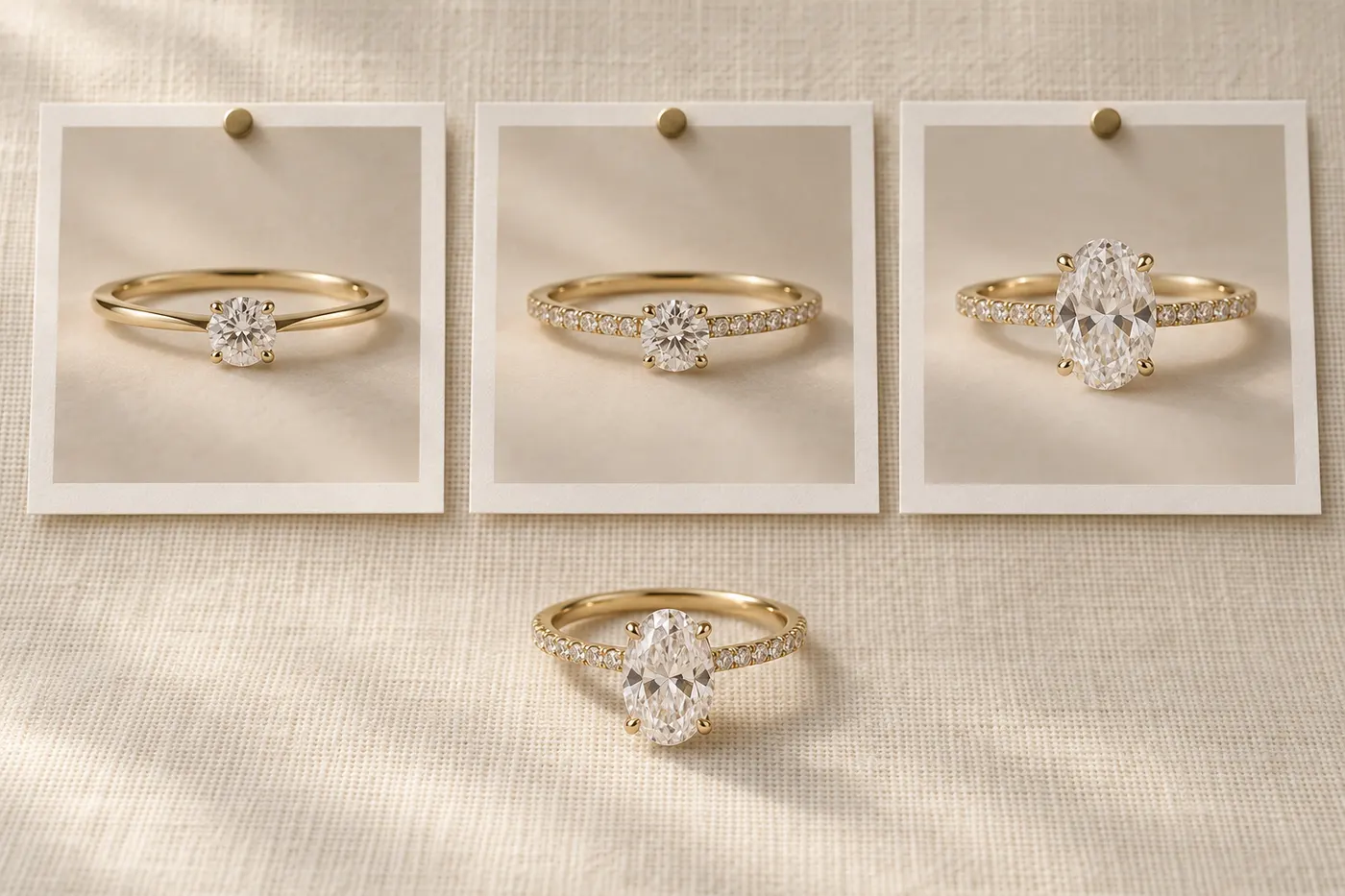
The part that matters most is the order of things: see it first, decide second, pay last. Designing in the studio commits you to nothing, and the piece is only made once you're happy with it.
Real examples: from one sentence to a finished piece
These are real requests customers typed into the studio, and what they turned into. Notice how short some of them are — the AI fills in the details, and you steer from there.
| What the customer wrote | What was made |
|---|---|
| "A gold emerald flower ring — add small diamonds" | 14K yellow gold, cushion emerald in a flower frame with 24 pavé diamonds |
| "A 2 carat eternity diamond ring, diamonds all the way around" | 14K yellow gold, 19 round diamonds, approx. 2 carats |
| "A ring to sit next to my engagement ring, something that flatters the round diamond" | 18K white gold, 8 diamonds along the open ends — a matching band |
| "A bow earring with a gold chain and leaves" | 14K yellow gold threader earrings, no stones |
| "A pink tourmaline sphere pendant, capped with a gold dome with organic edges" | 14K yellow gold, 12mm pink tourmaline sphere with diamond accents |
| "A tennis bracelet with two kinds of diamonds: leaf, circle, leaf, circle" | 18K yellow gold tennis bracelet, alternating marquise and round diamonds |
What they have in common: none of these pieces was in a catalog. A ring made to flatter one particular diamond, a pendant built around a stone of one particular color — that's exactly what's hard to find in a store, and what custom design is for. For more ideas, browse engagement rings, gold rings and necklaces.
What AI is genuinely good at
- Seeing before deciding. Instead of imagining a piece from a salesperson's description or a pencil sketch, you see a realistic image — gold color and stones included.
- Trying many directions quickly. Yellow or white gold? Oval or round stone? Each change takes seconds, so you can compare without committing.
- Turning words into shapes. "Delicate but with presence" is hard to explain to a jeweler. Showing a picture and saying "like this" is easy.
- Starting from nothing. You don't need to know what a bezel or pavé setting is. Describe it in plain words and refine from what you see.
What AI can't do (and why you still need a goldsmith)
This is where a lot of sites oversell, so let's be direct. An AI render is a great starting point, but it has real limits:
- It isn't accurate to the millimeter. Ask for a one-carat diamond and the render shows "a big diamond" — not necessarily in exact proportion. Real dimensions are set in the quote.
- Stone counts are approximate. The AI may draw 20 or 30 small diamonds; the goldsmith decides how many will actually fit, and at what size.
- Not everything that looks good can be made. Sometimes the AI draws a setting that wouldn't hold a stone, or a part too thin to survive daily wear. The goldsmith catches this and suggests an adjustment — before anything is made.
- Lettering is a weak spot. On name necklaces and engravings, the letters in the render are illustrative. The final wording and font are confirmed with the team.
- Screen colors aren't a stone in your hand. The shade of a sapphire or tourmaline varies from stone to stone; the actual stone is chosen for real.
AI design vs. traditional custom design
| Traditional custom design | AI design at Gold AI | |
|---|---|---|
| Until you first see the design | Days to weeks | Seconds |
| Changes | Each round takes time, sometimes at a cost | Instant, in chat |
| Cost of the design stage | Often built into the price or charged separately | Free |
| Who makes it | A goldsmith | A goldsmith — the same handwork |
| When you pay | Often a deposit up front | Only after you've seen a design and approved a quote |
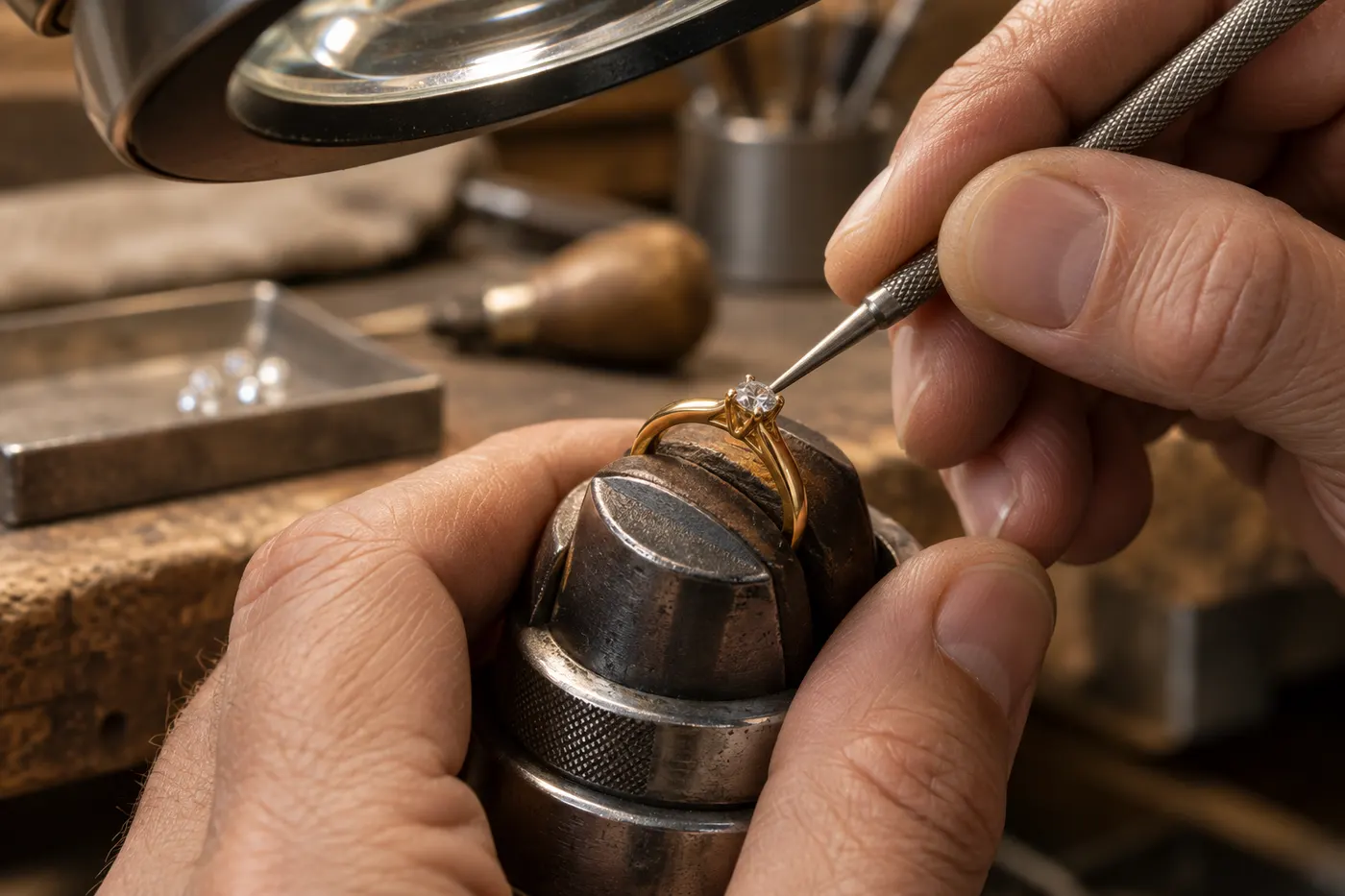
The making itself hasn't changed: casting, setting and polishing by hand, in 14K or 18K gold. What changed is the road there — faster, more transparent, and open to people who have no idea where to start. The full process, with timelines, is in our guide to ordering custom jewelry.
Curious what Israelis design with AI? In our data report we analyzed 5,700 designers: what they ask for, what they plan to spend, and when.
Is AI-designed jewelry "real" jewelry?
Completely. The AI doesn't make the jewelry — it only helps you decide what it should look like. The piece itself is real gold, with natural or lab-grown diamonds as you prefer (the differences are explained in our lab-grown vs natural diamonds guide), made by experienced goldsmiths. The only difference from a piece designed on paper is the tool the sketch was drawn with.
And privacy? Your designs are private by default. They aren't published anywhere unless you choose to share a link.