Diamond Clarity Chart: Every Grade from FL to I3, and What's Enough for an Engagement Ring
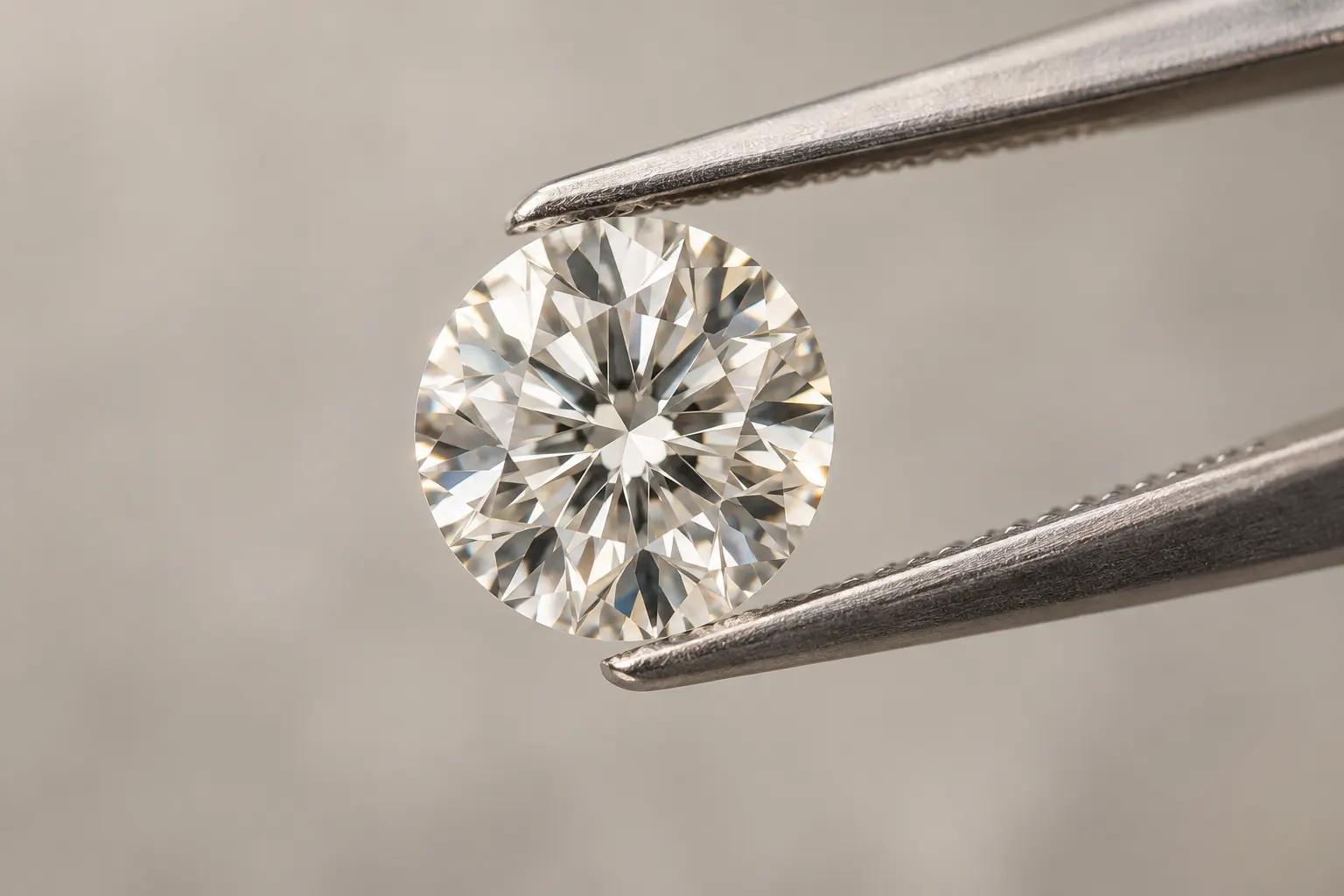
Diamond clarity describes the internal and external marks in a stone as seen under 10x magnification. The scale has 11 grades: FL and IF (flawless), VVS1–VVS2, VS1–VS2, SI1–SI2 and I1–I3. For most round engagement ring diamonds, VS2 or SI1 is eye clean, and anything above that pays for differences you can only see under magnification. For emerald or Asscher cuts, go to at least VS1.
What is diamond clarity?
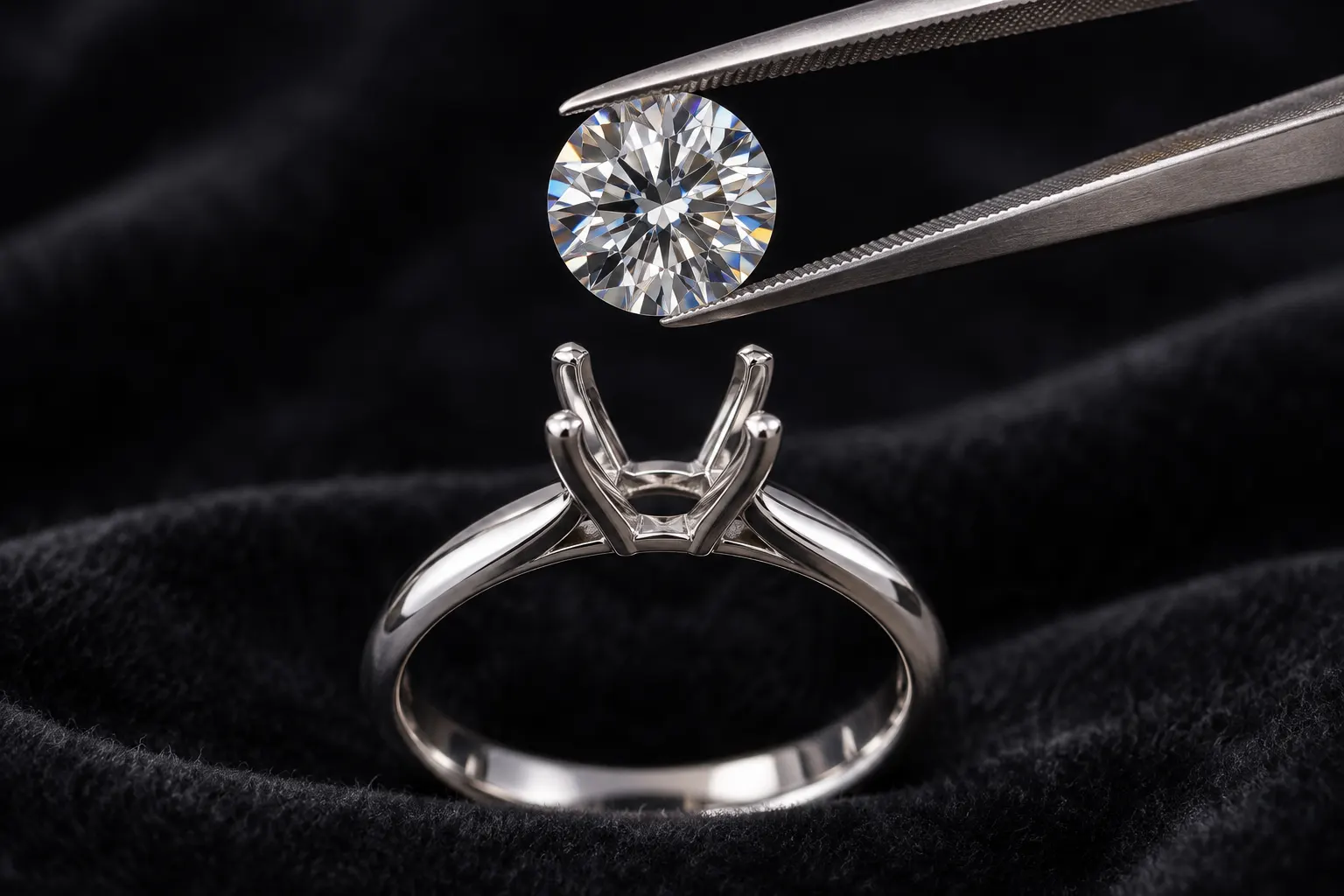
Nearly every diamond, natural or lab-grown, forms with small marks: tiny crystals of other minerals, fine fractures or “clouds” of pinpoints. Marks inside the stone are inclusions, and marks on the surface, such as a scratch or polish line, are blemishes. The clarity grade reflects how many there are, how large, where they sit and how visible they are at 10x.
Clarity is one of the four Cs, along with cut, color and carat. It is usually also the easiest C to save on, because most clarity differences are invisible to the eye. The full picture is in our guide to the diamond 4Cs.
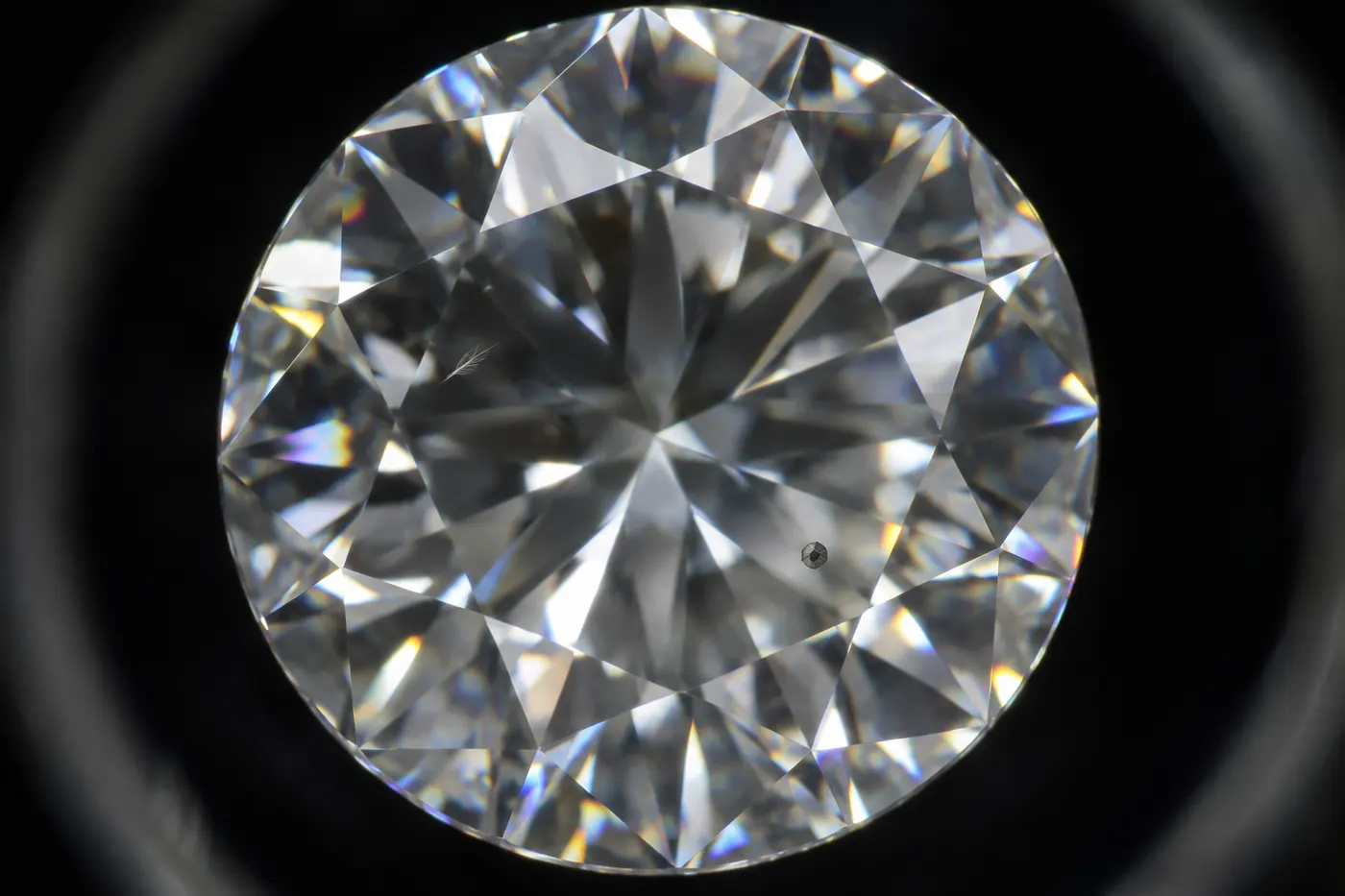
Diamond clarity chart: FL to I3
| Grade | Full name | What's inside | Visible to the eye? | Typical use |
|---|---|---|---|---|
| FL | Flawless | No marks at all at 10x, inside or out | No | Very rare, mostly collectors |
| IF | Internally Flawless | No inclusions, only tiny surface marks | No | Rare and expensive |
| VVS1 / VVS2 | Very Very Slightly Included | Minute marks even experts struggle to find at 10x | No | Luxury stones, large step cuts |
| VS1 / VS2 | Very Slightly Included | Small marks visible only under magnification | Almost never | The most popular engagement ring choice |
| SI1 | Slightly Included | Marks easy to see under magnification | Usually not, in a round | A smart pick for rounds up to about 1 ct |
| SI2 | Slightly Included | Obvious marks under magnification | Sometimes, up close | Only after checking the specific stone |
| I1 / I2 / I3 | Included | Large or numerous flaws | Yes | Not recommended for a center stone; can affect sparkle and durability |
The 1 and 2 within each pair mark a small step inside the same group: VS1 is slightly cleaner than VS2. The difference between them only shows under magnification, and not always then.
What “eye clean” means, and why it's the grade that matters
An eye clean diamond shows no marks to the naked eye at about 20–30 cm. Labs don't use the term, but it matters most in real life: nobody looks at your ring through a loupe. Once a stone is eye clean, every grade above it pays for a difference you can't see.
- Round diamonds up to about 1 ct: VS2 is almost always eye clean, and SI1 often is.
- Above 1.5 ct: inclusions grow with the stone, so aim for VS2 or better, or SI1 only after seeing the specific stone.
- Where the mark sits matters as much as the grade: an inclusion near the edge, under a prong, almost disappears. The same inclusion in the middle of the table (the top facet) stands out.
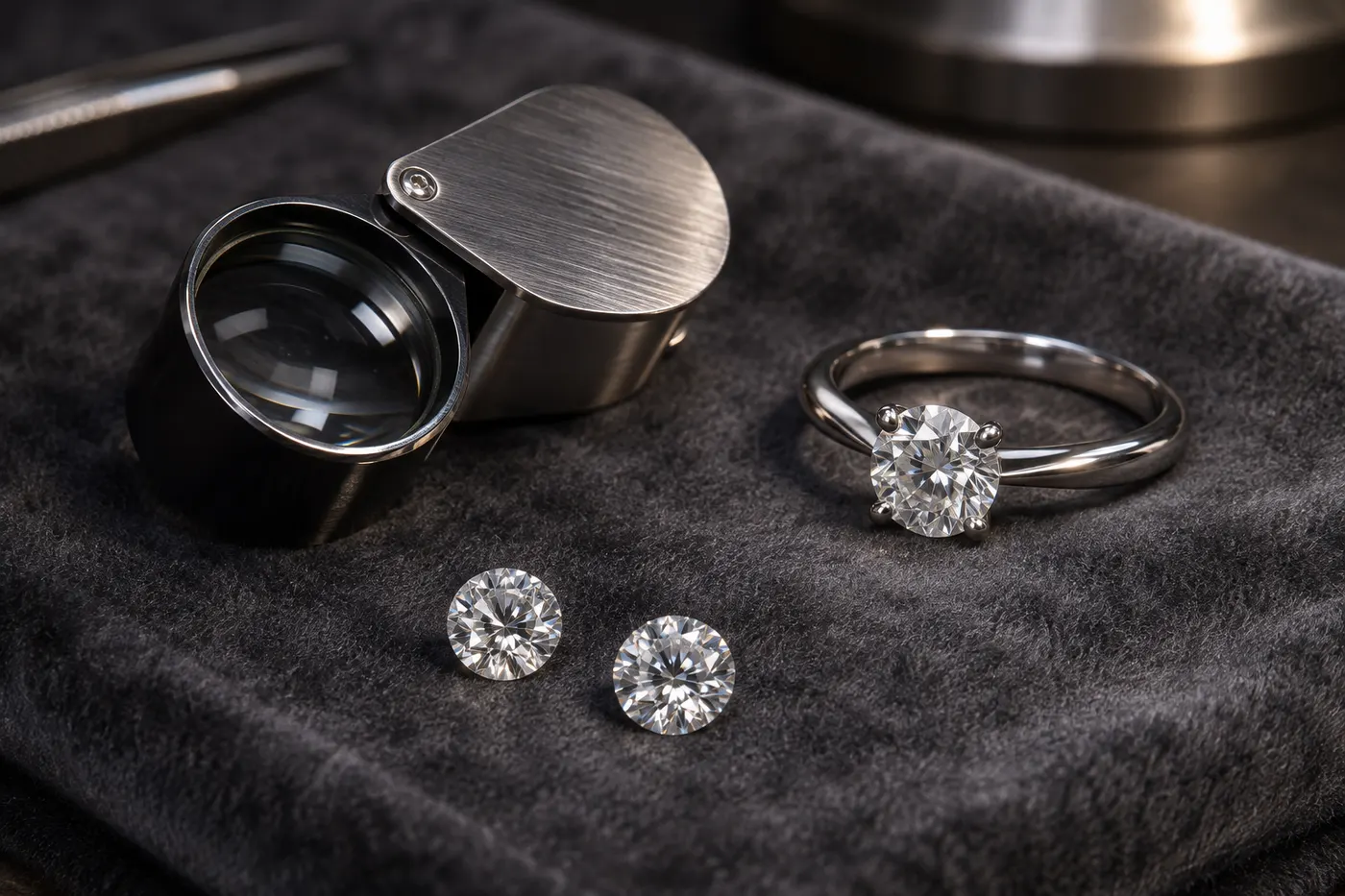
What clarity is good enough for an engagement ring?
Mostly it depends on the shape. Brilliant cuts such as round, oval and pear have dozens of small facets that scatter light and hide marks. Step cuts such as emerald and Asscher have long, flat facets that act like windows into the stone, so every mark shows.
| Shape | Cut style | Recommended minimum | Why |
|---|---|---|---|
| Round | Brilliant | SI1 (eye clean) | The shape that hides marks best |
| Oval, pear, marquise | Brilliant | SI1–VS2 | Hide marks well; watch the central “bow tie” |
| Princess, cushion, radiant | Square brilliant | VS2 | Corners can hide or reveal marks |
| Emerald, Asscher | Step | VS1 and up | Flat, clear facets reveal everything |
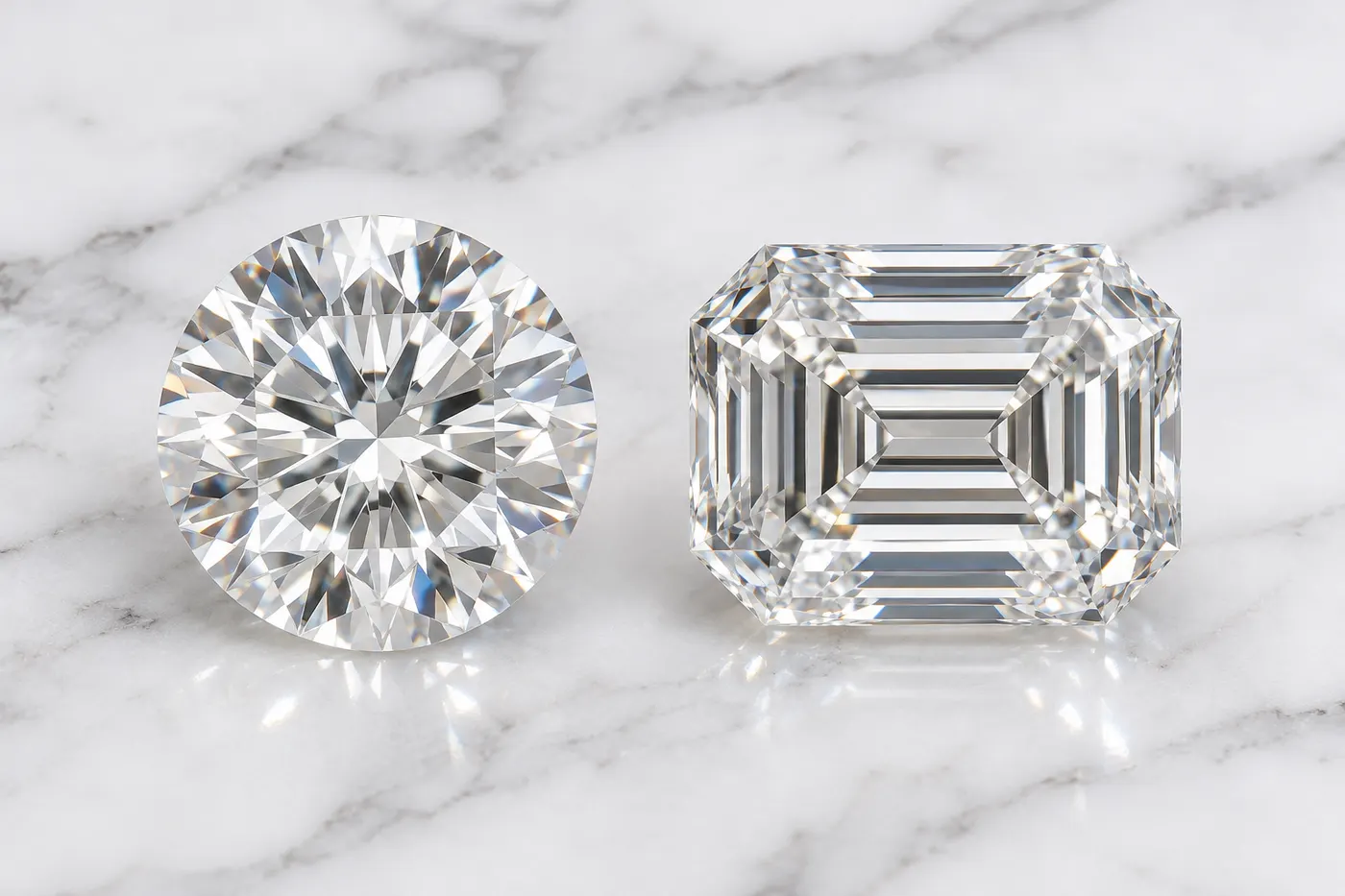
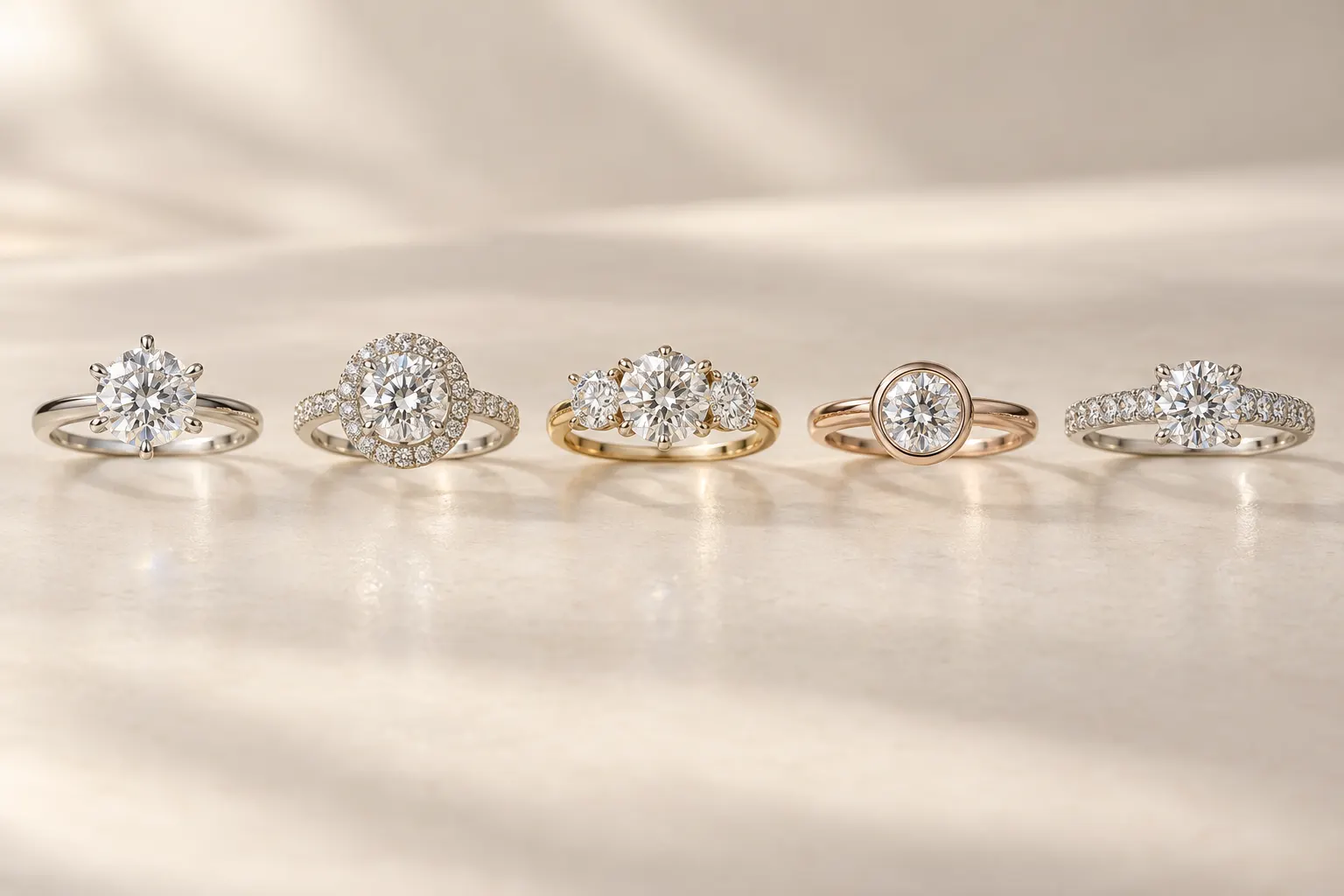
For the shapes themselves and the settings that hold them, see our engagement ring settings guide. Prongs can also hide an inclusion near the edge, one more reason to look at the actual stone rather than only the grade on the certificate.
Clarity in small diamonds: pavé, tennis bracelets and studs
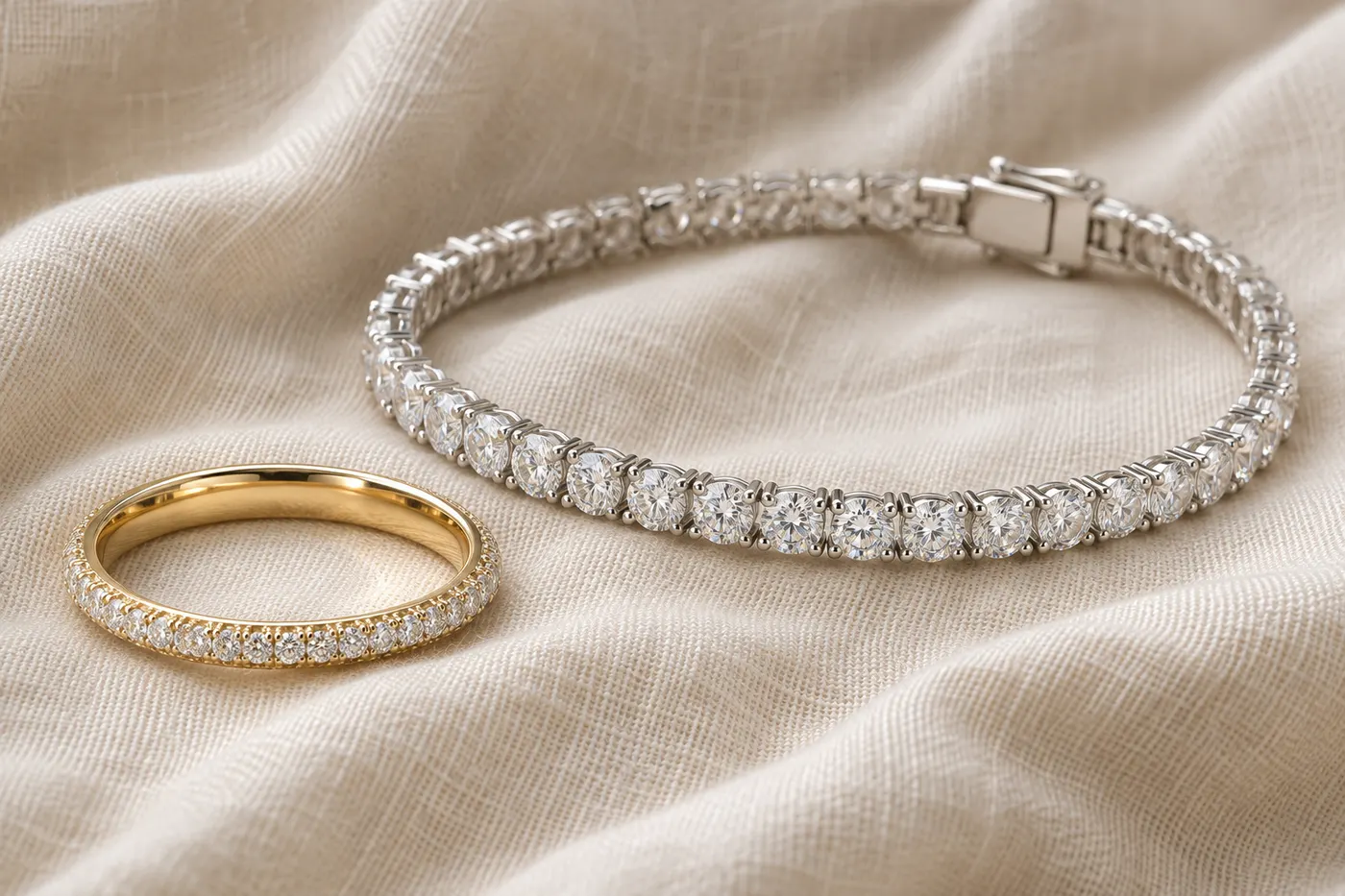
In very small diamonds, under about 0.10 ct each, nobody can see clarity, even up close. Stones this size are rarely graded one by one; they are sorted in groups by a range of grades. So in a pavé band, a tennis bracelet or small stud earrings, what matters is that the stones match in size and color, not the clarity of each one.
Clarity in lab-grown diamonds and moissanite
Lab-grown diamonds are graded on exactly the same scale, by the same gemological labs, as natural diamonds. Because they grow in controlled conditions, VS and VVS lab stones are relatively easy to find and cost far less than natural stones of the same grade. See lab-grown vs natural diamonds.
Moissanite is a different stone, not a diamond, so it isn't graded on the diamond labs' scale. Most moissanite sold today is very clean to the eye, and the differences from diamond are mainly sparkle, hardness and price. The full comparison is in moissanite vs diamond.
How does clarity affect price?
Each step up costs more, and the jumps get bigger as the diamond gets heavier. A few rules of thumb, without a price list that would date quickly:
- SI1 to VS2 is usually a noticeable price step, but in an eye-clean round it is practically invisible.
- FL, IF and VVS are a premium you pay for knowing, not for looks. They make most sense in large emerald and Asscher cuts.
- Above 1 ct every grade is worth more money, so that is where checking the specific stone pays off most.
- In small stones clarity barely moves the total price of the piece.
The diamond is only part of a ring's price; gold, labor, setting and VAT make up the rest. See how much an engagement ring costs and how gold jewelry is priced.
How choosing a diamond works with us
Diamonds are the most common motif among people who design jewelry in Israel: in our 2026 Israel custom jewelry report, 22% of designers mentioned diamonds, more than any other motif. So “which diamond?” comes up in almost every ring quote.
In our design studio you describe the ring, refine it in chat and request a personal quote, which we send over WhatsApp. When you request it, you can specify the diamond shape, the color and clarity you're after, and whether you prefer natural or lab-grown. For a center stone of half a carat or more, it's worth asking for a gemological lab certificate. The ring is handmade within about 2–3 weeks of design approval. Here is how the custom jewelry process works, and you can browse engagement rings designed in the studio.