Stud Earrings Guide: How to Choose Gold Studs (Sizes, Backs and Huggies)
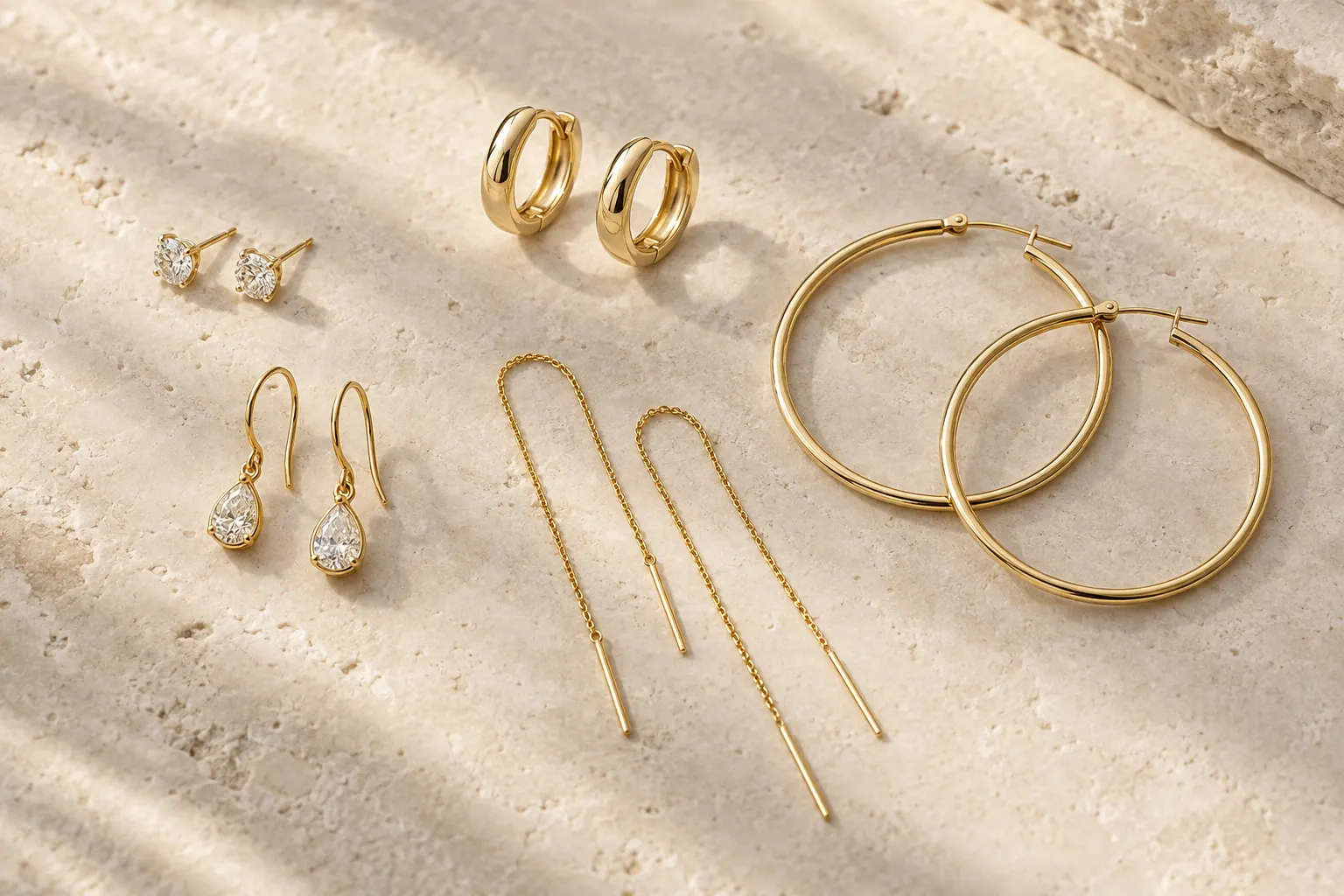
Stud earrings sit directly on the earlobe without hanging: a stone or small gold shape on a post, or a small, thick hoop that hugs the lobe (a huggie). For everyday wear most people choose a 4–5 mm stud in the first piercing and 2–3 mm in extra holes. Screw backs are best for valuable pairs and for children, and sensitive ears do best in solid 14K or 18K gold rather than plating.
What counts as a stud earring?
People use “stud” for a few different styles, so it helps to know which one you mean:
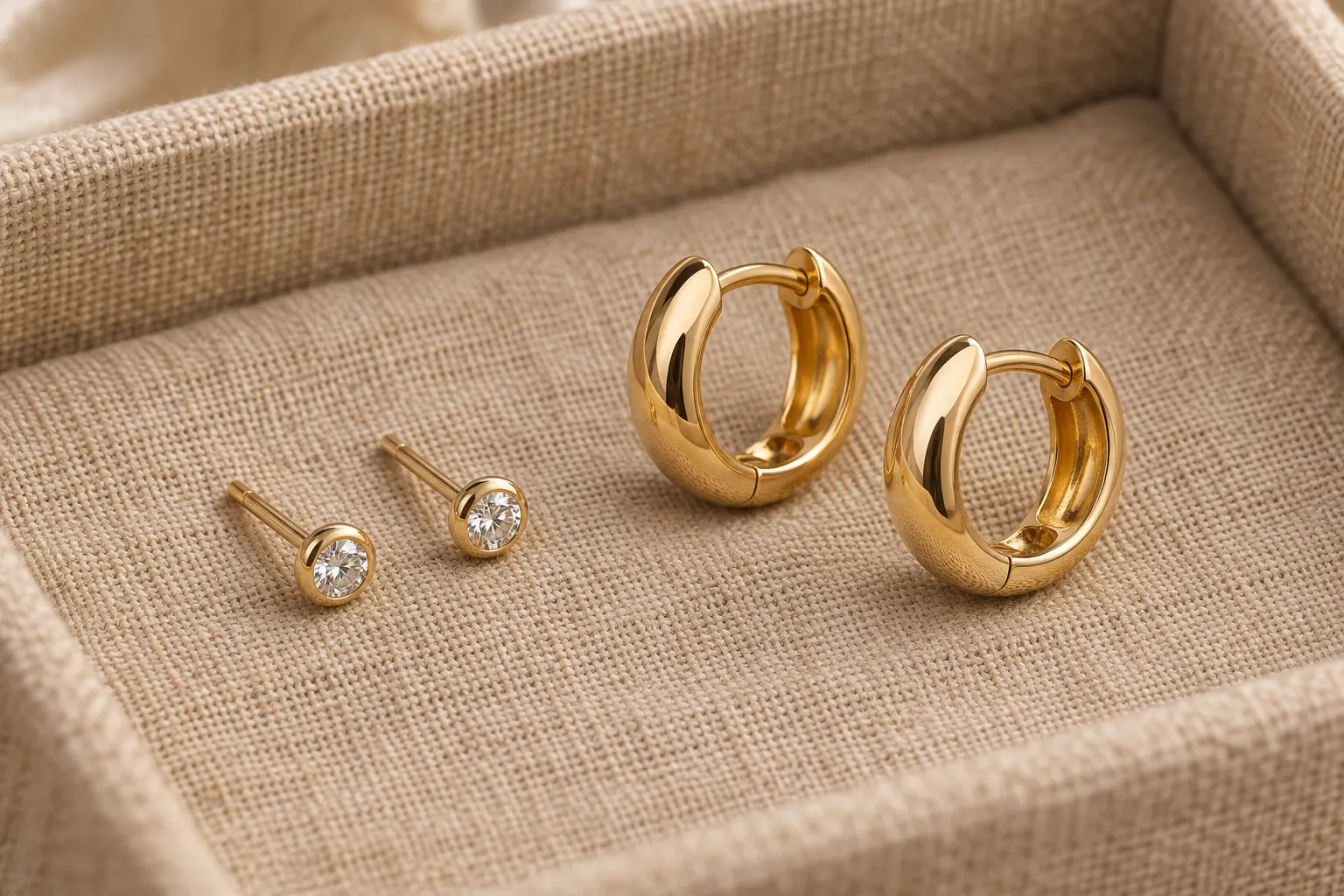
- Classic stud: a stone, pearl or small gold shape on the lobe, with a post through the piercing and a back behind it. Diamond studs are the classic version.
- Huggie hoop: a small, fairly thick hoop, about 8–12 mm across, that clicks shut and hugs the lobe with almost no gap.
- Ear climber: goes into the normal piercing and climbs up the edge of the ear. It sits close to the ear but is longer.
All three stay close to the ear, which makes them easy for everyday wear, work and light exercise. Drops, threaders and the rest are covered in our guide to earring types.
Stud earring sizes: what is small, medium and large in mm?
Stud size is the diameter of the front, the stone or gold shape, in millimeters. For diamond studs the carat weight is often given too. Approximate equivalents for a round diamond:
| Diameter | Approx. round diamond weight | Look | Best for |
|---|---|---|---|
| 2–3 mm | 0.05–0.10 ct | A tiny point of light | Second and third holes, cartilage, kids |
| 4 mm | about 0.25 ct | Delicate but visible | Everyday, work, first piercing |
| 5 mm | about 0.50 ct | Classic with presence | Everyday and events |
| 5.8 mm | about 0.75 ct | Noticeable | A special gift, evenings |
| 6.5 mm | about 1.00 ct | Striking from across the room | Medium to large lobes, events |
| 8 mm and up | over 1.5 ct | A statement | Mostly gold shapes or gemstones |
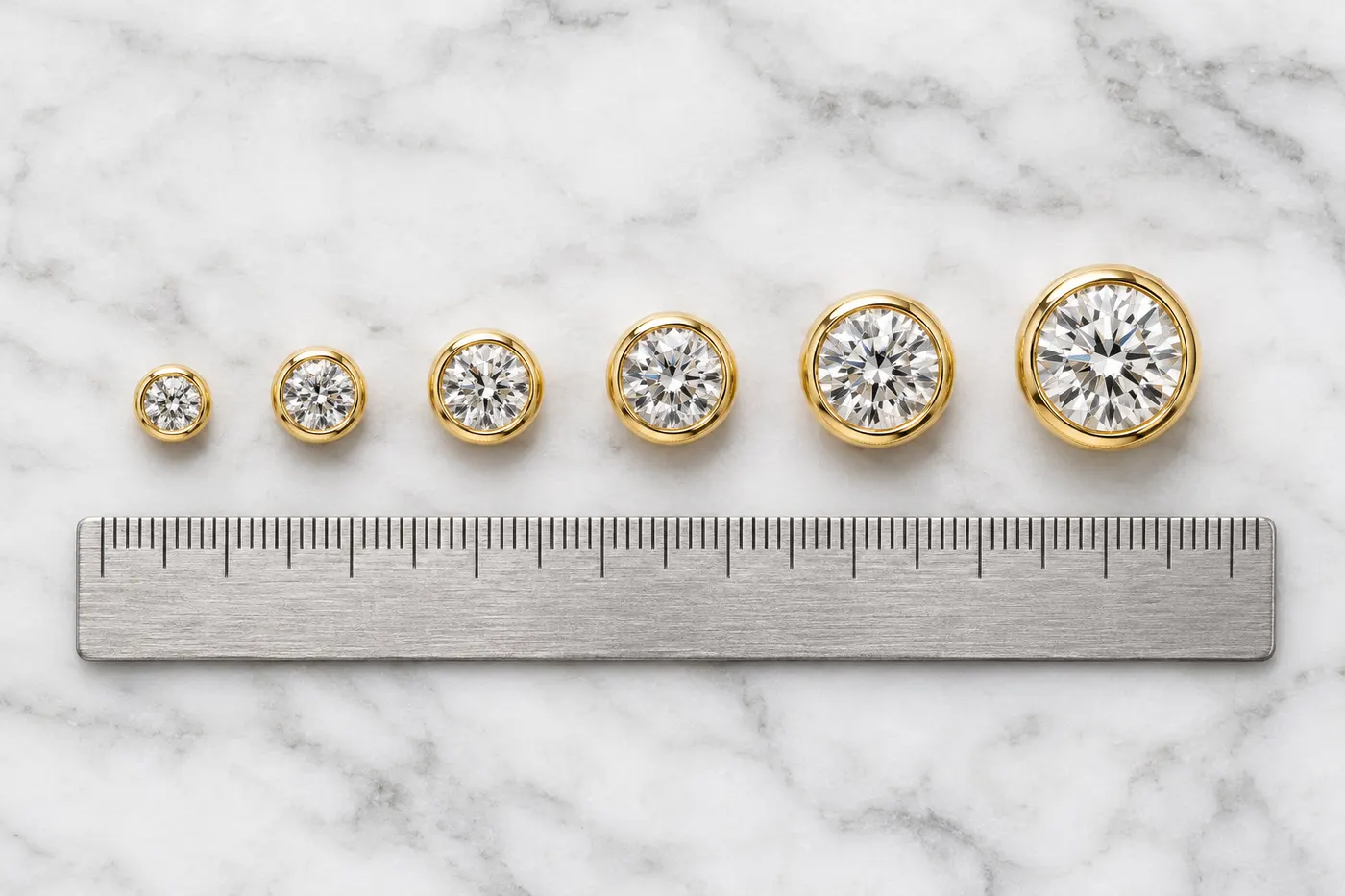
Rule of thumb: on a small lobe 4–5 mm looks balanced, and above 6 mm a stud becomes a statement. Diamond stud weights are often quoted per pair (“total carat weight”), so a “half carat” pair usually means two quarter-carat stones. In stones this small, clarity is almost invisible to the eye, so it is a safe place to save. See our diamond clarity chart.
Huggie hoops: diameter, thickness and comfort
Huggies are measured by inner diameter, the space the lobe passes through. On an average lobe, 8–10 mm sits snug; 11–12 mm leaves a small gap and looks looser. Upper holes and cartilage usually take 6–8 mm.
- 1.5–2 mm thick: delicate, good for a second hole and for stacking.
- 2.5–3.5 mm thick: the classic golden huggie, with enough presence to wear alone.
- Pavé: a row of small diamonds across the front gives diamond sparkle without one big stone.
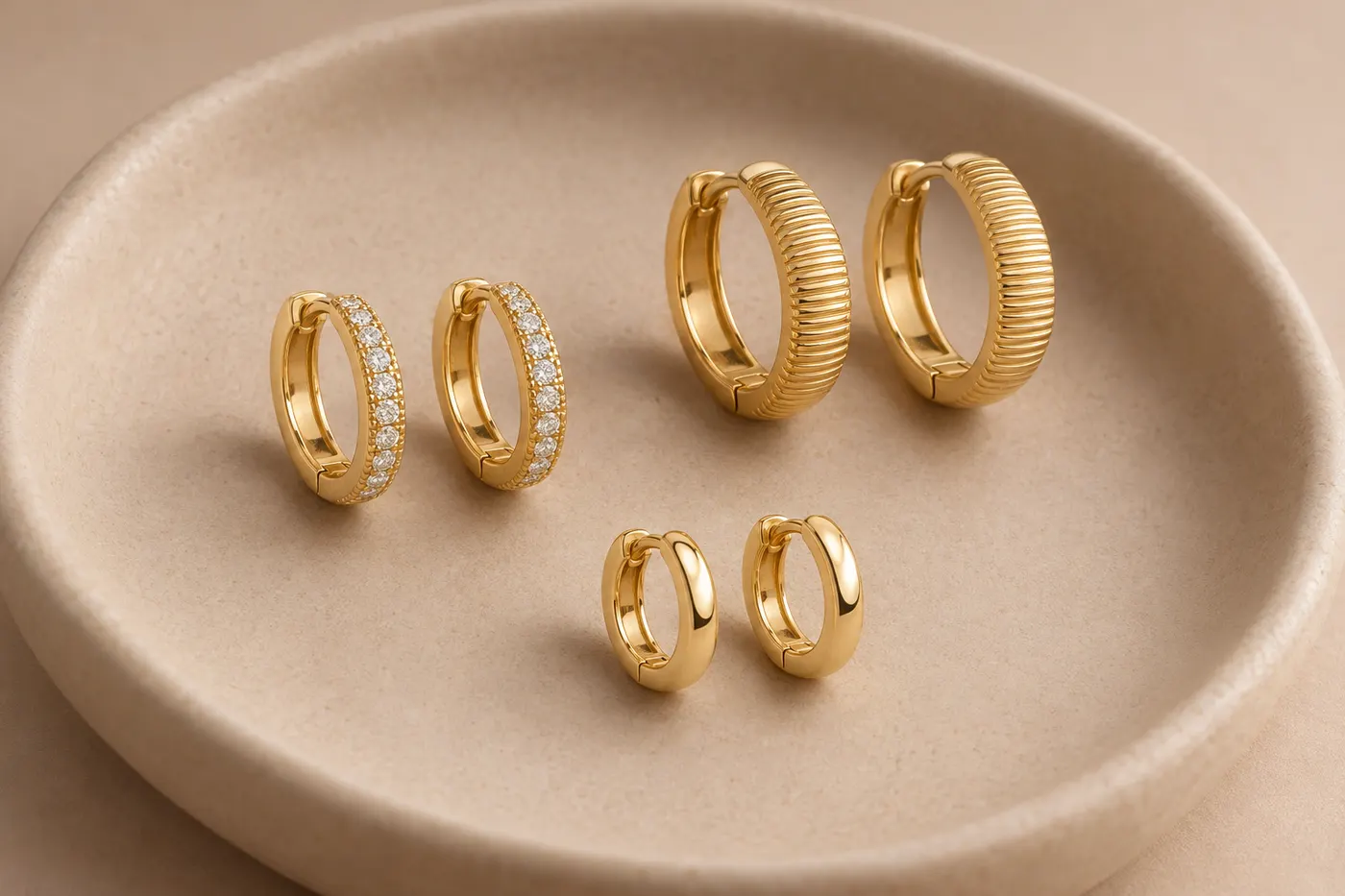
Huggies are especially comfortable for sleeping, since there is no back to dig in. A thick solid gold huggie weighs more than a small stone stud, and gold weight is a major part of the price. Our gold price per gram guide shows how to work out how much gold is in a piece.
Stud earring backs: butterfly, screw or flat back?
| Back | How it works | Advantage | Choose it for |
|---|---|---|---|
| Butterfly (push) | A spring-loaded metal back pushed onto a smooth post | The most common; easy on and off | Light, less valuable pairs |
| Screw back | Screws onto a threaded post | Almost never falls out | Diamond studs, children, wearing non-stop |
| Flat back | A flat disc behind, often internally threaded | Doesn't catch on hair or pillows | Cartilage, sleeping, third holes |
| Hinged click | Part of the hoop opens and clicks shut | No separate parts to lose | Huggies and small hoops |
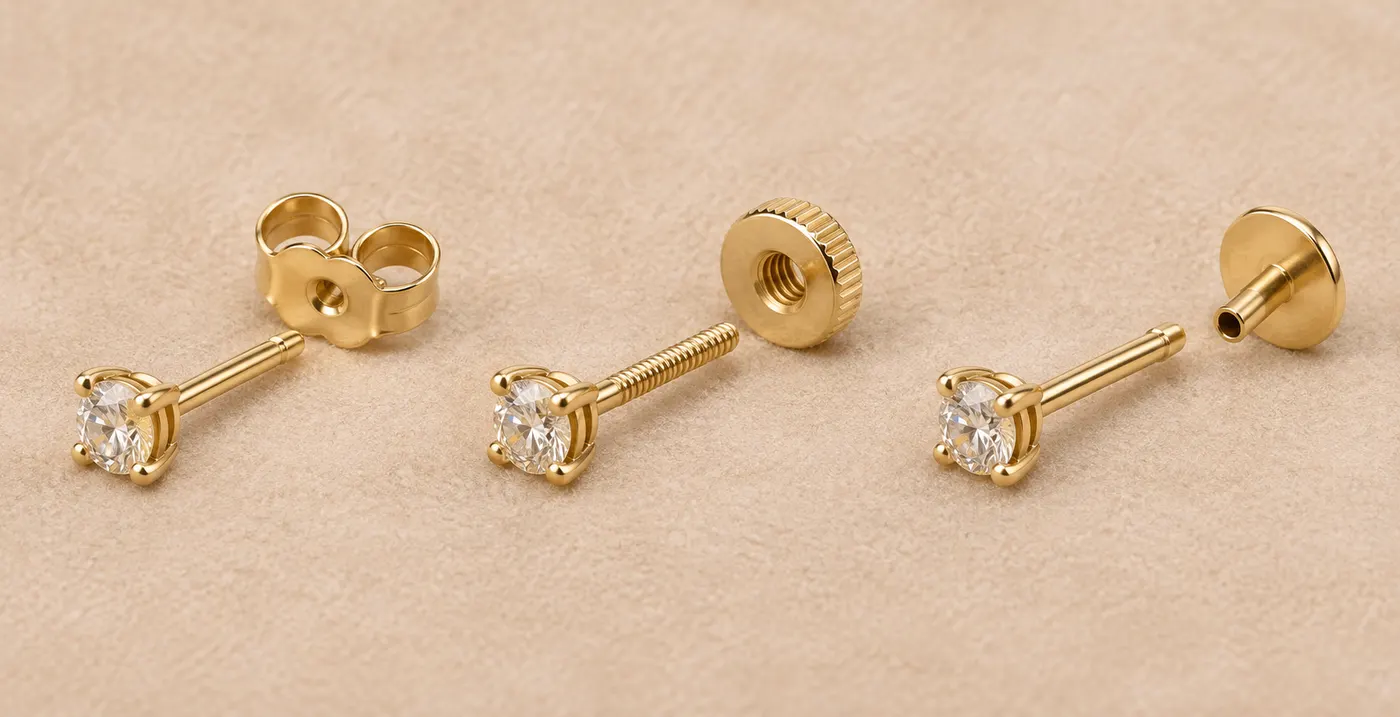
Butterfly backs loosen over the years, and then a stud can fall out without you noticing. For diamond studs, or any pair you care about, a screw back is worth the extra half minute in the morning. All backs, including lever backs for drops, are compared in our earring types guide.
Studs for second, third and cartilage piercings
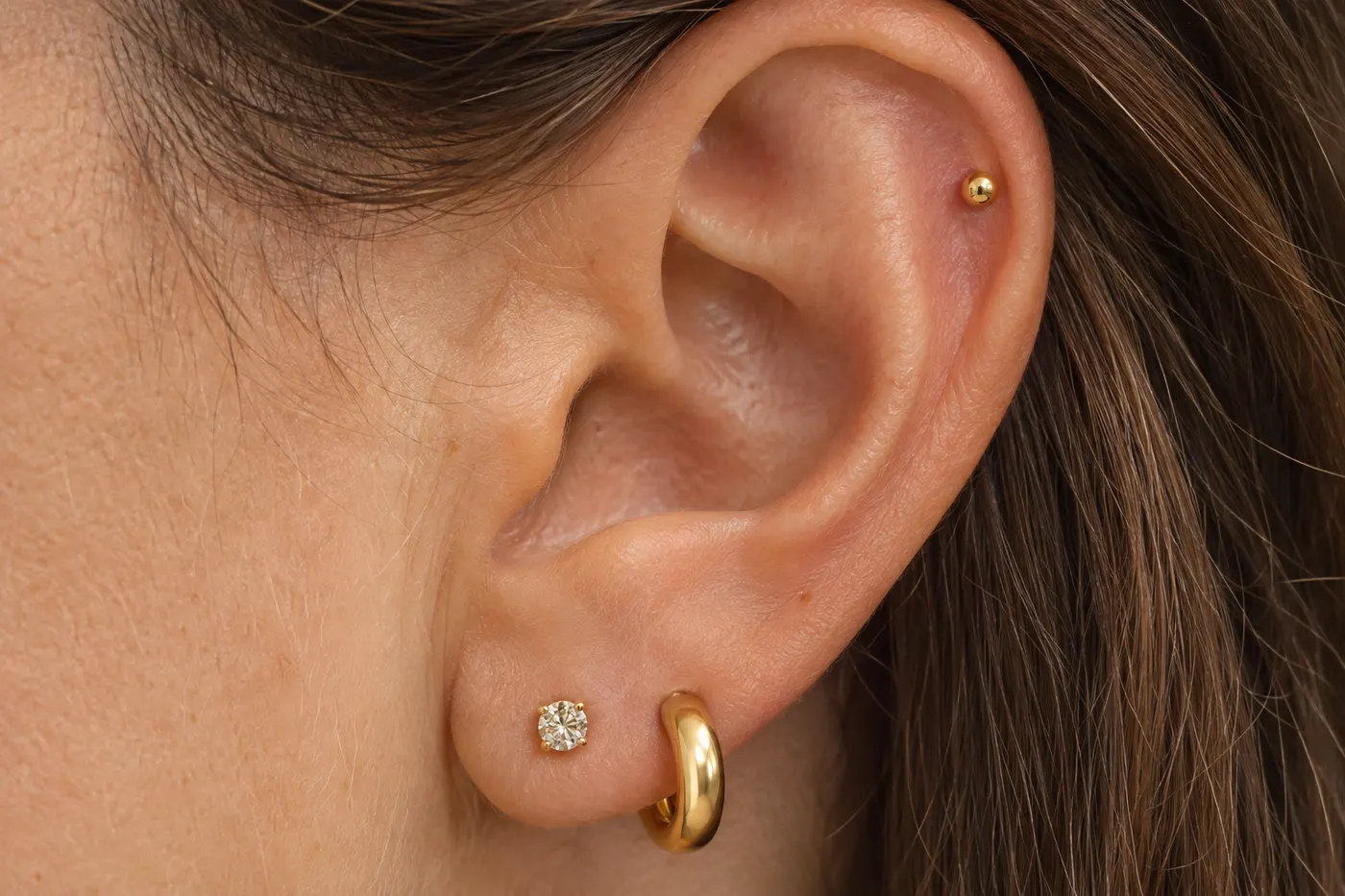
With several lobe piercings, most people build a gradient: the largest earring in the first hole and smaller ones above it. A common combination is a 4–5 mm stud in the first hole, a thin huggie in the second and a tiny 2–3 mm stud in the third. Cartilage (helix, tragus, conch) usually gets a flat-back stud that won't catch on hair or a pillow.
A new piercing has to heal before you switch to regular jewelry. That usually takes a few weeks in the lobe and can take many months in cartilage, so plan the first change with your piercer.
14K or 18K for studs, and what about sensitive ears?
A stud touches skin and often stays in through sleep and showers, so the alloy matters more than in a necklace. Most earring reactions come from nickel, common in fashion jewelry and in some white gold alloys. 14K suits most people, and 18K, with more pure gold, is generally the safer choice for very sensitive ears. See our 14K vs 18K gold guide.
- Yellow or rose gold: usually fine even for sensitive ears.
- White gold: mention a nickel sensitivity when you request a quote, and remember rhodium plating wears over time. More in our white gold guide.
- Gold-plated earrings: plating wears through exactly where it touches skin, which makes them the most common cause of irritation. See gold plated vs solid gold.
Stud earrings as a gift
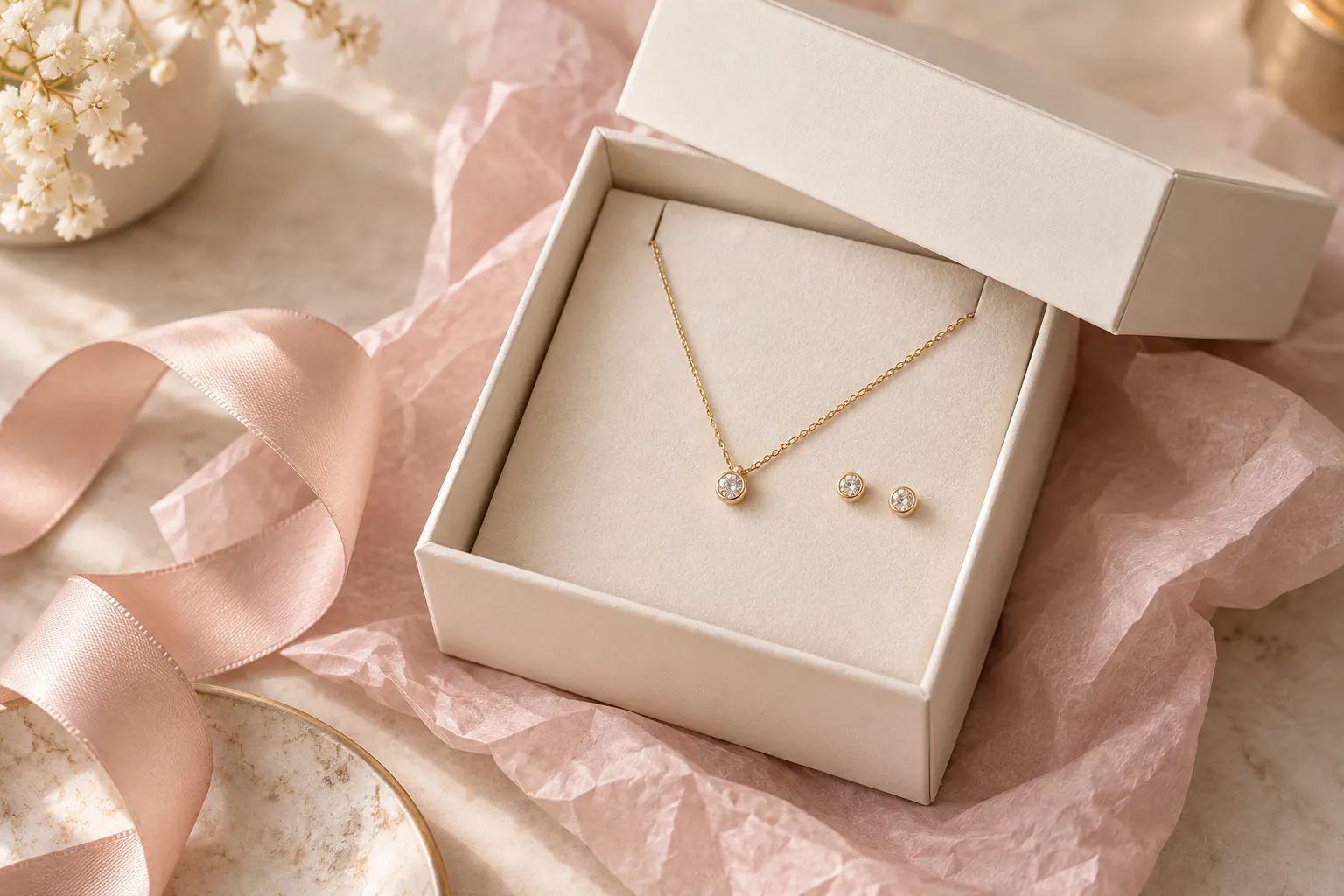
Gold studs are one of the safest gifts there is: no size to guess, they suit almost any style, and they get worn every day. A few ideas:
- Bat mitzvah: delicate 3–4 mm studs with screw backs that will last for years. More in our bat mitzvah gift guide.
- Birthstone: studs with her birth month's stone, such as garnet for January or sapphire for September. See birthstones by month.
- Hanukkah and birthdays: gold huggies that go with everything. More in our Hanukkah gift guide and jewelry gift guide.
- For him: a single small, flat stud in yellow or white gold. See our men's gold jewelry guide.
How much do gold stud earrings cost?
Earrings are where Israelis plan the smallest budgets. In our 2026 Israel custom jewelry report, 57% of earring designers chose a ₪1,000–2,000 budget and only 10% went over ₪5,000, compared with 25% of ring designers.
In practice, a handmade pair of solid gold studs starts at around ₪2,000 with us, like most pieces. A pair of studs usually holds only 1–2 grams of gold, so the price mostly moves with:
- The stones: a half-carat diamond per stone costs far more than a plain gold stud. Lab-grown diamonds or moissanite narrow the gap.
- Gold weight: a thick huggie or large shape weighs more than a delicate stud.
- Workmanship: pavé setting, an unusual shape or engraving.
- Karat: 14K or 18K changes how much gold is in the piece.
The full breakdown is in our guide to how gold jewelry is priced.
How to order custom stud earrings
In our design studio you describe the studs in words: shape, size, gold color, stone and type of back. You get photorealistic designs, refine them in chat and request a personal quote, which we send over WhatsApp. We work in 14K and 18K gold in yellow, white and rose, and every pair is handmade within about 2–3 weeks of design approval. Here is how the custom jewelry process works, and you can browse gold earrings designed in the studio.
To keep studs shiny, wash them now and then in warm water with mild soap, paying attention to the post and back, where lotion and dirt build up. More in our gold jewelry care guide.